
Riber posts H1 2026 revenue growth of 19% and returns to profit
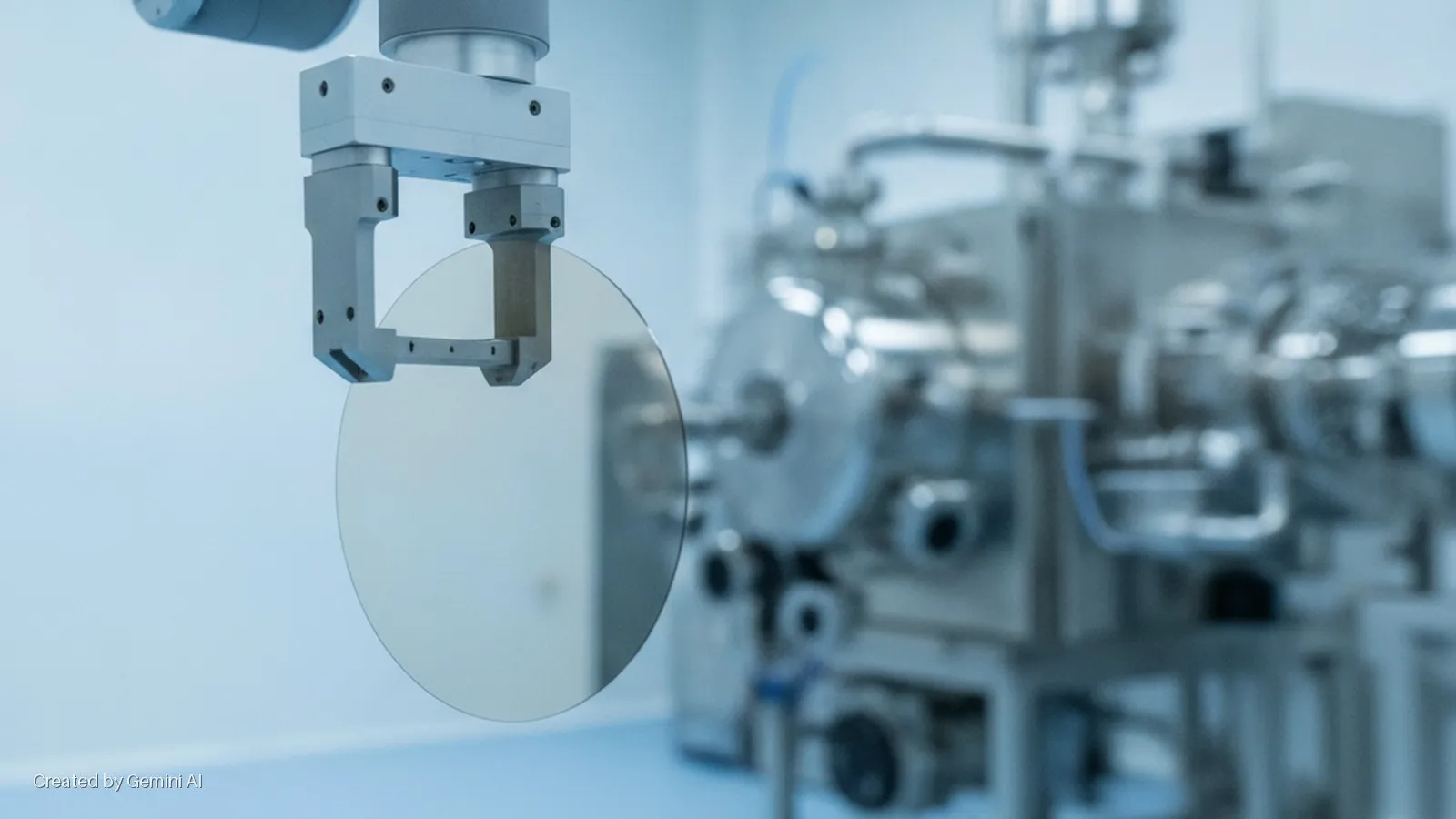
Riber, the Bezons-based maker of molecular beam epitaxy equipment, has reported revenues of €12.7 million for the six months to June 2026, a 19% increase on the same period a year earlier. Net income turned positive at €0.2 million, compared with a loss of €0.8 million in H1 2025, as the company benefited from strong demand for services and accessories and disciplined cost control.
Gross margin reached €5.1 million, up 31% year on year, with the margin rate improving to 39.8% from 36.2%. Operating income was a slim positive €0.1 million, reversing a €0.7 million loss in the prior-year period. The services and accessories revenue line, which rose 71% to €5.1 million, was the primary driver of the improvement, partially offsetting a 1% dip in systems revenues to €7.7 million.
ROSIE II and the photonics push
Riber used the results announcement to confirm €6 million in bank financing, arranged with Bpifrance and a group of French commercial banks, to fund the industrialisation of ROSIE II, its dual-chamber cluster production platform. ROSIE (RIBER Oxide on Silicon Epitaxy) targets functional oxide growth on 300 mm silicon wafers, positioning the company at the intersection of integrated silicon photonics, electro-optical components for datacom and quantum computing architectures.
The second ROSIE system was shipped in July 2026 to an unnamed major quantum computing organisation in the United States. The first ROSIE II production system is now under construction, and the company expects initial barium titanate oxide and strontium titanate oxide samples from its partnership with the Novo Nordisk Foundation Quantum Computing Programme to be available in Q4 2026. Several laboratories and industrial customers have placed technology wafer pre-orders, Riber said.
At 30 June 2026, the order book stood at €26.8 million, down 3% year on year. Riber attributed the decline largely to export restrictions into Asia, which it said prevented the company from booking more than €8 million in additional orders. The caveat on its full-year guidance reflects this directly: Riber expects 2026 revenues to be broadly in line with 2025's €40.3 million, subject to obtaining the relevant export licence.
Market context and competitive landscape
The molecular beam epitaxy equipment market is a specialised segment within the broader semiconductor capital equipment industry, which is itself subject to cyclical demand patterns tied to wafer fabrication investment cycles. Riber occupies a niche but globally significant position as the recognised leader in MBE systems, serving both research laboratories and compound semiconductor manufacturers.
The pivot towards photonics and quantum-compatible oxides reflects wider structural tailwinds. Integrated photonics for data-centre interconnects has attracted substantial investment from hyperscalers and optical component vendors seeking to replace copper with faster, lower-power optical links. Simultaneously, quantum computing hardware developers, particularly those pursuing photonic and superconducting approaches, require specialised epitaxial materials that conventional silicon CMOS processes cannot deliver.
Export controls targeting semiconductor manufacturing equipment destined for certain Asian markets have become a significant operational constraint across the industry. The US Bureau of Industry and Security and, latterly, the Dutch and Japanese governments have tightened licensing requirements for advanced fabrication tools. Riber's exposure illustrates that these controls extend beyond lithography systems to upstream materials and deposition equipment. The outcome of its licence application could materially affect the second-half revenue run rate given that the restricted Asia orders exceed 30% of the current order book.
Chief executive Annie Geoffroy described the first half as confirmation of core business strength and signalled that ROSIE II would be central to the company's commercial positioning over the next two to three years: "We are also reaching an important milestone, with the support of our financial partners, as we move forward with the construction of ROSIE II."
Full-year revenues will be disclosed on 3 February 2027, before the start of trading on Euronext Growth Paris.