
Boehringer Ingelheim and Eko Health launch AI heart murmur tool for dogs
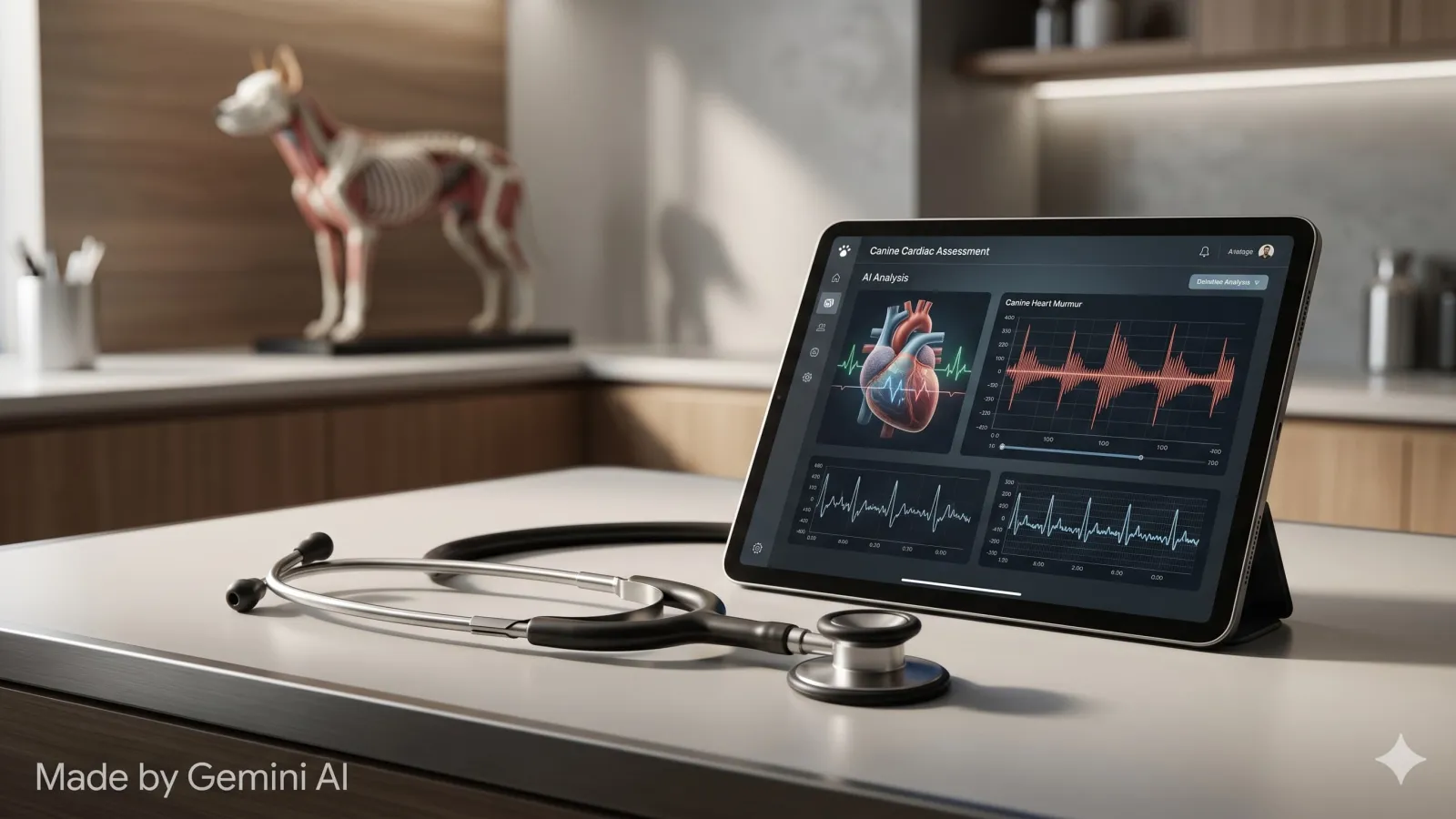
Boehringer Ingelheim and Eko Health have jointly launched Eko Vet+ with CANINEBEAT AI, a digital auscultation solution designed to help veterinarians detect, visualise, and grade heart murmurs in dogs. The product is now available in the United States and United Kingdom, with a German rollout planned for next month and further market expansions scheduled through 2026 and 2027.
The solution combines three components: the Eko CORE Digital Attachment, which digitises heart sounds via a stethoscope connector and amplifies them by 40 times; the CANINEBEAT AI algorithm; and the Eko Vet+ app, which surfaces murmur images, sound files, and shareable clinical reports. The AI model was trained and validated on more than 4,000 annotated canine heart sound recordings from over 3,400 dogs, with input from approximately 50 veterinary cardiology specialists. The company reports sensitivity and specificity both above 95%, though full peer-reviewed results have not yet been published.
Clinical context
Heart disease affects roughly 10% of dogs, with myxomatous mitral valve disease (MMVD) — a chronic, progressive condition affecting the mitral valve — representing the most prevalent form. Because early-stage MMVD is typically asymptomatic, murmurs can go undetected during routine consultations. Earlier identification matters clinically: dogs caught at the pre-symptomatic stage may be eligible for treatment with pimobendan, which has demonstrated efficacy in delaying disease progression in published veterinary cardiology literature.
Dr Erich Schött, Head of the Pet Business at Boehringer Ingelheim, said the tool addresses a practical challenge in busy clinic environments where subtle murmurs can be difficult to detect by ear alone, and where communicating an invisible disease to pet owners presents its own difficulty. Prof. Gerhard Wess of Ludwig-Maximilians-Universität Munich, who contributed to the solution's development, described CANINEBEAT AI as offering "a high level of consistency" in murmur grading for general practitioners who may not have specialist cardiology training.
Market and competitive landscape
Eko Health enters veterinary medicine from a position of established credibility in human cardiology: its FDA-cleared platform has placed more than 700,000 devices in clinical settings worldwide. The move mirrors a broader pattern of medical AI vendors extending validated human-health models into adjacent animal-health markets, where regulatory pathways are often less onerous and the addressable population — companion animals — is large and commercially attractive in Western markets.
The veterinary digital diagnostics space is still nascent compared with its human equivalent, but a number of well-funded startups and established medtech players are pursuing AI-assisted imaging, remote monitoring, and diagnostic decision support for companion animals. For Boehringer Ingelheim, which already holds a significant position in canine cardiology pharmaceuticals, pairing a diagnostic tool with its existing treatment portfolio represents a vertical integration play: earlier murmur detection is likely to increase the eligible patient pool for MMVD therapy, creating a commercial feedback loop between the diagnostic and pharmaceutical arms of the business.
The solution will be available through both companies under distinct commercial offers, and no pricing or subscription terms were disclosed in the release. Buyers — primarily veterinary practices and small-animal clinics — will weigh per-device cost, EHR integration capability, and reimbursement structures as the product scales beyond its launch markets. The absence of published peer-reviewed benchmark data at this stage is worth noting; the company has indicated results will appear in scientific forums, which will be an important credibility milestone for wider clinical uptake.