
Hypervision Surgical raises £17m Series A for AI surgical imaging
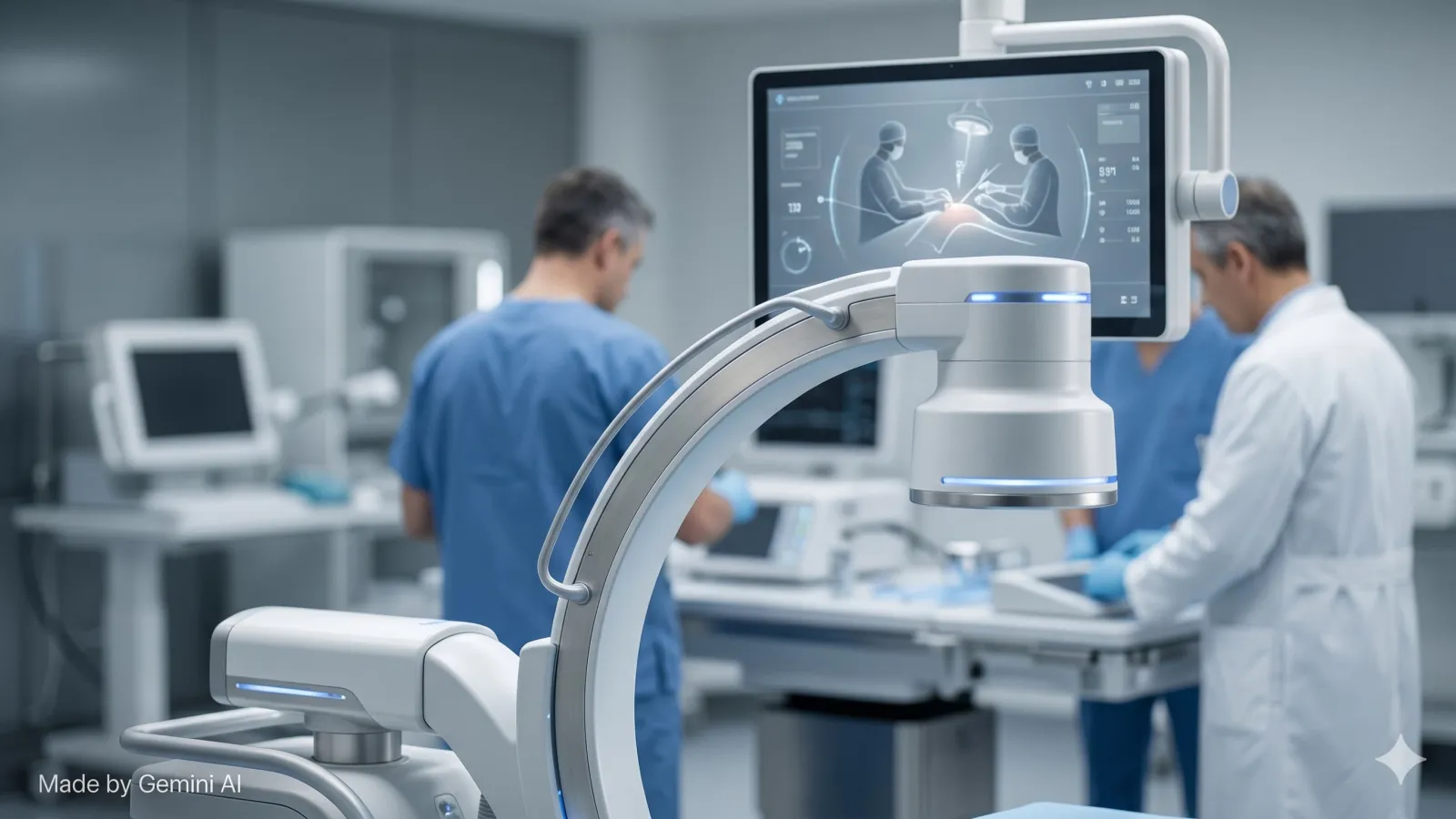
Hypervision Surgical has closed a £17 million Series A to accelerate commercial deployment of its Hyperspectral Intelligence® platform, which combines on-chip spectral sensing with cloud-connected AI analytics to deliver real-time tissue insights during surgery. The round was led by Heal Capital and included participation from Angelini Ventures, IP Group, and Daycrest, alongside existing investors HERAN Partners, Redalpine, LifeX Ventures, and ZEISS Ventures.
The King's College London spin-out also drew strategic backing from the SINC Fund — managed by SAGES Ingenuity, the innovation arm of the Society of American Gastrointestinal and Endoscopic Surgeons — and Macmillan Cancer Support, the UK cancer charity. The involvement of clinical and patient-advocacy bodies lends independent validation to the platform beyond conventional venture endorsement. Tanja Dowe, Managing Partner at Angelini Ventures, joins the company's board as part of the financing terms.
The technology
Hypervision's core product, the HYPERSNAP® surgical system, is built on the NVIDIA IGX edge-computing architecture and uses hyperspectral sensing co-developed with Imec, the Belgian semiconductor and photonics research institute. Unlike conventional surgical cameras, which capture visible-light imagery, hyperspectral systems sample hundreds of wavelength bands simultaneously, enabling quantitative analysis of tissue oxygenation, perfusion, and composition in real time.
The HYPERSNAP system holds both UK certification and US FDA clearance for open and minimally invasive general surgery, and has been selected for the FDA's Safer Technologies Programme (STeP), a designation reserved for devices judged likely to offer meaningful safety improvements over existing approaches. Chief executive and co-founder Michael Ebner said the funding would allow the company to build "a new intelligence layer in surgery — giving surgeons real-time insights into tissue that were previously impossible to access."
Hypervision's roadmap targets integration with laparoscopic, robotic, microscopic, and endoscopic platforms — a broad ambition that, if realised, would position the technology across the majority of minimally invasive procedure categories.
Market and competitive context
Intraoperative imaging is an active area of medtech investment, with competing approaches including near-infrared fluorescence imaging (used widely for sentinel-node mapping and perfusion assessment), optical coherence tomography, and AI-enhanced endoscopy. Several large surgical-equipment groups, including Stryker, Medtronic, and Karl Storz, have developed or acquired fluorescence-imaging capabilities. Hypervision's differentiator is the breadth of the spectral window and the cloud-software architecture, which it positions as a path to continuous algorithmic improvement without hardware replacement — a model more closely aligned with enterprise SaaS than traditional capital-equipment sales.
The AI-assisted surgery market is drawing increasing regulatory scrutiny. The FDA has issued guidance on predetermined change-control plans that would allow iterative AI model updates without full re-submission, a framework that matters directly to cloud-enabled surgical platforms. In the UK, the MHRA's Software and AI as a Medical Device Change Programme is establishing clearer post-market surveillance obligations for AI-enabled devices. Hypervision will need to demonstrate that its cloud-update pathway satisfies both regulators as it scales commercially.
The Series A proceeds will also support further co-development with Imec on next-generation sensing components — a partnership that provides access to semiconductor fabrication expertise that would be prohibitively capital-intensive to replicate in-house. For investors, near-term milestones to watch include named hospital system partnerships, published clinical outcomes data, and expansion of FDA clearance into additional surgical specialties.