
Inseego to acquire Nokia's FWA business in revenue-doubling deal
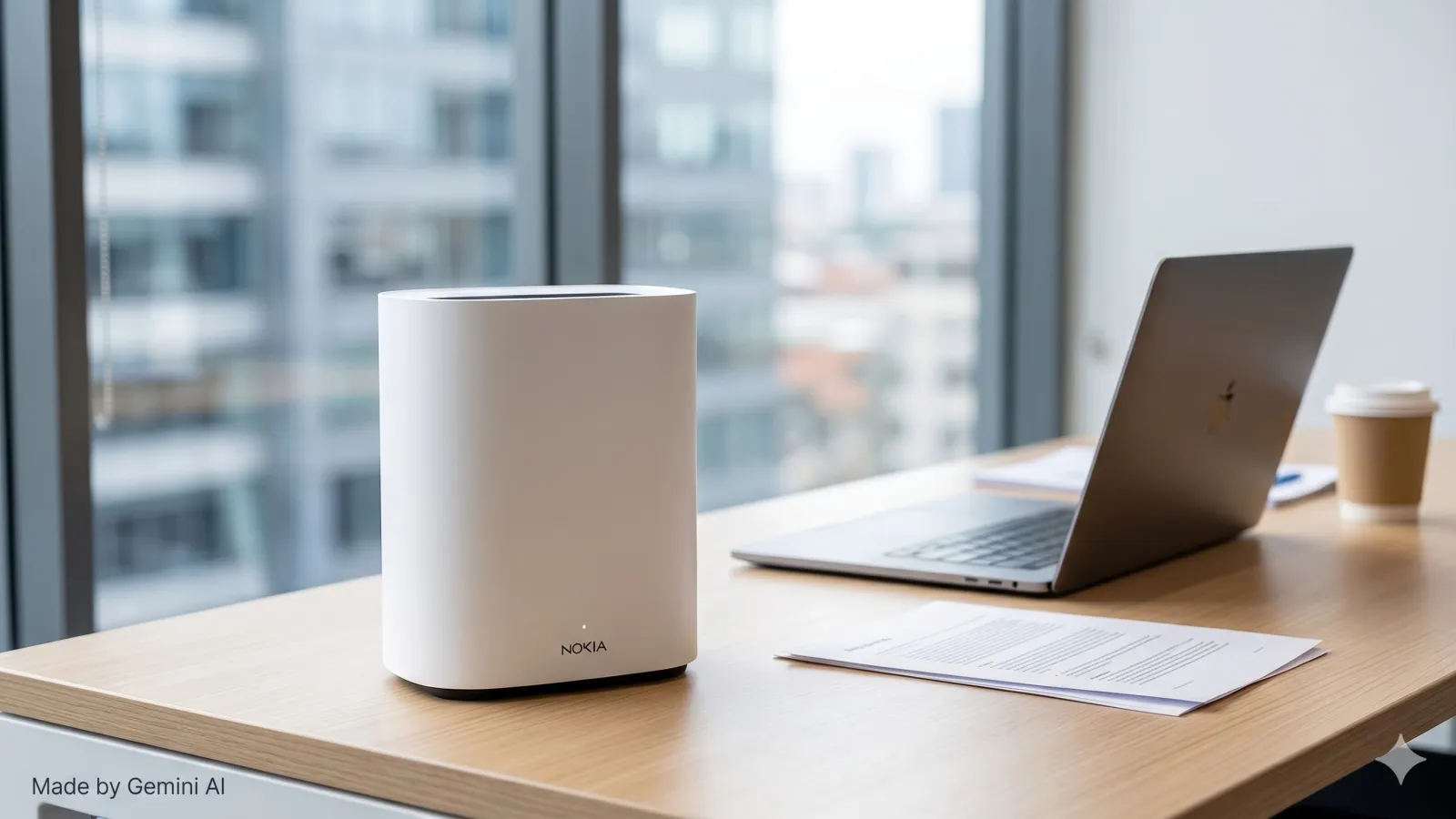
Inseego has signed an agreement to acquire Nokia's Fixed Wireless Access (FWA) customer-premises equipment business in a transaction the San Diego-based vendor says will approximately double its revenue and establish it as a global wireless broadband player spanning consumer, enterprise, and carrier markets.
Under the terms, Nokia will receive around a 7% equity stake in Inseego — in the form of common stock and warrants valued at US$20 million — at closing. Nokia will then make an additional $10 million equity investment, bringing its total ownership to approximately 11% of Inseego's current capitalisation. The transaction is expected to close in Q4 2026, subject to customary regulatory approvals and closing conditions. Perella Weinberg Partners advised Nokia on the deal.
The deal
Juho Sarvikas, chief executive of Inseego, said the acquisition "expands our scale, broadens our portfolio, and positions us as a global leader in wireless broadband across consumer and business markets," adding that the combination creates collaboration opportunities at the wireless edge where "AI-driven workloads, cloud connectivity, and next-generation networks are increasingly coming together."
For Nokia, the divestiture is framed as a deliberate portfolio simplification. Konstanty Owczarek, Nokia's Chief Corporate Development Officer, described the move as part of a strategic shift to "focus its portfolio on the infrastructure that powers the AI supercycle and AI-driven transformation of networks." Neither company disclosed the FWA business's standalone revenue, and Nokia noted the transaction is not financially material to its group results.
The two companies plan joint go-to-market initiatives in 6G and wireless edge, including carrier 5G monetisation and enterprise edge opportunities. The scope of those commercial arrangements beyond the equity terms has not been detailed in the announcement.
Market context
The FWA CPE market has expanded sharply over the past three years as operators sought to monetise 5G mid-band spectrum with home and business broadband products. IDC and Ericsson have both noted that FWA connections are growing faster than any other 5G use-case segment globally, with North American and emerging-market deployments driving the bulk of volume.
Nokia has historically competed in the FWA CPE segment alongside Inseego, Netgear, TP-Link, and a cluster of Asian ODMs. By consolidating the Nokia brand's install base into Inseego, the combined entity will carry a larger carrier-relationship footprint, though it will face intensifying competition from Qualcomm-powered devices and from operators internalising CPE procurement through white-label programmes.
Nokia's retreat from the device-level CPE layer is consistent with a broader pattern among network-infrastructure vendors — including Ericsson, which exited its consumer business years ago — of shedding endpoint hardware to concentrate on software, core network, and systems-integration margins where pricing power is more durable.
Regulatory and standards read-across
A Q4 2026 close gives both parties roughly two quarters to work through any regulatory review. Because neither company is dominant in CPE at a jurisdictional level, significant antitrust risk appears low, though works-council consultation processes in Finland and potentially other European markets where Nokia has employees attached to the FWA unit may affect timing.
Looking further ahead, the joint 6G innovation agenda announced alongside the deal sits within a standards cycle that is still in the research phase at 3GPP. Commercial 6G network launches are not expected before 2030, which means the near-term commercial value of any 6G collaboration will be measured primarily in standards-body influence and spectrum-policy positioning rather than product revenue. Investors in Inseego — a relatively small-cap vendor — will be watching whether the Nokia equity stake signals deeper long-term commercial commitment or merely a transitional arrangement to protect customer continuity.