
Applied Materials opens $500m Singapore campus for AI chip demand
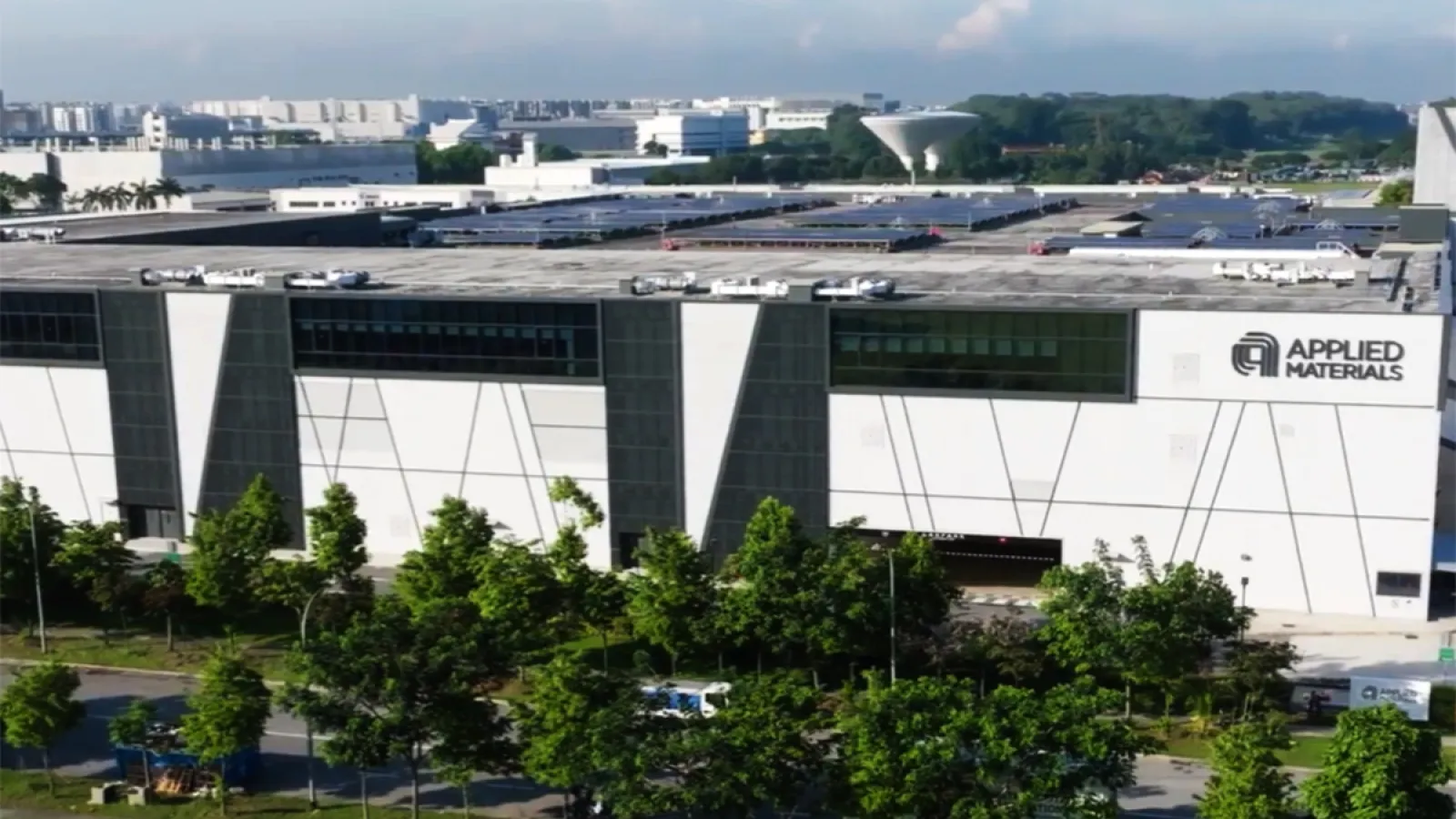
Applied Materials has opened a US$500 million (S$600 million) manufacturing and R&D campus in Tampines, Singapore, more than doubling its advanced cleanroom capacity in the country. The facility, which the Santa Clara-headquartered company says is already operating at volume production, is focused on supplying chipmakers expanding capacity to meet AI-driven demand for advanced semiconductors.
The Tampines Campus is a milestone in Applied's "Singapore 2030" strategy, which encompasses manufacturing scale-up, technology ecosystem partnerships and local workforce development. The company anticipates creating approximately 1,000 new jobs in Singapore over the coming years as the facility ramps.
What the facility does
The campus deploys Autonomous Mobile Robots, autonomous assembly and testing systems, and AI-assisted quality inspection — integrating manufacturing, R&D and external partners to accelerate time-to-market for new equipment generations. Augmented and virtual reality tools support technician training and maintenance operations. The building is designed to achieve Green Mark Platinum Certification under Singapore's Building and Construction Authority rating system, the highest tier available, and features onsite solar generation, a closed-loop water reclamation system targeting zero water waste, low-carbon concrete construction, and a smart energy and water monitoring platform.
Gary Dickerson, president and chief executive of Applied Materials, said the expanded Singapore operations would help the company "deliver semiconductor manufacturing equipment that chipmakers need to bring next-generation chips to market faster." Singapore's Economic Development Board chairman Png Cheong Boon welcomed the investment, saying Applied's automation and AI-enabled facility would "push the envelope of advanced manufacturing capabilities" in the country.
Market and competitive context
Applied Materials operates in a semiconductor equipment market that is consolidating around a small number of scale players — principally AMAT itself, ASML, Lam Research, KLA Corporation and Tokyo Electron — as chipmakers intensify capital spending on advanced-node and AI-specific capacity. Singapore has become a strategically important node in this supply chain: its stable regulatory environment, proximity to major Asian fabs, and government incentives via the Economic Development Board make it a preferred location for equipment manufacturers seeking geographic diversification away from US-China trade friction.
The Tampines investment builds on a broader capital deployment programme. Applied says it has nearly doubled its global manufacturing capacity over the past several years and has committed more than US$400 million to US equipment manufacturing infrastructure over five years. Separately, the company's US$5 billion EPIC Center in Silicon Valley — described as the largest-ever US investment in advanced semiconductor equipment R&D — is expected to become operational this year, though the company notes that capital spending will "scale over time as customer projects commence."
Regulatory and supply-chain read-across
Singapore's semiconductor ecosystem sits at an interesting intersection of US export-control policy and regional supply-chain resilience. US Bureau of Industry and Security (BIS) rules restrict the transfer of certain advanced semiconductor manufacturing equipment to specific end-users, and equipment companies such as Applied Materials must maintain careful compliance programmes as they serve a global customer base. Manufacturing and R&D assets based in Singapore offer some operational flexibility, though the facilities are still subject to US re-export controls given the company's US domicile.
The broader push by chipmakers — including TSMC, Samsung and Intel — to diversify fabrication geography is generating a sustained uplift in demand for front-end equipment. Analysts tracking the equipment sector have noted that AI accelerator demand, particularly for leading-edge logic and high-bandwidth memory, is sustaining capital equipment order books at levels that would historically have indicated a cyclical peak. Whether that elevated demand proves durable or corrects as hyperscaler capital expenditure normalises is the central question facing the sector in the next 12 to 18 months.