
Tower Semiconductor plans $3bn Japan expansion for silicon photonics
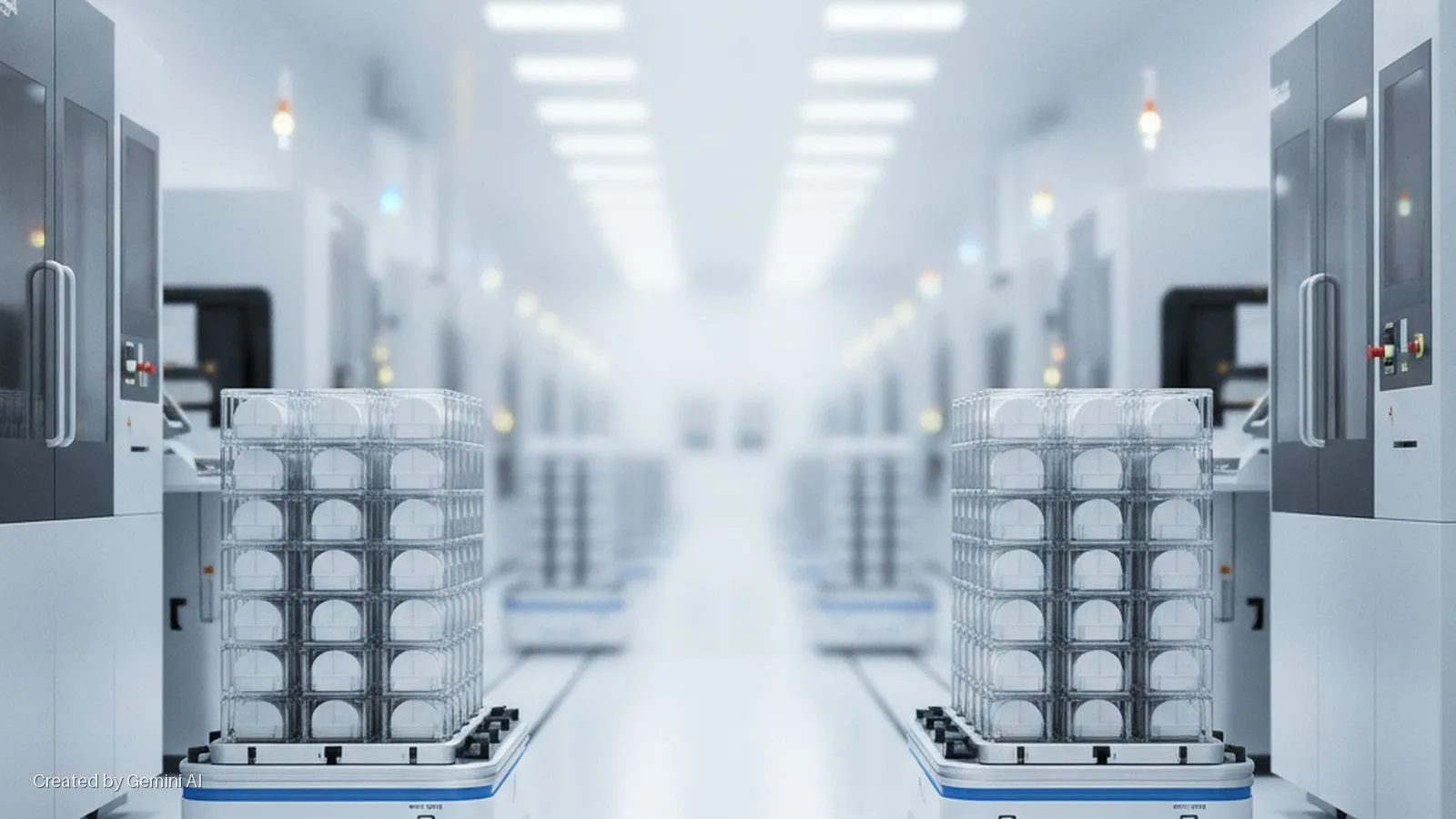
Tower Semiconductor has announced a dual-track capacity expansion in Japan that will add significant volumes of 300mm Silicon Photonics (SiPho) and Silicon Germanium (SiGe) manufacturing, with the programme backed by approximately $1 billion in grants from Japan's Ministry of Economy, Trade and Industry (METI). The Israel-headquartered foundry estimates total investment at around $3 billion net of those grants, making this one of the largest announced commitments in the specialty-analogue semiconductor segment.
The announcement revises Tower's 2028 financial targets upward, with the company now guiding to $3.6 billion in revenue and $1.2 billion in net profit for that year, compared with its previous model.
The two tracks
Track one involves repurposing the Arai facility (formerly known as Fab 6) for 300mm Silicon Photonics production and advanced optical packaging, alongside maximising output at the existing Fab 7 site in Uozu. Full production readiness at the repurposed Arai facility is targeted for the fourth quarter of 2027. Because Arai is being converted rather than built from scratch, Tower argues that this approach avoids the multi-year learning cycles associated with greenfield qualification.
Track two, which is intended to commence in parallel, involves constructing an entirely new 300mm manufacturing building adjacent to Fab 7. Tower says the new facility is expected to be accretive from 2029 and is sized to provide a "multi-fold increase" in SiPho and SiGe capacity. Definitive agreements for track two have not yet been signed, and the company cautioned that completion remains subject to finalising vendor contracts, permits, and grant covenants with METI.
Chief executive Russell Ellwanger said the combination of Tower's specialist process technology with Japan's manufacturing workforce and university research ecosystem was designed to produce "a globally differentiated, advanced R&D and manufacturing centre of excellence for Silicon Photonics, Silicon Germanium, and advanced optical packaging."
Market context
The strategic rationale is rooted in a well-documented surge in demand for optical interconnect components driven by AI data-centre build-outs. Silicon Photonics chiplets, which integrate optical and electronic functions on a single wafer, are increasingly used in co-packaged optics modules for high-bandwidth, low-latency GPU-to-GPU and rack-to-rack connectivity. Hyperscalers and cloud operators are pulling forward procurement of 800G and 1.6T optical modules, and foundry capacity for SiPho process platforms is widely described by industry analysts as constrained relative to projected demand.
Tower's existing Japanese operations through TPSCo, the joint venture it majority-owns from the former Panasonic Semiconductor fabs, give it an established manufacturing base in Uozu and Arai. Rival foundries with SiPho capability include GlobalFoundries, TSMC and Imec-affiliated research lines, though dedicated high-volume specialty-analogue SiPho at 300mm remains a relatively thin field. The government support underlines Japan's broader industrial policy ambition to rebuild domestic semiconductor capacity, a strategy that has also drawn TSMC's Kumamoto fabs and Rapidus's 2nm pilot line.
Standards and trade considerations
Japan's METI grant framework for semiconductor projects typically carries localisation and technology-transfer covenants, which means Tower's operational model in Japan will be subject to ongoing compliance with grant conditions. Export-control exposure is also a factor: SiPho and SiGe processes used in defence, aerospace and advanced communications applications can attract scrutiny from both US Bureau of Industry and Security (BIS) licensing requirements and Japan's own Foreign Exchange and Foreign Trade Act controls.
Tower's forward-looking statements explicitly flag geopolitical risk from its Israeli operations, currency exposure to the Japanese yen and Israeli shekel, and the ongoing patent-infringement dispute brought by GlobalFoundries. Investors will watch whether track-two definitive agreements close on schedule, and whether 2027 production readiness at Arai is achieved without material delay.