
HBMSU signs MoU with Bavarian university on AI and smart learning
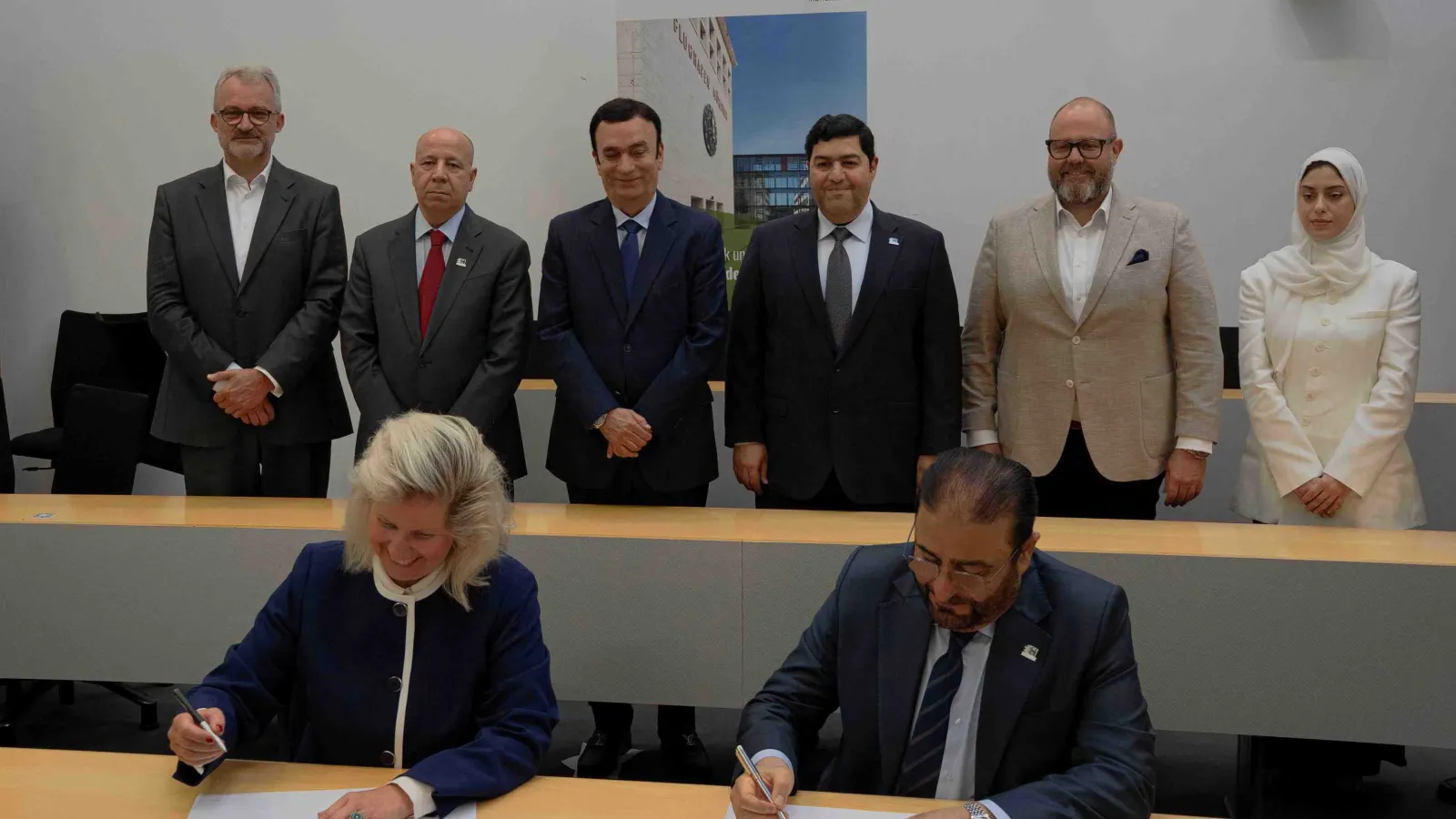
Hamdan Bin Mohammed Smart University (HBMSU) has signed a Memorandum of Understanding with the Bavarian University of Business and Technology following a high-level visit to Munich by a delegation led by Chancellor Mansoor Al Awar. The agreement is intended to establish a framework for joint research projects, smart learning exchange, and business incubation collaboration.
The delegation, which also included Vice Chancellor for Academic Affairs Fahad Alsaadi, Dean of Scientific Research Ahmed Ankit, and Associate Professor Shaima Al Harmoodi, held discussions with representatives of the Bavarian Industry Association alongside the university meetings. The visit was also attended by Ahmed Albanna, UAE Ambassador and board member of the German-Arab Friendship Association, who described the HBMSU-Bavaria partnership as "an important platform for promoting knowledge exchange, innovation, and talent development between the two countries."
The agreement
The MoU covers collaboration across smart learning methodology, applied scientific research, business incubation, and university-industry engagement models. Both institutions presented their institutional strategies and areas of excellence during the visit, with a shared emphasis on preparing graduates for labour markets shaped by automation and AI-driven transformation.
Al Awar said that emerging technologies and AI are "redefining the future of education, work and the economy," adding that the active collaboration with German institutions creates "a significant pathway for knowledge exchange, competency development, and innovation support." No financial terms, joint programme enrolment targets, or specific research funding commitments were disclosed.
Al Harmoodi noted the visit opened "new horizons of opportunities for launching joint initiatives in scientific research, supporting start-ups, and building an educational ecosystem closely aligned with the demands of the economy and the labour market."
Market and regulatory context
University-industry partnership frameworks of this kind have become a standard feature of Gulf-state higher education strategy over the past decade, as UAE institutions seek to diversify their international academic networks beyond the traditional Anglophone axis. Germany is an increasingly prominent partner in this space, partly because of its vocational and applied-science higher education model, which maps naturally onto the skills-pipeline ambitions articulated by UAE institutions such as HBMSU.
The broader trend reflects competitive pressure on universities to demonstrate labour-market relevance in an era when AI tools are compressing the skills lifecycle. Institutions that can place graduates into roles in AI-adjacent industries, or incubate technology startups through embedded programmes, are better positioned to attract government and sovereign-fund backing in the Gulf region.
From a regulatory standpoint, both the UAE and Germany are developing national AI strategies that include education and workforce development components. The EU AI Act, which applies to German institutions deploying or procuring AI-enabled systems, may create an interesting standards-alignment opportunity for HBMSU as it pursues European academic partnerships. Any joint programme delivering AI-assisted learning to EU-resident students would need to satisfy the Act's transparency and human-oversight requirements, though no specific digital platform or AI tool was mentioned in this release.
The MoU does not specify a timeline for deliverables or a review mechanism, which is typical of framework agreements at this stage. Named milestones and a joint research calendar would be the practical next steps to watch.