
Lotus Microsystems launches vStrata vertical power module for AI racks
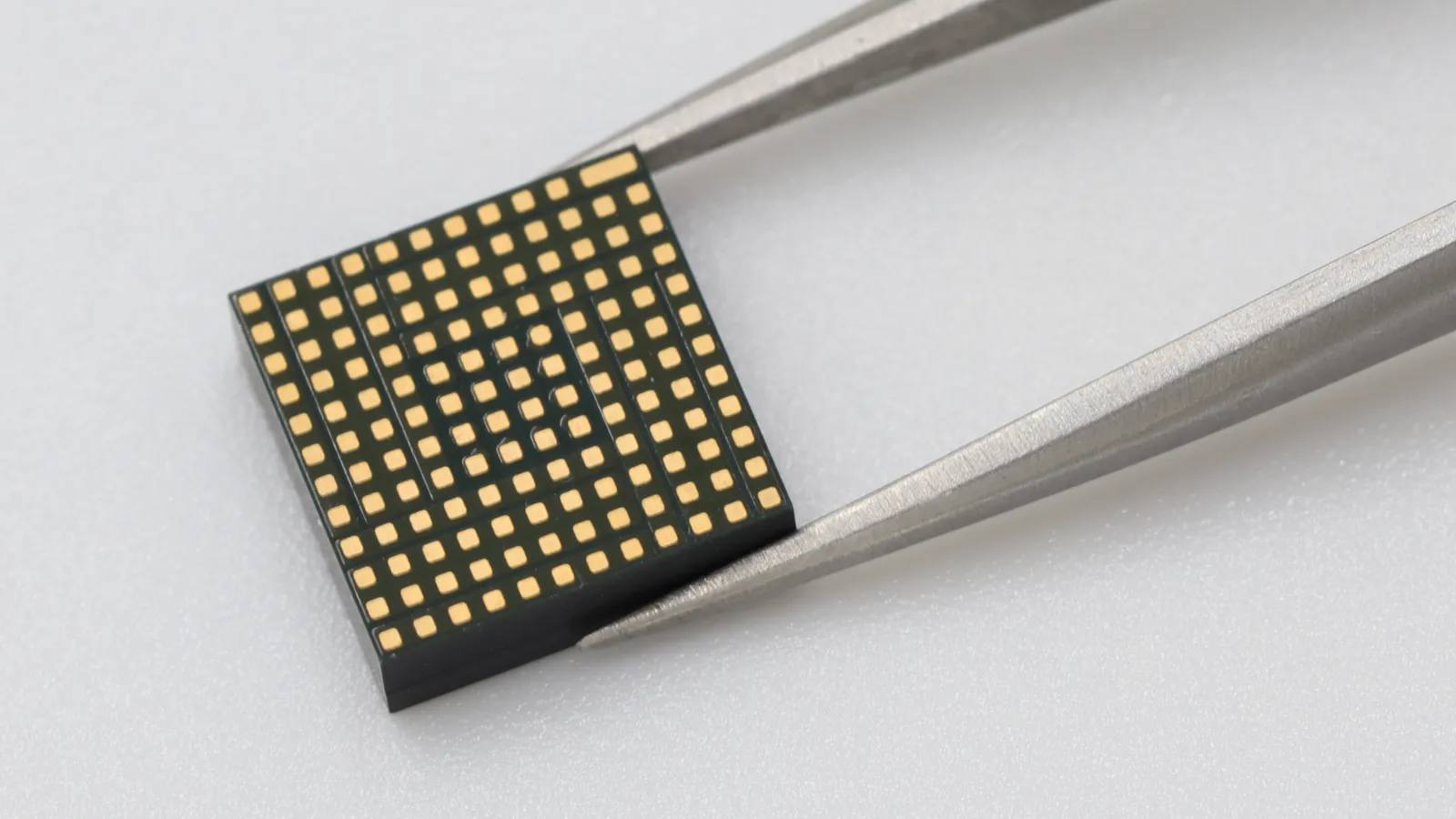
Lotus Microsystems has announced the launch of vStrata, a vertical power delivery and thermal management platform aimed at the mounting power and heat constraints inside AI data-centre racks. The company's first module, the LSC0580, has completed tape-out and engineering samples are scheduled to ship to early-access partners in Q3 2026. Lotus will demonstrate the hardware at PCIM Europe in Nuremberg from 9 to 11 June 2026.
The Copenhagen-based company, founded in 2020, argues that conventional board-level power architectures were not designed for the kiloampere-class current loads demanded by modern AI accelerators. Its response is what it calls proprietary silicon Power Interposer Technology (PIT), which places the power conversion stage directly beneath the processor die rather than at the board edge, collapsing the so-called "last inch" of power distribution that accounts for a disproportionate share of conversion losses.
What vStrata claims to deliver
According to Lotus, the LSC0580 achieves up to 96% point-of-load efficiency and is designed to reduce power conversion losses by more than 50% versus legacy approaches. The slim silicon substrate is said to reduce operating temperatures by up to 25°C in optimised configurations, and the architecture supports load transients exceeding 10 A/ns without external decoupling capacitors. A roadmap for sub-1 mm profile is cited. The company also says vStrata integrates with existing Tier-1 reference designs and standard power-management controllers to reduce adoption friction.
Chief executive Hans Hasselby-Andersen said the platform was built around the recognition that "power delivery and thermal management have become inseparable system constraints." Co-founder and CTO Yasser Nour framed the core problem as transient response: "The real bottleneck isn't just delivering power — it's how the system responds to rapid, unpredictable load changes."
Lotus says it is engaged with Tier-1 hyperscalers through an Early Access Programme but has not named any commercial customers, disclosed contract values, or published independently validated benchmark results.
Market context and competitive landscape
Vertical power delivery has been gaining traction as GPU and custom AI accelerator TDPs have risen sharply — Nvidia's Blackwell-generation parts and competing offerings from AMD and custom ASIC programmes at hyperscalers all push rack power densities well beyond what conventional voltage regulator module (VRM) architectures were optimised for. The result is a growing ecosystem of companies re-engineering the power delivery path, including established VRM suppliers, silicon interposer specialists, and a cohort of well-funded startups pursuing similar co-packaged power approaches.
The claim of "billion-dollar savings" in global data-centre energy costs is a projection the company has not supported with named customer data or an independent third-party analysis, and should be treated as indicative rather than verified.
Regulatory and standards read-across
Power efficiency is increasingly a compliance concern as well as a cost one. The EU's Energy Efficiency Directive and forthcoming data-centre-specific reporting obligations under the European Green Deal place growing pressure on operators to demonstrate PUE and IT-load efficiency improvements. Hyperscalers are simultaneously navigating US Department of Energy guidance on data-centre efficiency and, in some jurisdictions, grid-connection constraints that make every watt of conversion loss a commercially meaningful variable. A platform that credibly reduces point-of-load losses could therefore carry regulatory as well as operational value for buyers — provided that real-world figures match the engineering specifications published at launch.
Investors and prospective customers will look to Lotus for named hyperscaler partnerships, independently corroborated efficiency figures, and production-readiness data when the Q3 2026 engineering sample phase concludes.