
SPARC AI touts GPS-denied drone software via paid editorial
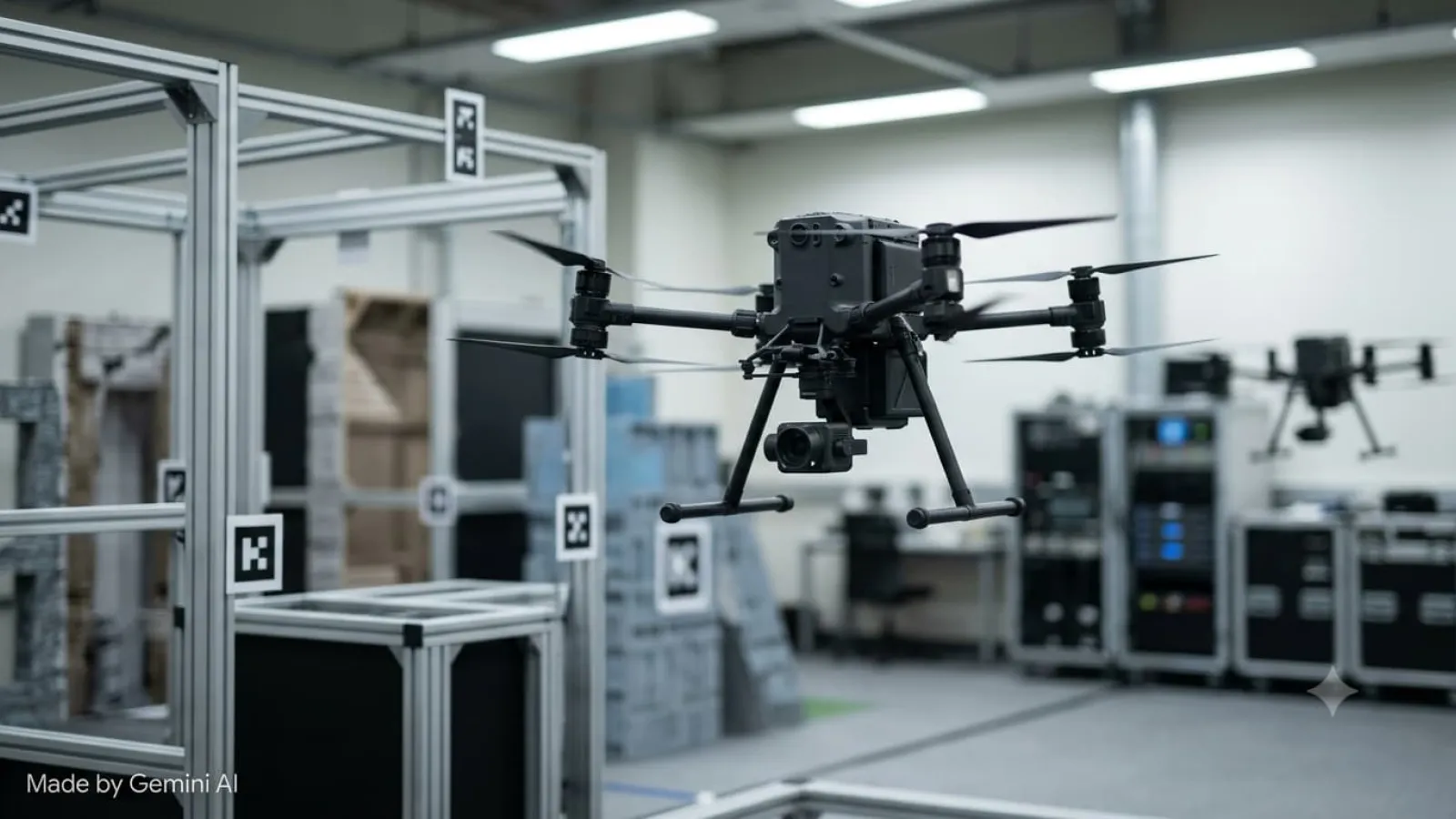
SPARC AI Inc. (OTC: SPAIF) has drawn attention to its Overwatch software platform via an editorial published by AINewsWire, a financial marketing and content-distribution brand within InvestorBrandNetwork (IBN). The company claims Overwatch enables drones to navigate and acquire targets in GPS-denied environments without any hardware modifications to the host vehicle.
The release does not constitute a conventional product announcement. It is a paid placement — IBN's standard practice is to charge issuers for editorial syndication across its 75-plus brand portfolio and 5,000-plus outlet network. The disclaimer appended to the release states that AINewsWire is "a news dissemination and financial marketing solutions provider" and explicitly notes it holds no brokerage or investment-adviser registration. Readers should weigh the content accordingly.
What SPARC AI says about Overwatch
The company describes Overwatch as a software-only layer that reprocesses data from the low-cost inertial measurement units already embedded in commercial drones, converting them into precision navigation and targeting instruments without external signals or hardware upgrades. SPARC AI frames this as a scalable alternative to hardware-dependent GPS-denial countermeasures — a meaningful cost argument if the performance claims hold, given that military-grade inertial navigation units can cost tens of thousands of dollars per unit compared with commodity drone IMUs.
No independent benchmark data, field-trial results, named defence-agency customers, or contract values were disclosed. The release does not specify which drone platforms Overwatch has been validated on, the minimum or maximum fleet size supported, or the accuracy tolerances achieved in GPS-degraded conditions.
Market context
GPS jamming and spoofing in active conflict zones — documented extensively in Ukraine, the Red Sea and the Middle East — has generated genuine commercial and government interest in GPS-independent navigation. The broader category includes inertial navigation systems, visual-odometry solutions, terrain-referenced navigation, and radio-frequency-agnostic timing, with established defence primes (Northrop Grumman, BAE Systems, Leonardo DRS) competing alongside a growing cohort of dual-use startups.
A software-only approach that retrofits existing commercial drones is commercially attractive because it sidesteps export-control complexity associated with hardware-integrated navigation components under the US International Traffic in Arms Regulations (ITAR) and EAR dual-use classification. Whether a pure-software navigation solution clears ITAR scrutiny in its own right depends on its classification and end-use — a detail the release does not address.
Investor caution
SPARC AI trades on the OTC markets under the ticker SPAIF, a structure typical of early-stage or micro-cap companies that have not met the listing standards of major exchanges. The IBN/AINewsWire placement model is a recognised marketing route for OTC-listed issuers, and the release carries the forward-looking-statement safe-harbour language required under US securities law.
The company has not disclosed revenue figures, customer contracts, or a development roadmap with firm milestones. Enterprise buyers and government procurement teams will require independent evaluation data before any serious procurement consideration. As GPS-resilience demand accelerates across NATO member states and commercial drone operators alike, SPARC AI will need to publish substantiated performance data and secure a named programme of record to differentiate itself from both defence incumbents and the broader wave of dual-use autonomy startups competing in this space.