
Swarm Aero selects Honeywell TPE331 engine for Group 5 UAS swarm
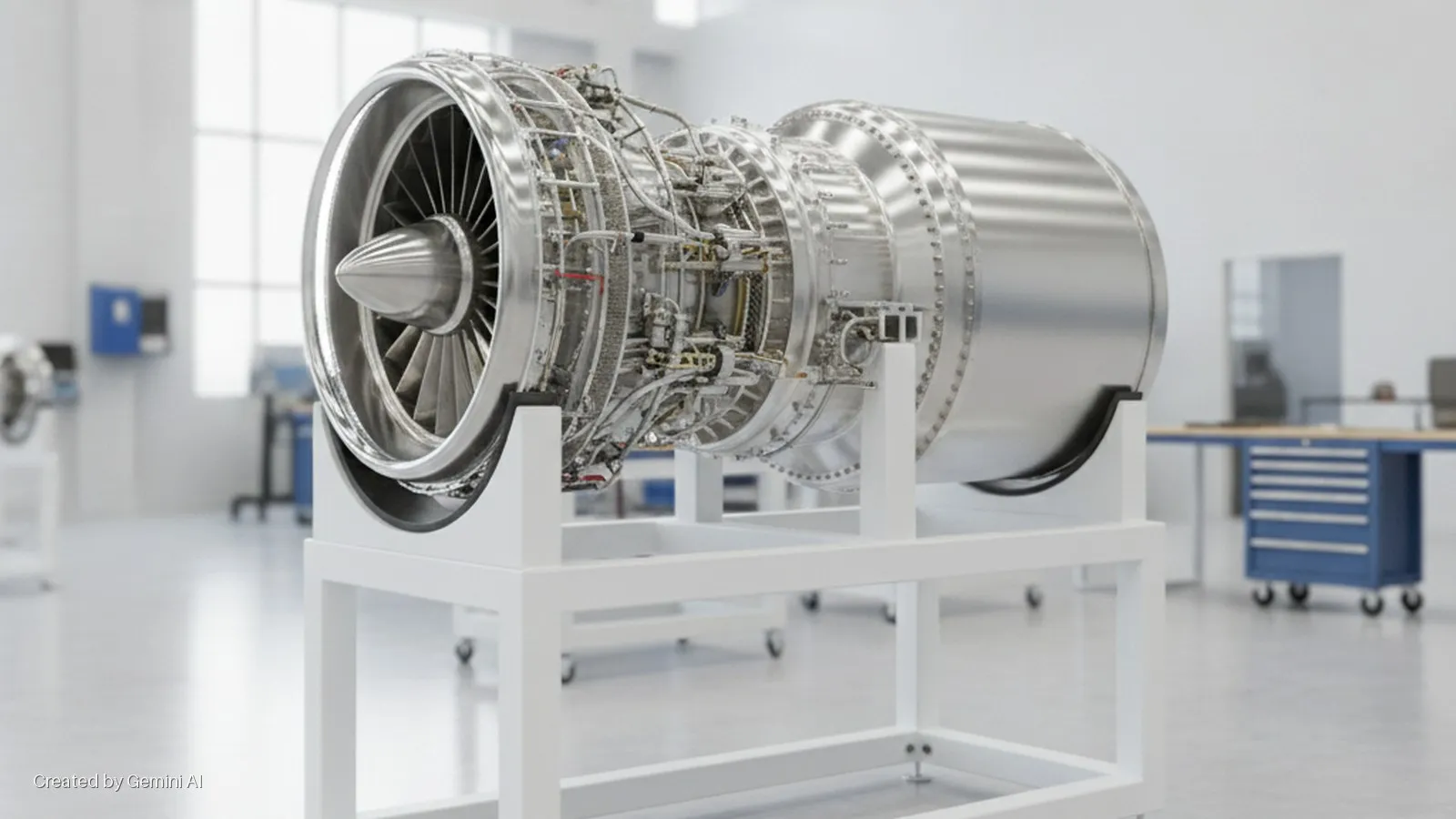
Swarm Aero, a developer of large uncrewed aerial vehicle (UAV) swarms, has named Honeywell Aerospace's TPE331 turboprop as the powerplant for its Group 5 UAS platform. The Oxnard, California-based startup confirmed that first propulsion systems have already been delivered under the initial contract, ahead of a full public aircraft reveal planned for later this year.
The TPE331 is a long-established engine originally certified in 1965 and continuously refined since. Honeywell says 13,000 units have been delivered, accumulating 122 million flight hours across military, commercial and agricultural applications. Swarm says it specifically sought a mature, cost-effective propulsion solution to anchor its aircraft design rather than a bespoke or developmental powerplant — a deliberate philosophy aimed at compressing timescales and holding down per-unit cost across production runs.
The deal and the platform
Swarm's Group 5 UAS — a classification denoting large, high-altitude aircraft weighing above 1,320 lbs — is designed to be operated at scale by small command teams via the company's own command-and-control software. Chief executive Peter Kalogiannis described the engine selection as foundational: "An aircraft is designed around its powerplant. It's a deep relationship that requires both the aircraft maker and engine maker to work extremely closely together."
Matt Milas, president of defence and space at Honeywell Aerospace, framed the partnership within a broader shift in defence procurement: "The defence landscape is shifting toward collaborative, distributed, and autonomous operations, where delivering capability at scale is as critical as innovation itself." The two companies say they are collaborating across aircraft design, development, maintenance and operations.
Swarm recently opened an 80,000-square-foot Advanced Manufacturing Centre in Fayetteville, Arkansas, and has raised $59 million in total funding, including a $35 million Series A led by Two Sigma Ventures and Silent Ventures. Existing backers include Khosla Ventures, Coatue, a16z and Founders Fund.
Market context and competitive landscape
The Group 5 UAS market has become one of the more active segments of the defence aviation industry, driven by lessons absorbed from recent high-intensity conflicts in which drone swarms and attritable autonomous platforms demonstrated asymmetric operational value. Programmes such as the US Air Force's Collaborative Combat Aircraft initiative and the broader DIU Replicator initiative reflect a Pentagon-level push to field large numbers of autonomous or semi-autonomous aircraft quickly and affordably, rather than procuring small quantities of exquisite manned platforms.
Swarm's approach — wrapping a proven commercial engine in a purpose-built, software-controlled swarm architecture — places it in competition with a number of well-funded startups and established prime contractors pursuing similar attritable-aircraft concepts. The emphasis on production scale and cost per unit, rather than peak individual-aircraft performance, aligns with procurement priorities that have become increasingly explicit in US and allied defence budgets.
For Honeywell, the deal extends the TPE331's commercial longevity into an emerging platform category. The engine's six-decade track record and wide MRO network reduce integration risk for a startup working at speed, while giving Honeywell a foothold in the fast-growing uncrewed systems supply chain. The aircraft's public unveil, expected before the end of 2026, will be the next significant milestone for both companies and is likely to attract attention from defence acquisition communities in the US and potentially allied nations.