
Orbital raises $5m pre-seed to build AI compute satellites in LEO
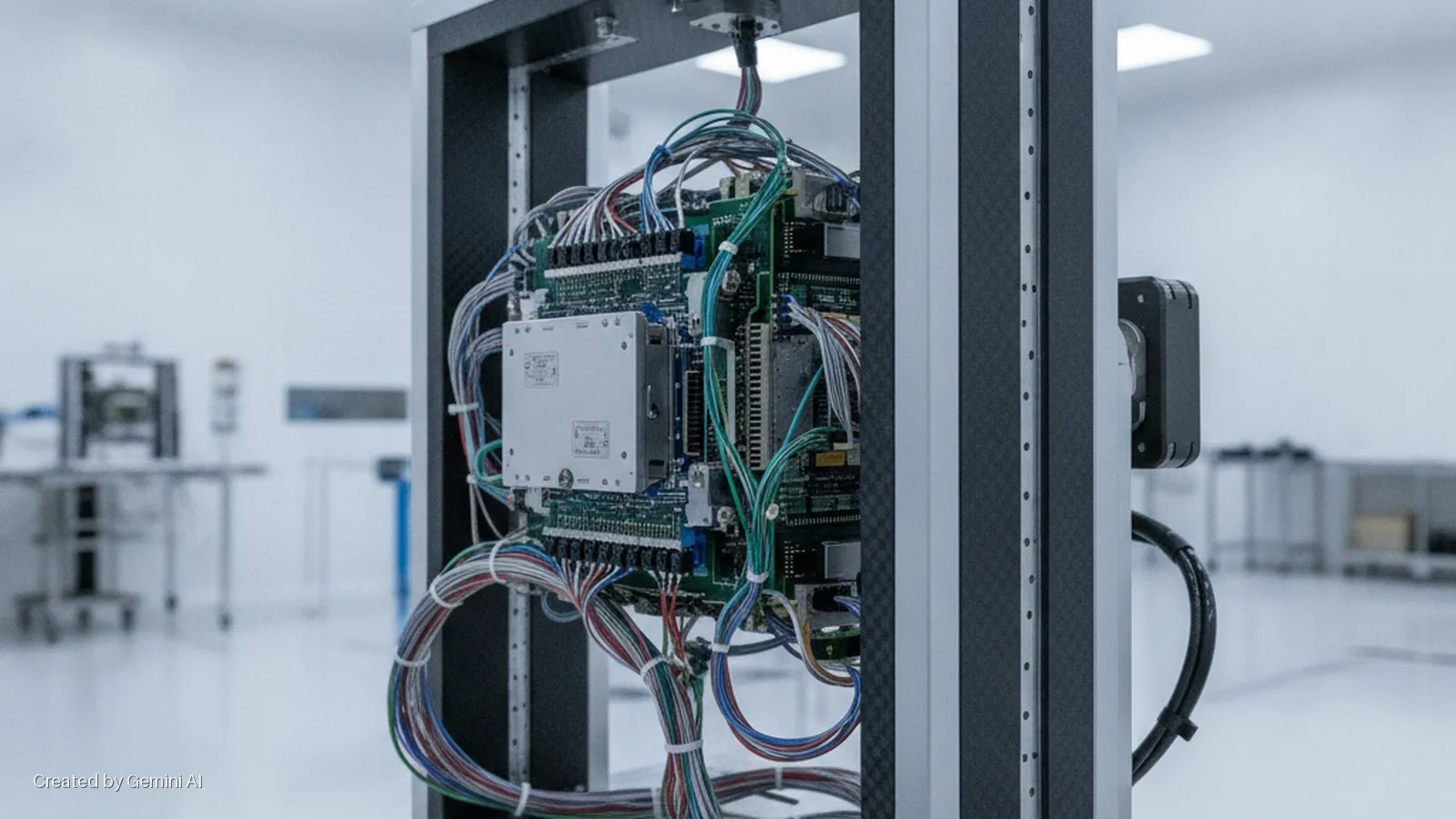
Orbital, a Los Angeles-based startup, has closed an oversubscribed $5 million pre-seed round to advance development of AI compute satellites in Low Earth Orbit. The raise was led by a16z speedrun and drew participation from fourteen additional investors including Basis Set, Human Element, Wayfinder, Antler, Anti Fund, Zero Knowledge Ventures and Feld Ventures, among others.
The funding will underwrite Orbital's first in-orbit technology demonstration — a hosted GPU payload called Pathfinder, scheduled to fly on a SpaceX Falcon 9 rideshare in 2027 — and early development of Orbital-1, described by the company as the first purpose-built satellite for AI compute workloads. The company said the pre-seed precedes a larger financing round as it moves toward scaled manufacturing and constellation deployment.
The technical proposition
Orbital's architecture centres on three engineering advantages it argues are difficult or impossible to replicate on the ground: uninterrupted solar power, radiative cooling directly into the vacuum of space, and a distributed constellation model that scales horizontally satellite by satellite rather than depending on large monolithic orbital structures.
Production satellites are being designed to deliver 100 kW of compute power each, with a long-term vision of more than 100,000 satellites collectively providing upwards of 10 GW of orbital compute capacity. The systems are being developed around NVIDIA's publicly announced Space-1 Vera Rubin-class GPU architecture. Orbital is also developing Factory-1, a satellite assembly and testing facility in the South Bay area of Los Angeles, intended to support that manufacturing ambition.
Founder and chief executive Euwyn Poon said the orbital environment resolves constraints that are increasingly binding on terrestrial infrastructure. "We're building AI data centres in orbit, where solar power is continuous and heat dissipates into the void of space," he said. "Advances in launch infrastructure are making this an imminent reality, not science fiction."
Market context and competitive landscape
The rationale for orbital compute is grounded in a genuine and worsening constraint. The International Energy Agency projects global data centre electricity consumption will exceed 945 terawatt-hours by 2030 — roughly equivalent to Japan's entire annual electricity demand — as AI inference workloads scale. In the United States, grid operators, land permitting and cooling capacity are already creating bottlenecks for conventional hyperscale data centre expansion.
Orbital enters a nascent but increasingly credible segment. A small number of startups and academic groups have explored in-orbit compute, but no commercial constellation optimised for AI inference has yet reached orbit. The broader new-space economy, shaped by sharply lower launch costs following SpaceX's Falcon 9 and Starship programmes, has made LEO infrastructure economics more tractable than at any previous point — a structural shift that underpins investor appetite for the category.
The company still faces substantial engineering risk. Pathfinder's 2027 mission will need to demonstrate GPU radiation tolerance and thermal performance at operational duty cycles before Orbital-1 can be positioned as a credible commercial offering. Data downlink bandwidth — the rate at which inference results can be returned to ground — is a further constraint the Pathfinder mission is designed to characterise.
For enterprise buyers, orbital AI inference remains speculative until at least a first commercial satellite is operational. Regulatory considerations around spectrum allocation, orbital debris and export controls on radiation-hardened GPU technology (subject to US Bureau of Industry and Security licensing) will also shape how quickly the company can scale internationally. The pre-seed close signals genuine investor conviction in the long-term thesis; the engineering milestones over the next eighteen months will determine whether that conviction is borne out.