
Skyworks unveils Si829x gate driver with 44% switching loss reduction
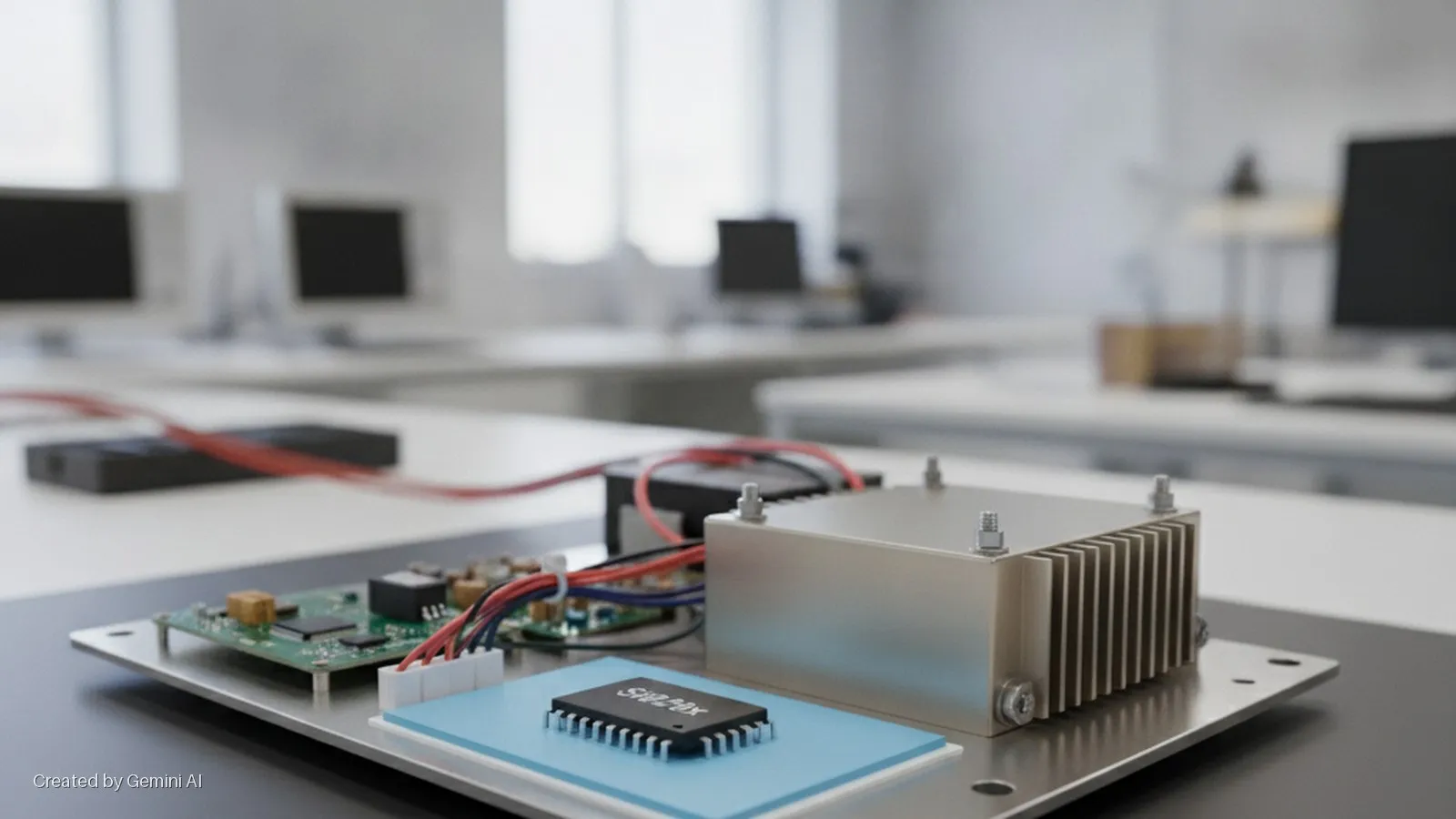
Skyworks Solutions (Nasdaq: SWKS) unveiled its Si829x isolated safety gate driver at PCIM Expo 2026 in Nuremberg, positioning the chip as a platform solution for electric vehicle traction inverters and adjacent electrified systems including eTrucking, industrial motor drives, robotaxis and eVTOL aircraft. Production is scheduled to begin at the end of July 2026.
The Si829x is built around Skyworks' second-generation ProVCD (variable current drive) architecture, which the company says replaces conventional voltage-mode gate control with cycle-by-cycle waveform shaping via a digital interface. Skyworks claims the approach delivers switching-loss reductions of up to 44% compared with voltage-mode equivalents, alongside lower EMI, a smaller PCB footprint, and 15-amp, three-phase turn-on and turn-off current control. The chip also integrates a VPOS regulator to supply bipolar gate drive voltages, eliminating the need for an external negative gate bias supply — a detail that matters to board designers trying to reduce component count.
Safety credentials and design flexibility
The Si829x has been developed to ISO 26262 functional safety standards and is rated for use in systems up to ASIL D, the highest automotive functional safety integrity level, which is a prerequisite for EV traction applications at Tier 1 suppliers and OEMs. On-chip safety mechanisms include power-up self-checks, safe-state enforcement and extensive diagnostic fault coverage.
Skyworks is positioning the device as a configurable platform rather than a fixed-function component: engineers can adjust gate drive parameters in software rather than through hardware substitution, enabling design reuse across multiple vehicle platforms. The chip supports both silicon-carbide FETs (SiC) and IGBTs, giving it vendor-agnostic compatibility across the two dominant power-semiconductor technologies currently deployed in EV drivetrains.
"As EV platforms scale globally, automakers face increasing pressure to improve efficiency and integrate advanced features while also lowering system cost," said Mario Battello, vice president of product line management at Skyworks. "The Si829x introduces a new class of gate driver technology that can enable all of these."
Market context and competitive landscape
The power-semiconductor and gate-driver market for EVs is intensely competitive. Texas Instruments, Infineon Technologies, onsemi and STMicroelectronics each offer isolated gate-driver families with ASIL-rated safety documentation, and Infineon and onsemi have both made significant moves in SiC module integration. Skyworks, better known in the wireless RF and connectivity segment, is leveraging its isolation and mixed-signal heritage to push into automotive power electronics — a category that commands higher average selling prices and longer design-cycle commitments than smartphone components.
The timing is commercially significant. SiC-based inverters are increasingly standard in battery-electric vehicles above the entry segment, and automakers are under cost pressure to improve drivetrain efficiency without adding system complexity. A gate driver that cuts switching losses while removing external components addresses both vectors simultaneously. However, the 44% switching-loss figure is a company-stated claim and has not been independently verified; buyers will want to replicate the result in their own test environments before committing to a design.
Regulatory and standards read-across
ISO 26262 ASIL D compliance is a commercial necessity for any semiconductor entering a safety-critical automotive application, and Skyworks' certification claim will need to be backed by a full functional safety case reviewed by Tier 1 customers. Separately, the expansion of the Si829x's addressable market into eVTOL platforms brings European Aviation Safety Agency (EASA) and FAA DO-254 design assurance requirements into scope — a considerably more demanding certification path than automotive. Whether Skyworks intends to pursue avionics qualification was not addressed in the release.
With production set for late July 2026, design-in activity at automotive Tier 1s and inverter module makers is likely already under way. Skyworks is demonstrating the chip at PCIM in Hall 4A, Stand 328, with real-time inverter optimisation scenarios across driving and charging use cases.