
AZIO AI expands Power Champion deal to 512 NVIDIA HGX B300 systems
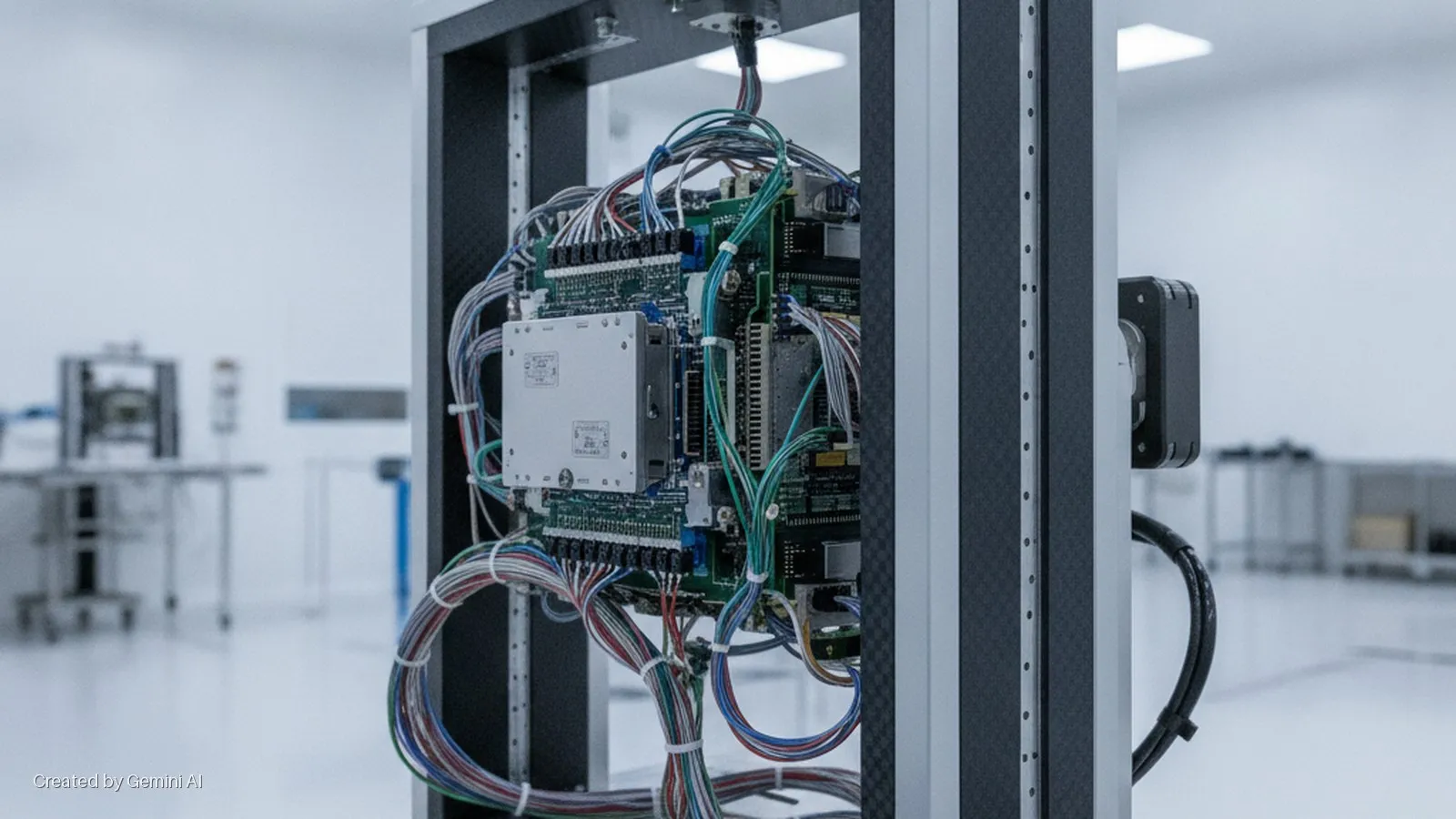
AZIO AI Holdings (Nasdaq: AZIO) has expanded its agreement with Power Champion Investment Limited to cover up to 384 additional NVIDIA HGX B300 GPU systems, building on the 128 systems announced earlier in August. The total relationship now covers up to 512 systems, which the company estimates represents a cumulative sales pipeline value of approximately $307 million, based on a midpoint market price of $600,000 per unit. The deal marks a rapid escalation in a commercial relationship that only began with a hosting agreement in July 2026.
The company is careful to frame the figures as pipeline estimates rather than firm orders. No purchase orders have been issued under the expanded agreement, and no revenue has been recognised. Per-system pricing currently ranges from approximately $472,000 to $720,000 depending on configuration, placing the total pipeline value anywhere between roughly $242 million and $369 million. Chief executive Chris Young acknowledged the uncertainties plainly: "This is a pipeline, not a purchase order. Delivery at this volume depends on supplier allocation and is subject to U.S. federal export requirements."
Atlas One and the infrastructure gap
The backdrop to the deal is Atlas One, AZIO AI's compute campus in South Texas, which has been engineered for up to 500 MW of planned behind-the-meter power capacity across more than 548 acres. The company and Power Champion are in discussions about hosting systems at the site, though no hosting agreement has been signed. Crucially, Atlas One currently has only approximately 11 MW of secured capacity, of which around 6 MW is activated. The remaining potential capacity requires additional generation, equipment, permitting, financing and customer commitments that do not yet exist.
The gap between the campus's stated engineering ambition and its operational reality is material. AZIO AI has not contracted any AI hosting capacity at Atlas One as of the release date, and the 97.8% uptime figure cited in recent announcements relates to a separate compute workload during a historical period, not to AI or high-performance computing infrastructure. Reaching 500 MW would represent one of the largest behind-the-meter power deployments in the US, a category that remains highly capital-intensive and subject to lengthy permitting timelines.
Market context and regulatory risk
The broader market for dedicated AI compute infrastructure is intensely competitive. Hyperscalers including Microsoft, Google and Amazon are committing tens of billions of dollars to new data-centre capacity, while specialist GPU cloud providers such as CoreWeave and Lambda Labs compete for enterprise workloads that do not fit neatly into public-cloud economics. AZIO AI is positioning itself at the intersection of GPU resale and power-backed hosting, a model that depends on securing both hardware allocation from NVIDIA's supply chain and reliable, low-cost power generation.
NVIDIA HGX B300 systems are subject to US federal export controls administered by the Bureau of Industry and Security. Any sale to a non-US entity or deployment outside approved jurisdictions requires export licences, and the regulatory environment for advanced AI chips has tightened considerably since 2023. Young flagged this directly, noting that delivery at the contemplated volume is subject to US federal export requirements and that the company will report progress on those conditions as they are resolved.
For investors, the distinction between pipeline value and contracted backlog is significant. AZIO AI itself notes the figures are not revenue forecasts, do not reflect margins, and assume full conversion of contemplated volume. Readers should not aggregate the $307 million figure with previously disclosed agreements, which measure different stages of commercial development. The next concrete milestones to watch are the issuance of purchase orders, confirmation of a hosting agreement at Atlas One, and evidence that NVIDIA allocation has been secured at the required scale.