
Cango's EcoHash begins commercial GPU compute at Georgia facility
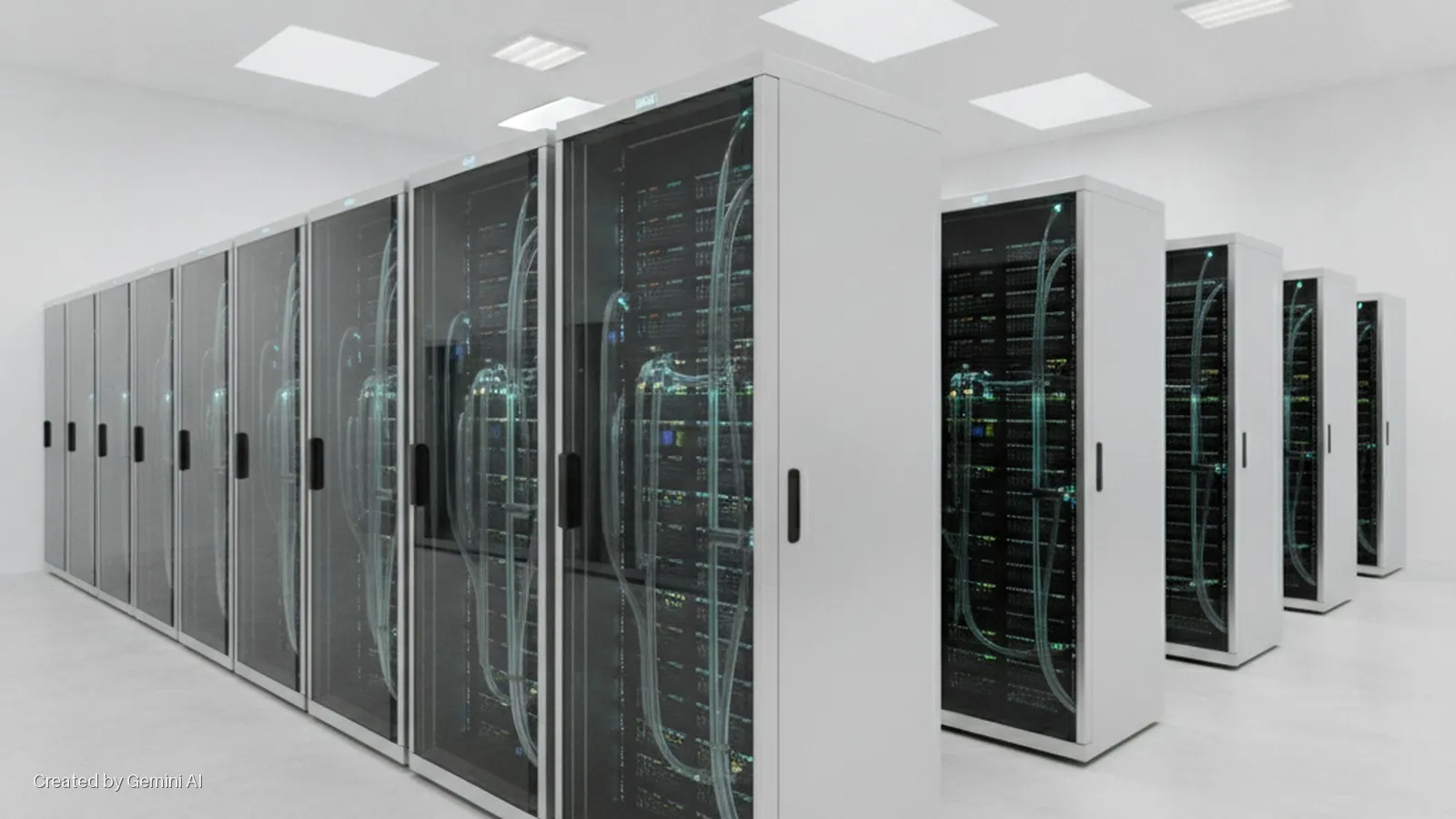
Cango Inc. (NYSE: CANG) has announced that its high-performance computing subsidiary, EcoHash Technology LLC, has completed infrastructure modifications at the company's owned 50-megawatt facility in Georgia and has begun providing commercial GPU compute services using its first batch of GPU servers. The milestone marks EcoHash's initial revenue-generating activity since the subsidiary was founded in 2025.
The dedicated AI compute section within the Georgia site supports up to three megawatts of capacity, with scope described as expandable. EcoHash has deployed containerised, high-density compute modules that consolidate power delivery, precision cooling, networking and operations into standardised units. Because the modules were co-located with Cango's existing Bitcoin mining infrastructure, the company says it was able to reduce new construction requirements and accelerate the timeline from delivery to power-on.
The commercial footprint
EcoHash has begun serving an initial customer base it describes as GPU cloud platforms and AI-native cloud infrastructure providers, with additional discussions underway involving decentralised compute networks and advanced AI research laboratories. The company did not disclose the identity of any customer, the volume of GPU capacity currently under contract, or the pricing structure for its compute services.
Simon Tang, chief financial officer of Cango Inc., said the Georgia rollout demonstrates "the commercial application of this plug-and-play container solution" and is intended to serve as "a strategic proof-of-concept hub" for replicating the model at future sites. Cango has not specified which sites are under consideration or on what timeline.
Market context
EcoHash enters a market that is heavily contested at multiple tiers. At the top end, the hyperscalers, AWS, Microsoft Azure and Google Cloud, dominate enterprise AI compute procurement. The mid-market is served by a growing cohort of GPU cloud specialists including CoreWeave, Lambda Labs and Crusoe Energy, several of which have raised substantial capital to build purpose-built AI data centres. Crusoe, in particular, has pursued a similar thesis of co-locating compute with stranded or low-cost energy assets, a model that mirrors Cango's approach of repurposing existing mining infrastructure.
The modular, containerised approach EcoHash is employing is gaining traction across the industry as a way to compress deployment timelines and manage power density, particularly as purpose-built AI facilities face grid-connection delays in many markets. Whether a 3MW initial deployment is large enough to win contracts from well-capitalised GPU cloud platforms, which typically procure at much larger scale, remains an open question that the company's disclosure does not address.
Regulatory and infrastructure read-across
Cango's pivot from Bitcoin mining to AI compute reflects a broader trend among mining operators seeking to diversify revenue as Bitcoin halving events compress mining margins. The company notes operations spanning North America, the Middle East, South America and East Africa, suggesting ambitions to replicate the Georgia model across multiple energy jurisdictions. Each geography would carry its own grid, permitting and data-residency regulatory considerations.
On the infrastructure side, sustained high-density GPU loads place significant demands on cooling systems; the release references a precision cooling setup but does not specify whether liquid cooling is employed. As rack densities in AI data centres continue to rise, liquid cooling is becoming a baseline expectation among large compute buyers, and EcoHash's ability to meet those specifications at scale will be a key factor in winning larger contracts.
The company's next meaningful disclosure milestones will likely include named customers, total GPU count deployed, utilisation rates and progress on the orchestration layer it says is under development.