
Eco Wave Power taps NVIDIA AI and digital twins for wave energy
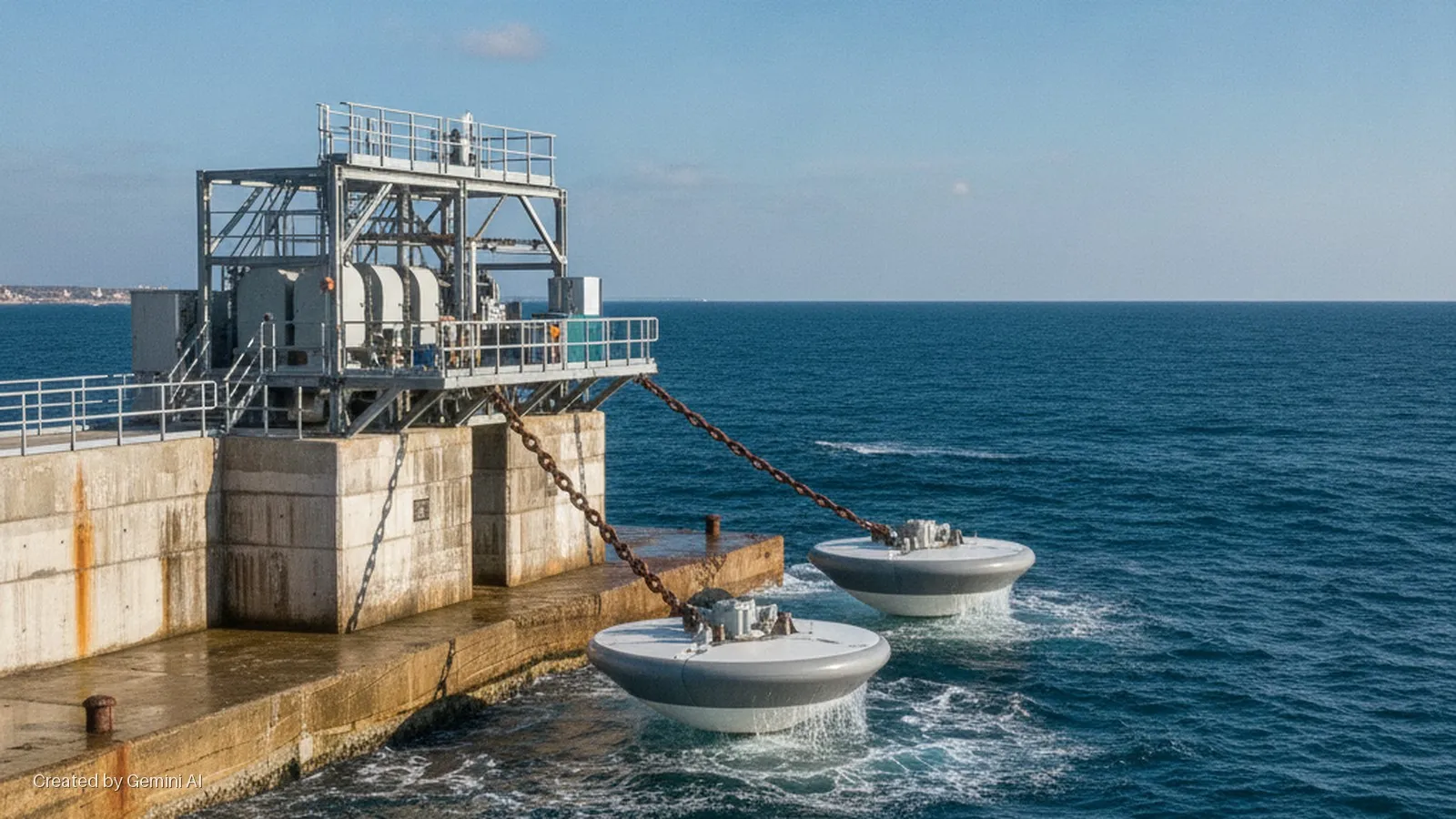
Eco Wave Power, a member of NVIDIA's Inception sustainable futures programme, is deploying NVIDIA AI infrastructure and Omniverse-based digital twins to optimise ocean wave energy systems and, in a more ambitious step, to power data centres directly from marine renewable sources. The company is running a pilot at the Port of Los Angeles in which AI software acts as the sole control layer for a data centre, scheduling compute workloads around predicted wave intensity rather than drawing from the grid.
The Israeli-founded startup attaches floating devices to existing coastal structures such as breakwaters and sea walls, keeping electronics and hydraulic conversion equipment on land. That architecture is designed to sidestep a failure mode that has hampered earlier wave-energy ventures, where hardware located inside floaters was vulnerable to storm damage. Seawater is roughly 800 times denser than air, meaning wave devices can generate comparable energy output to wind turbines at significantly smaller physical scale.
AI as the energy-intelligence layer
Digital twins of wave patterns and floating infrastructure, built using NVIDIA Omniverse libraries, allow engineers to simulate deployment configurations and structural behaviour before any physical installation begins. At the operational layer, NVIDIA accelerated computing enables predictive maintenance, anomaly detection and environmental forecasting, so that energy generation can be continuously tuned to ocean conditions.
The workload-scheduling capability is the most directly relevant feature for data centre operators. The AI layer monitors weather-derived wave forecasts and aligns compute-intensive tasks with periods of stronger generation. Chief executive Inna Braverman described the company's position plainly: "We exist, we work, we're grid connected and we have so much of this resource. The energy is needed now, so I think we're in the right place at the right time and we're innovative, but we're not futuristic, and that's what sets us apart."
Active projects include installations at Jaffa Port in Israel, developed with EDF Power Solutions and the Israeli Energy Ministry, and at the Port of Los Angeles in collaboration with AltaSea and Shell. Further projects are in development at the Port of Leixões in Portugal, Suao Port in Taiwan, and Mumbai in partnership with Bharat Petroleum.
Market context and competitive landscape
The wave energy sector has historically struggled to reach commercial scale, held back by the corrosive marine environment, high capital costs and the intermittency challenges common to all renewables. Eco Wave Power's land-based electronics strategy addresses the durability problem but has not yet been tested at utility scale. The US Energy Information Administration has estimated that wave energy could theoretically supply more than 60 per cent of annual US electricity consumption, though the gap between the resource estimate and deployed capacity remains vast.
The broader context is one of acute power constraint for AI infrastructure. Hyperscalers and co-location operators are increasingly siting new data centre capacity near water for cooling and, in some cases, exploring co-location with offshore wind and tidal projects. Eco Wave Power's coastal-deployment model positions it directly in that intersection. The company competes for attention and capital with established offshore wind and tidal-stream developers, as well as a small number of wave-energy peers pursuing different conversion technologies.
From a regulatory standpoint, any marine energy project touching EU coastal waters will be subject to the revised Renewable Energy Directive (RED III) permitting frameworks, while US projects at federal ports such as Los Angeles sit within FERC and Army Corps of Engineers jurisdiction. Accelerating those approvals is a material constraint on deployment speed, regardless of how capable the underlying AI and simulation tooling becomes.