
Lettie adds Loop CRM to its property maintenance integrations
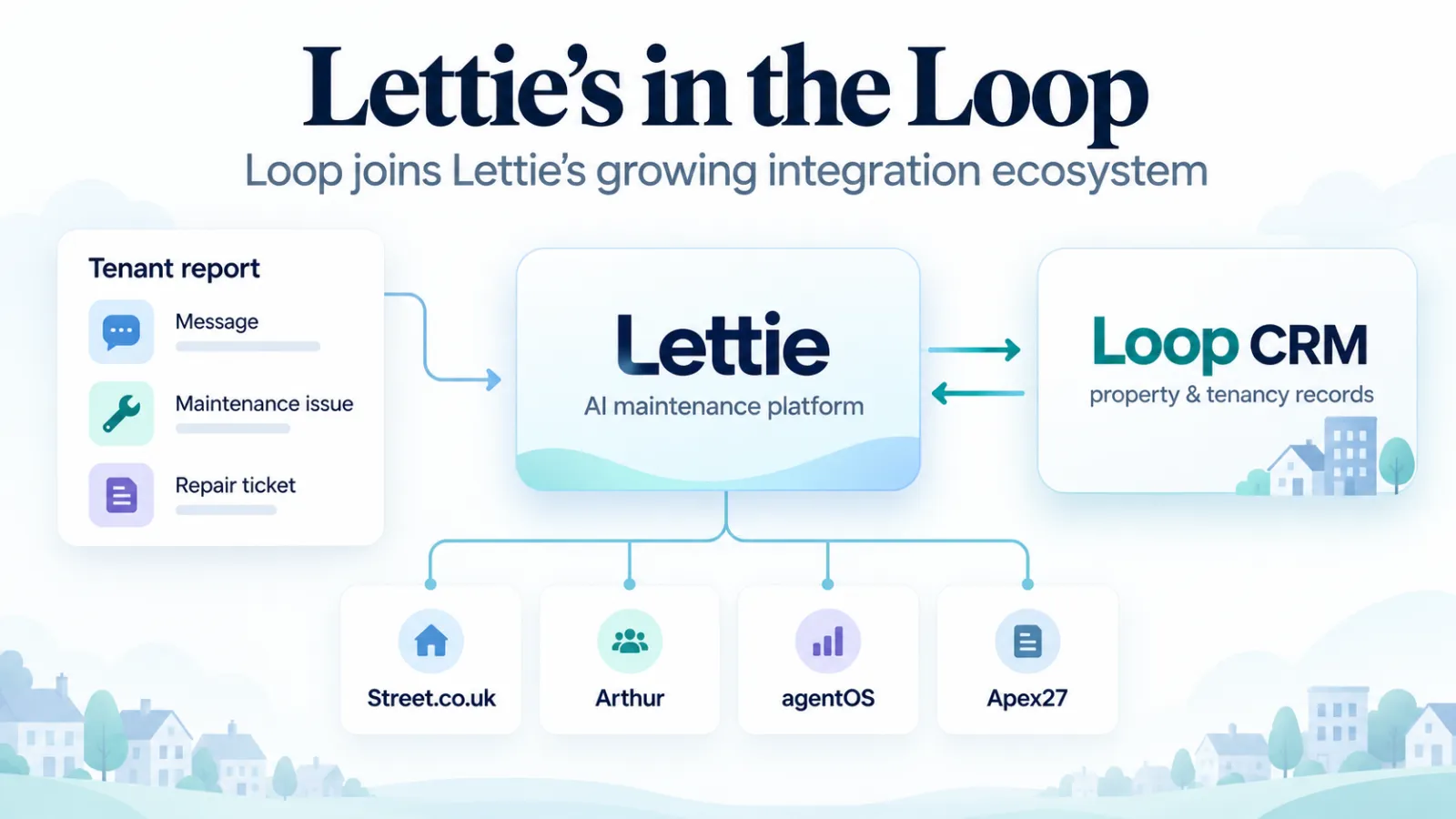
Lettie, a UK-based AI property maintenance platform, has launched a two-way integration with Loop, an all-in-one CRM aimed at independent estate and letting agencies. The connection allows Loop's property, tenancy and contact records to synchronise with Lettie, with completed repair tickets automatically returned to Loop once resolved.
The move extends Lettie's integration roster to five named platforms, joining Street, Arthur, agentOS and Apex27. In each case the integration is designed to operate as a two-way data flow: portfolio information moves into Lettie at the point of tenant contact, and the resulting maintenance record travels back to the agency's system of record once the job is complete.
How the integration works in practice
For letting agents, the practical benefit is continuity of information. When a tenant reports a maintenance issue, the interaction begins in Lettie's front-end platform. The relevant repair context, including any conversation history, is then passed back into Loop rather than requiring a staff member to manually recreate it.
The platform also covers out-of-hours scenarios. If a tenant submits a report when the agency is closed, Lettie can continue handling the conversation and, where appropriate, surface agency-approved emergency contact numbers. The aim is to reduce the volume of routine out-of-hours calls that require direct staff intervention.
Connor Hawkins, co-founder and Chief Solutions Officer at Lettie, said: "Agents shouldn't have to choose between introducing specialist technology and keeping the systems their teams already know and rely on every day."
Market context
The UK lettings software market has consolidated around a small number of competing CRM platforms serving independent and corporate agencies. Loop positions itself as an all-in-one solution covering sales, lettings, property management and client accounting; it competes in roughly the same space as Street and agentOS, both of which Lettie already supports.
Lettie's deliberate strategy of integrating with competing CRMs rather than attempting to replace them reflects a wider pattern in proptech, where point-solution vendors are increasingly valued for their connectivity rather than their breadth. Integration ecosystems have become a key differentiator for specialist platforms: the more CRMs a maintenance tool supports, the lower the switching friction for prospective agency customers.
That said, the release provides no user numbers, no volume of maintenance tickets processed across the existing integrations, and no commercial terms for the Loop connection. Prospective buyers will want to understand the depth of the synchronisation, particularly around edge cases such as contractor workflows, invoice attachment and audit trails, none of which are addressed in the announcement.
Regulatory and compliance read-across
Maintenance data held within property management platforms falls under UK GDPR by virtue of containing personal data relating to tenants and landlords. Two-way integrations between systems raise questions about data-processor agreements and where responsibility for data accuracy sits when records are modified in one system and propagated to another. Lettie has not published detail on how its integration layer handles data-controller obligations or how conflicts between records in the two systems are resolved.
The property sector is also subject to increasing regulatory pressure around habitability standards and repair response times, including duties introduced under the Renters' Rights Act. Platforms that can timestamp and audit the full lifecycle of a maintenance report, from tenant submission through to contractor completion, are likely to become more valuable to agencies seeking to demonstrate compliance.