
Kratos Defence clears J85 engine flight tests across three launch types
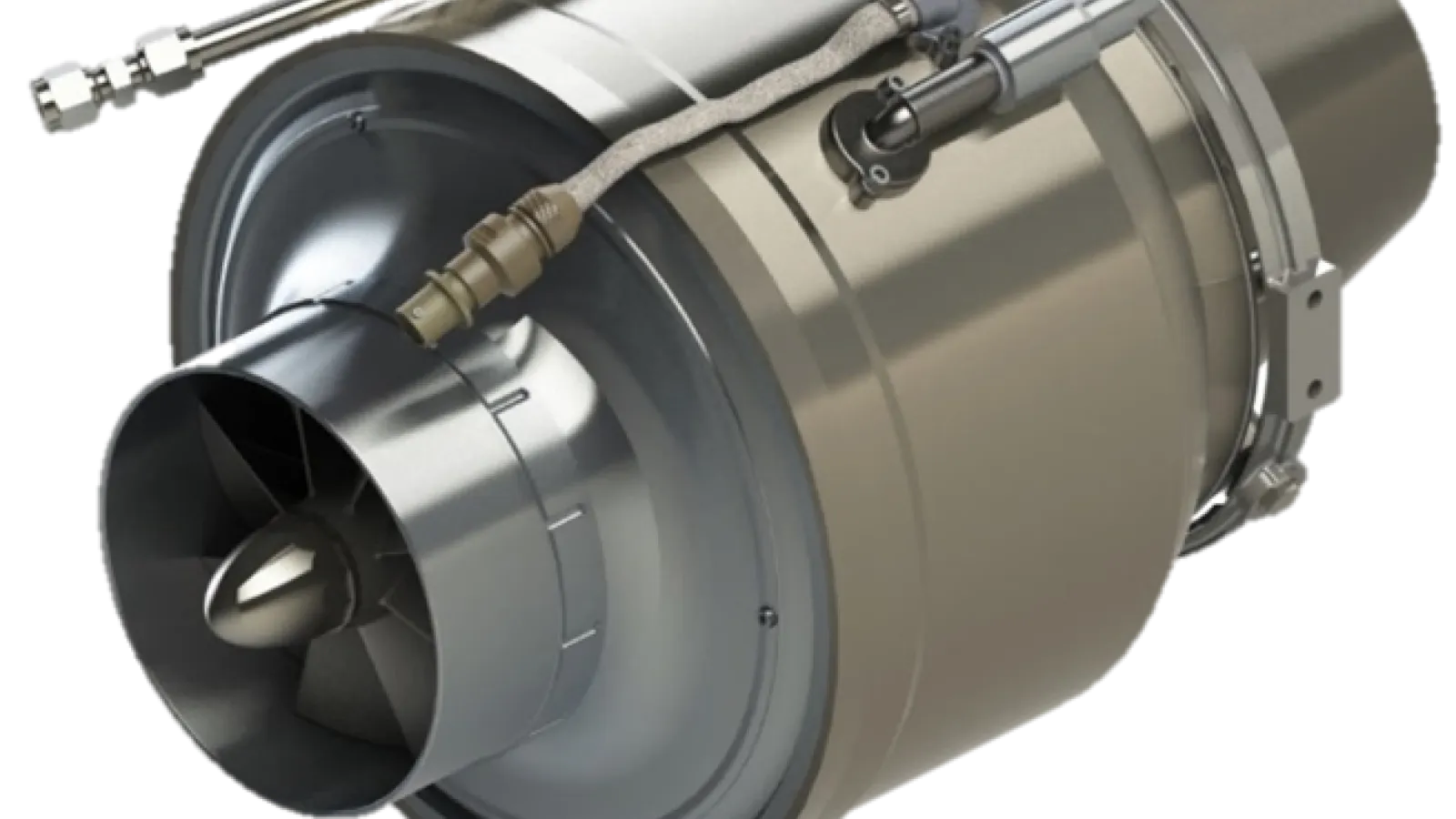
Kratos Defence and Security Solutions has completed a series of flight tests for its TDI-J85 turbojet engine across three distinct deployment configurations: lugged launch from standard rail or zero-length launchers, palletised launch from cargo-aircraft-deployed systems, and surface-to-surface rapid-start operations suited to containerised munition platforms. The NASDAQ-listed company said the tests, conducted ahead of publication on 12 October 2026, validate the engine's performance across what it describes as the most operationally relevant low-cost propulsion scenarios.
The J85, part of Kratos' broader Spartan engine family, is designed to power low-cost cruise missiles, decoys, and unmanned aerial systems (UAS). The company says the engine's high-altitude start reliability and fuel efficiency translate directly into greater mission range and probability of mission completion. Kratos has not disclosed specific thrust figures, fuel-consumption benchmarks, or test altitude envelopes in this release.
Production scale-up
The flight-test announcement arrives alongside a significant manufacturing commitment. Kratos said it has placed long-lead component orders to produce more than 3,000 Spartan engines during 2027 and is targeting a production ceiling of 10,000-plus engines per year by 2029. The company's Spartan engine manufacturing facility is described as fully operational.
Joseph Kovasity, Senior Vice President of Kratos TDI, said the company is "transforming how the industry approaches affordable propulsion" by pairing operational flight-test success with high-rate manufacturing capacity. President and Chief Executive Eric DeMarco framed the scale-up as a deliberate execution of Kratos' strategy of internally funded development, arguing the company is positioned to deliver "production-ready products now" in support of what he described as the rebuild and reindustrialisation of US national-security capabilities.
Market context
The market for low-cost, mass-producible propulsion is attracting renewed urgency from Western defence procurement agencies. Attritable drone and cruise-missile programmes require propulsion suppliers capable of sustaining high-volume, repeatable manufacturing at price points that allow expendable platforms to be used at scale. Kratos occupies a relatively specialised niche in this space; traditional prime contractors such as Raytheon, General Dynamics and Boeing have historically owned the larger propulsion sub-system tier, but smaller, purpose-built vendors are gaining traction as defence ministries seek to diversify supply chains.
The US Department of Defence has signalled through several recent budget cycles that affordable mass, rather than exquisite performance, is a strategic priority for contested-environment scenarios. Kratos' stated path to 10,000 engines per year by 2029 would, if achieved, represent a meaningful share of the anticipated domestic UAS and cruise-missile propulsion addressable market, though the company has not disclosed forward revenue projections linked to those volume targets.
Regulatory and export considerations
Turbojet engines for cruise missiles and UAS are controlled items under the US International Traffic in Arms Regulations (ITAR) and the Export Administration Regulations (EAR), restricting which allied nations Kratos may supply without State Department or Commerce Department authorisation. As Washington seeks to accelerate munitions supply to partners under various Foreign Military Sales (FMS) and direct commercial channels, export-licensing timelines could constrain how quickly the Spartan family reaches non-US buyers, even if domestic production capacity is in place.
Investors and defence primes will be tracking whether named programme wins emerge in coming quarters to underpin the 2027 and 2029 volume commitments. The absence of named customers or signed contracts in this release means the production ramp remains a forward-looking ambition rather than a contracted orderbook.