
ASUS ProArt P16 and P14 laptops launch with NVIDIA RTX Spark superchip
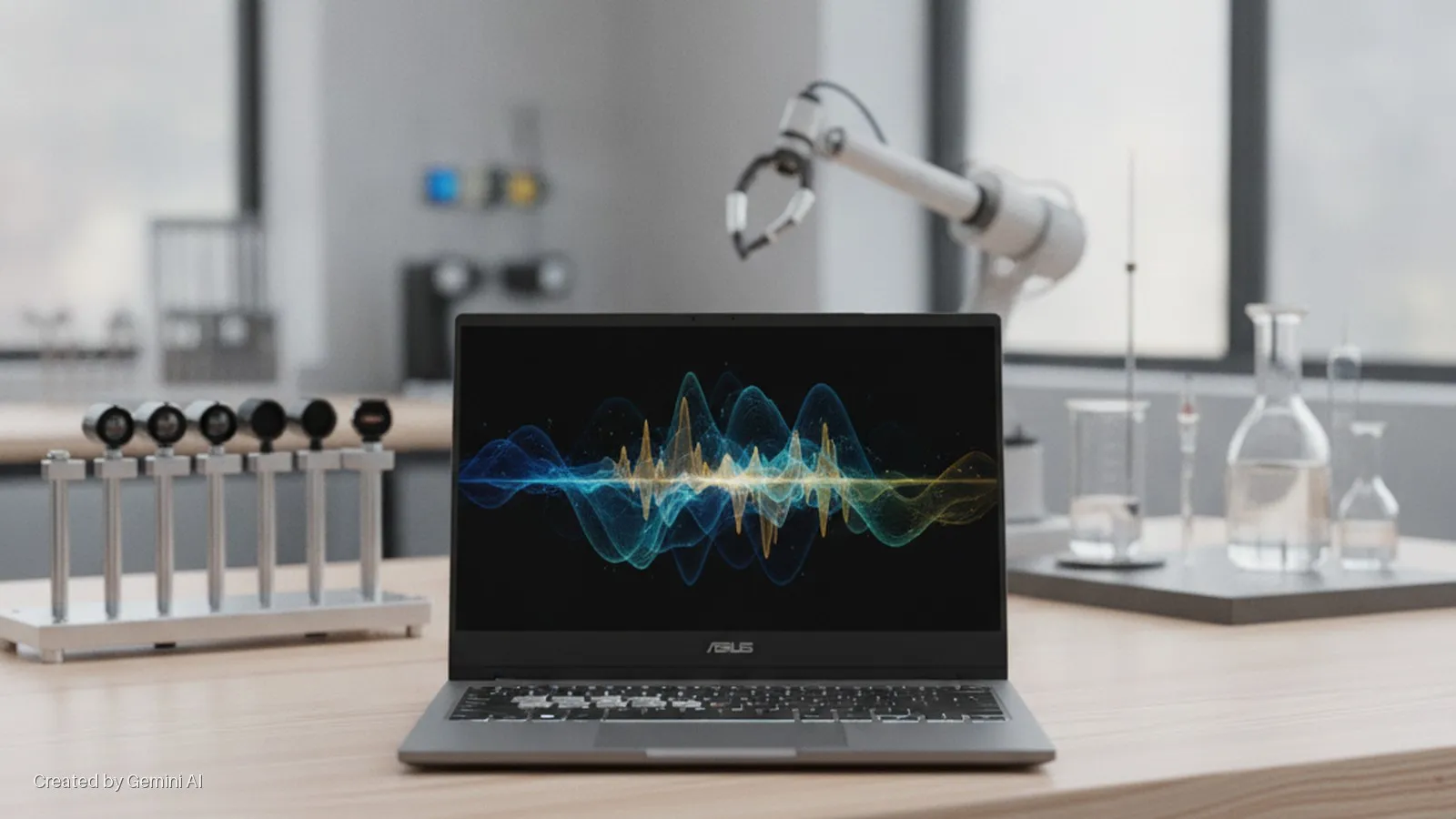
ASUS has opened global pre-orders for its ProArt P16 and ProArt P14 laptops, both built around the NVIDIA RTX Spark superchip. Starting at $2,599.99 for the P14 and $2,799.99 for the P16, the machines are positioned as the company's answer to growing demand for high-memory local AI compute among creative professionals and AI developers.
The RTX Spark platform integrates an NVIDIA Blackwell RTX GPU with a 6,144-core configuration, a 20-core NVIDIA Grace CPU, and fifth-generation Tensor Cores with FP4 support, all linked by NVLink-C2C interconnect. The result is a unified memory pool of up to 128GB, which ASUS and NVIDIA say enables workloads that conventional GPU laptops cannot accommodate: large local language models, vision-language inference, LoRA fine-tuning, and multi-step agentic pipelines. Rated AI performance reaches up to 1 petaflop.
The ecosystem play
Beyond the hardware, ASUS is shipping a software layer it calls the ProArt creative ecosystem. The P14 and P16 come preloaded with MuseTree, an image and video generation application integrating the FLUX and WAN models, and StoryCube, an AI-powered media organisation tool. The company has also partnered with ComfyUI, the open-source visual workflow platform, and Nous Research, whose Hermes autonomous agent can drive ComfyUI workflows via plain-language instructions and connect to local files.
Dillon Rolnick, chief executive of Nous Research, said his company built Hermes "to provide intelligence you can truly own, rather than simply rent," and that the memory headroom of the ProArt platform was essential to running the models that underpin the agent's capabilities. Yoland Yan, chief executive and co-founder of Comfy, said creators wanted "full control" over large image and video workflows and that ComfyUI's agent-ready design enabled that on local hardware.
ASUS also bundles Adobe Creative Cloud and, for eligible buyers, three months of Google AI Pro with 5TB of cloud storage via the MyASUS app. The company frames the package as a local-first, cloud-optional architecture, arguing that heavy users of cloud AI APIs could recover the cost of the hardware within five to ten months based on illustrative token-cost comparisons, though the footnoted assumptions rely on promotional API pricing and estimated utilisation rates.
Market context
The launch arrives at an inflection point for on-device AI. The broader AI PC category, already contested by Intel's Core Ultra line and Qualcomm's Snapdragon X Elite, has so far focused on NPU-assisted tasks at relatively modest memory scales. NVIDIA's RTX Spark changes the frame by bringing datacenter-class unified memory to a thin-and-light form factor, a move that directly challenges the assumption that frontier-scale local inference requires a desktop workstation or cloud access.
Competitive pressure in creative-professional hardware is high. Apple's M-series MacBook Pro line already offers up to 128GB of unified memory and has a mature local model ecosystem; the ProArt range must compete on CUDA software compatibility and the depth of NVIDIA's developer toolchain rather than on memory capacity alone. Microsoft's Copilot Plus initiative, which mandates a minimum NPU threshold for AI-branded features, sits below the performance ceiling ASUS is targeting, suggesting the ProArt line is pitching at a narrower, higher-spending segment.
A compact desktop variant, the ProArt GR1X Mini PC, is also due before year-end. It adds 10GbE networking, dual M.2 storage, and multi-display support for studio and small-team deployment, rounding out what ASUS is presenting as a vertically integrated local-AI product family.
The P14 and P16 are available now via the ASUS Store and Best Buy in the United States. The ProArt GR1X will follow through select premium retailers later in 2026.