
Quantum Cyber files patent for dual-propellant UAV rocket motor
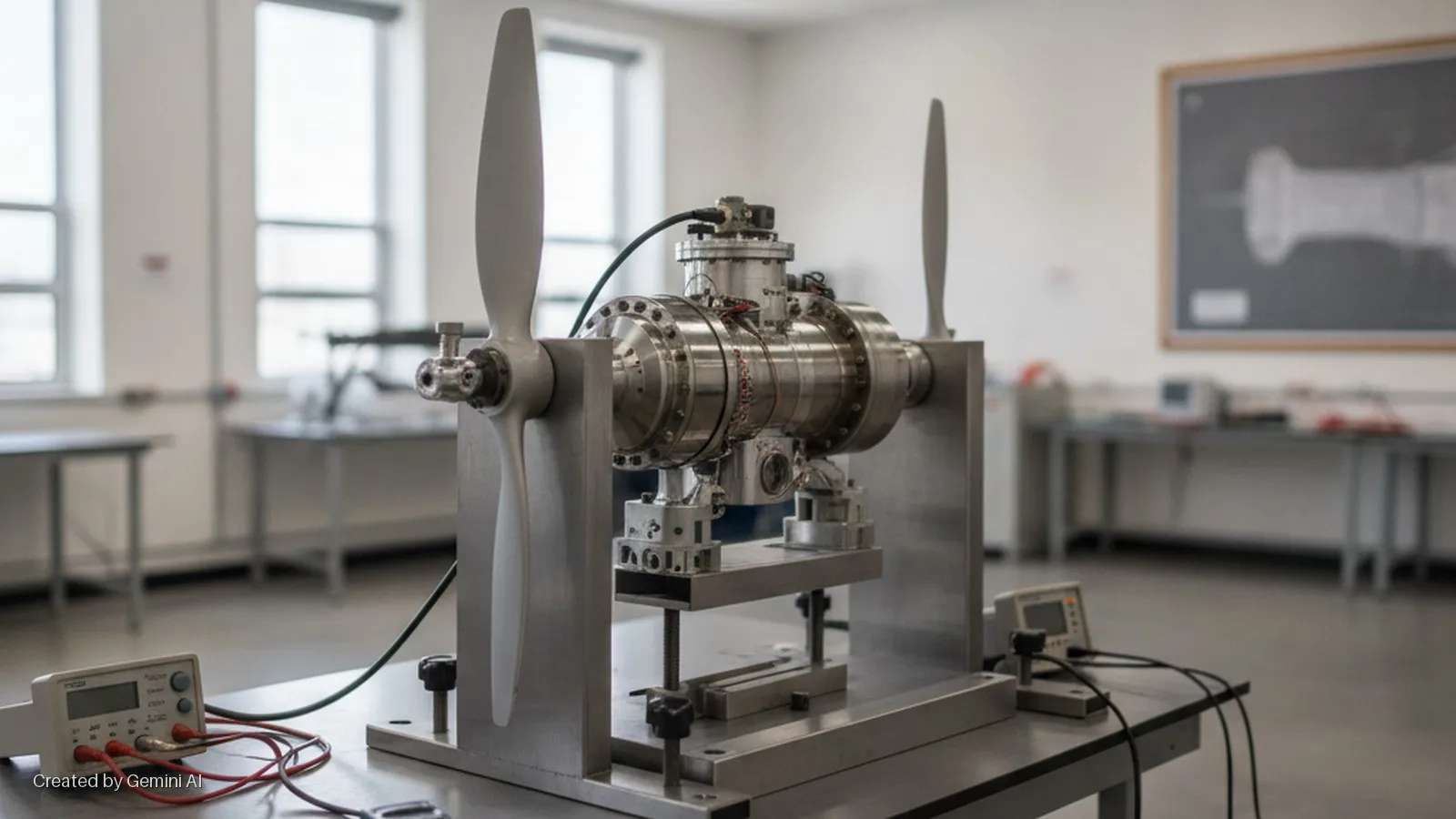
Quantum Cyber N.V. (Nasdaq: QUCY) has filed a provisional patent application with the United States Patent and Trademark Office for a Coaxial Dual-Propellant Grain Solid Rocket Motor, referred to internally as the CDPG-SRM. The West Palm Beach company says the motor is designed to extend the operational range and loiter time of unmanned aerial vehicles in the 1-15 kg class, which it describes as a documented bottleneck limiting the broader adoption of attritable drone doctrine.
The filing is provisional, which means it secures a priority date but does not yet constitute a granted patent. Quantum Cyber acknowledged in its own release that patent issuance is not guaranteed and that protection, if eventually granted, may not prove commercially meaningful.
What the motor does
The CDPG-SRM uses a coaxial architecture, placing a high-thrust boost grain concentrically around a lower-thrust sustain grain. A proprietary thermal barrier interlayer, composed of silica microspheres in an HTPB matrix with alumina and ceramic fillers, separates the two propellant zones and maintains thermal conductivity below 0.4 W/(m·K). The design delivers a two-phase thrust profile: an initial boost phase of roughly 3-8 seconds at peak thrust, followed by a sustain phase of 15-45 seconds at reduced output, with a boost-to-sustain ratio of 3:1 to 8:1. The nozzle incorporates a graphite throat insert rated for pressures up to 5.5 MPa and temperatures exceeding 3,000 K.
The motor is scalable across outer casing diameters of 30-100mm and attaches to compatible UAV airframes via a detachable cradle and release latch, enabling clean jettison once the burn sequence completes. Quantum Cyber positions this as a modular propulsion upgrade that avoids the need to redesign underlying airframes, which the company argues is a critical advantage given the defence sector's focus on rapid fielding and cost discipline.
Market and competitive context
The small-drone propulsion market sits at an intersection of several well-funded priorities. The US Department of Defense's proposed fiscal year 2027 budget is cited by Quantum Cyber as allocating an estimated $54 billion to $75 billion toward drones, autonomous warfare, and counter-UAS systems, a figure the company draws from publicly discussed procurement plans. DoD programmes including Replicator are actively operationalising the concept of low-cost, expendable autonomous platforms deployed at scale, driven in part by operational lessons from Ukraine.
Executive Order 14307, which the release references explicitly, establishes domestic drone production as a stated national-security priority and directs expanded exports of US-made systems. That policy backdrop has attracted a growing number of hardware and software vendors into the defence-drone supply chain, ranging from established prime contractors to early-stage startups seeking to supply propulsion, sensor, and command-and-control subsystems.
Quantum Cyber describes its broader platform as spanning drone warfare, counter-UAS, autonomous naval mine countermeasures, EMP shielding, anti-drone ammunition, and command-and-control. The company says the propulsion IP is intended to increase the strategic value of potential partnerships with UAV original equipment manufacturers, though no such partnerships were announced alongside the patent filing.
Editorial assessment
Quantum Cyber is a small-cap Nasdaq-listed company with a wide-ranging and ambitions portfolio description that as yet has no publicly disclosed revenue figures, named customers, or delivery contracts attached to the CDPG-SRM or related product lines. A provisional patent filing is a routine early-stage IP step; it does not establish commercial readiness, manufacturing capacity, or regulatory clearance for use in military systems. The release contains several financial projection-style estimates drawn from government budget discussions rather than confirmed contract awards. Investors and industry partners should treat the announcement as an IP positioning move rather than a product launch.