
Taara and Liquid deploy wireless optical links across Lagos
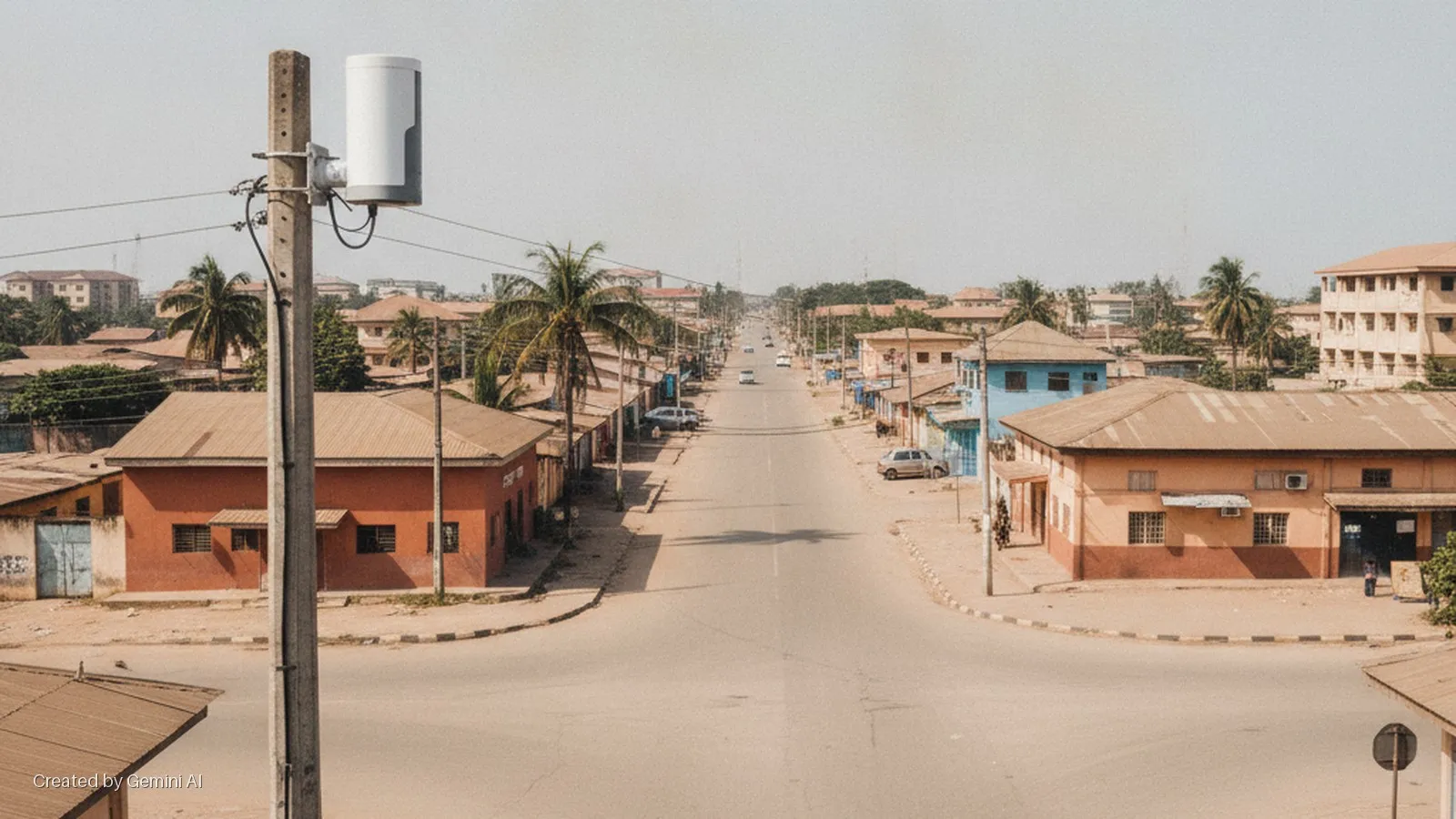
Taara, the wireless optical communications company that graduated from X, Google's Moonshot Factory, has expanded its collaboration with Liquid Intelligent Technologies in Nigeria, with nearly a dozen light-beam links now active across Lagos serving large enterprise customers. The deployments have been running for approximately two years and connect clients including internet service providers, banks, hotels and a utility company to high-capacity bandwidth distributed from Africa Data Centres and other major data centre points of presence in the country.
Taara's Lightbridge platform transmits data through narrowly focused, invisible beams of light, delivering up to 20 Gbps of capacity across distances of up to 20 kilometres. Unlike fibre, it requires no trenching, no spectrum licensing and minimal civil works, meaning links can typically be installed and activated within hours rather than the days or weeks that a traditional underground deployment demands. That rapid turnaround has proven particularly valuable in Lagos, where dense urban infrastructure makes new fibre routes both expensive and operationally difficult, and where fibre cuts can leave enterprise customers offline for days at a time.
The deployment
Eugene Uka, Acting Chief Executive Officer of Liquid Intelligent Technologies Nigeria, said deployment speed had been among the most significant advantages of the technology. "Taara links can often be installed and activated within hours, allowing Liquid to ensure it is remaining true to its mission to create a digitally connected future that leaves no African behind," he said.
Liquid is now assessing opportunities to extend wireless optical connectivity from Lagos to additional Nigerian cities, including Abuja, Ibadan and Kano. The expansion would position Liquid to serve enterprise demand in commercial centres where fibre reach is still limited relative to population and business density.
Bhavesh Mistry, Regional Lead for Taara in Africa, framed the technology as a complement to fibre rather than a replacement, noting that "there are many situations where deploying fiber quickly or cost-effectively can be difficult" and that wireless optical communication gives operators flexibility to extend capacity without compromising performance.
Market context
Wireless optical communication, sometimes called free-space optics, occupies a niche between licensed microwave radio and fibre in the connectivity stack. While microwave links are well understood and widely deployed, they face spectrum constraints and regulatory licensing overhead; fibre remains the gold standard for high-capacity, long-haul connectivity but carries high capital expenditure and long deployment lead times in congested or difficult terrain.
Taara's Lightbridge is deployed in more than 20 countries and counts T-Mobile, Airtel, Digicel and SoftBank among its operator partners, giving the platform a reference list that extends well beyond emerging markets. That breadth of deployment reduces buyer risk for operators evaluating the technology for the first time.
Nigeria is one of Africa's largest economies, and several analysts have reported accelerating GDP growth in 2026 relative to the preceding five years, creating corresponding demand for enterprise-grade connectivity infrastructure. Lagos, as the country's primary commercial hub, concentrates that demand but also concentrates the physical barriers to conventional fibre rollout.
For Liquid, part of the Cassava Technologies group, the Nigeria deployments fit a broader pan-African strategy to build network resilience across markets where last-mile fibre economics remain challenging. Operators across sub-Saharan Africa are under increasing pressure to reduce mean time to restore after outages, and the ability to provision a high-capacity backup link within hours is a meaningful differentiator for enterprise procurement teams weighing service-level commitments. As 5G rollouts extend across Nigerian cities, wireless optical backhaul is also likely to feature in radio access network densification, adding another growth vector for Taara's technology beyond its current enterprise-connectivity use case.