
Sharon AI signs US$373m five-year AI cloud deal, expands GPU fleet
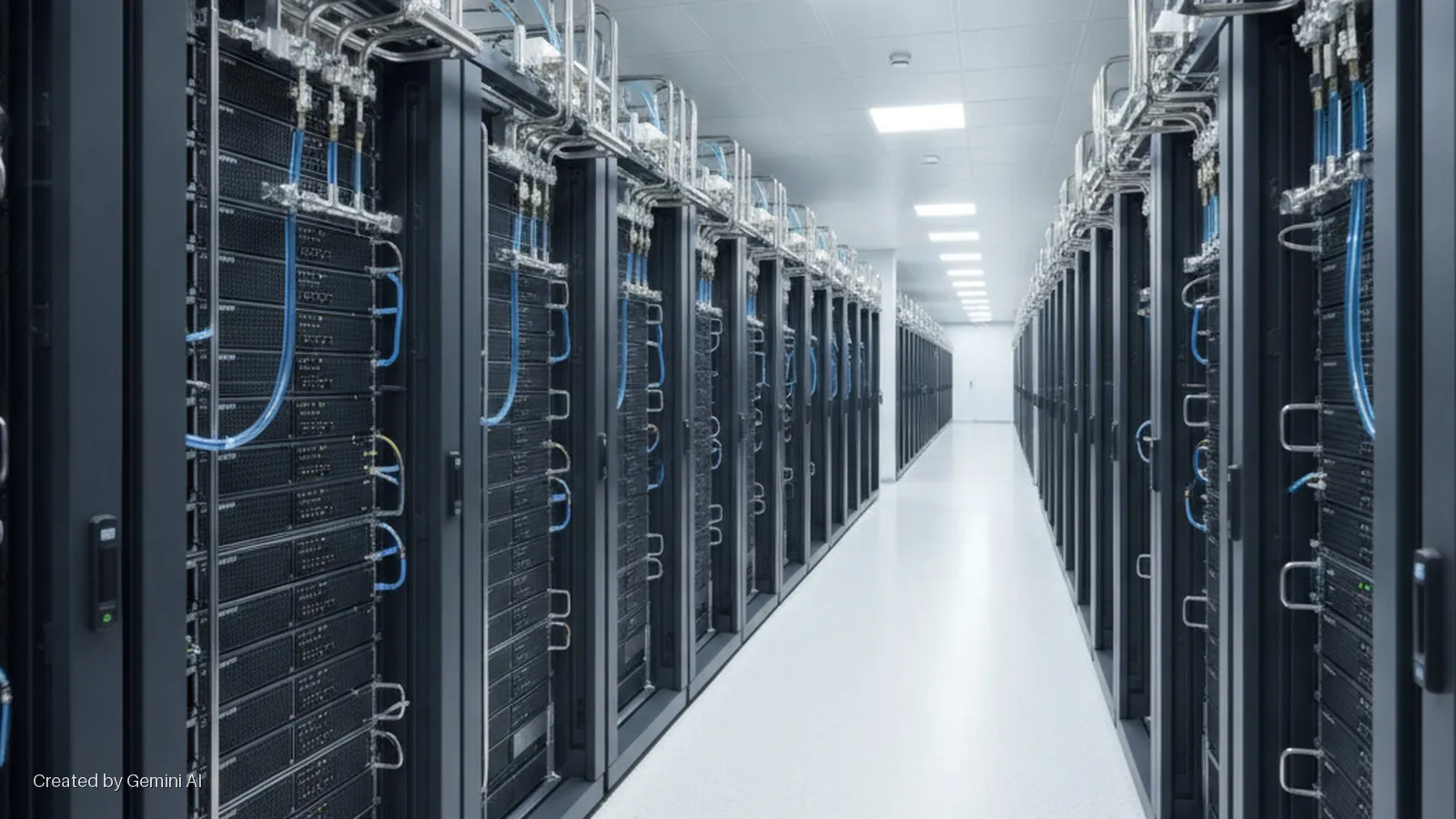
Sharon AI Holdings (NASDAQ: SHAZ) has signed a five-year cloud computing services agreement worth US$373 million in total contract value with an undisclosed global AI platform. The deal, announced on 4 August 2026, is expected to begin generating revenue in the first quarter of 2027 and marks what the company describes as a significant expansion of its contracted customer base in Australia.
Under the terms of the agreement, Sharon AI will deploy cloud computing infrastructure across its Australian AI Factory platform. The initial phase calls for 2,048 NVIDIA Blackwell Ultra B300 GPUs, with additional deployments possible over the contract term subject to customer requirements. The company did not name the counterparty or break out annual revenue run-rate in the announcement.
The deal
The agreement takes Sharon AI's total contracted capacity from 110MW to 120MW, against a total AI Factory capacity of 132MW, leaving roughly 12MW available for new business. Separately, the company said it will upgrade its GPU fleet from 62,000 to 64,000 NVIDIA units across the platform by mid-2027, adding compute headroom ahead of the new workloads coming online.
Co-founder and chief executive James Manning said: "This agreement represents an important milestone in the continued expansion of Sharon AI's customer base and contracted AI infrastructure capacity. As organisations increasingly seek access to sovereign, high-performance AI compute, we remain focused on delivering scalable infrastructure that supports the evolving needs of AI platforms, enterprises and governments."
The company positioned the deal as supporting Australia's sovereign AI ambitions, citing the value of keeping high-performance compute capacity within national borders for access by domestic enterprises, researchers and government bodies.
Market context
The Australian and Asia-Pacific AI infrastructure market is drawing increasing attention from hyperscalers and specialist neocloud operators alike, as data-residency requirements and latency considerations push customers toward regionally anchored compute. Sharon AI competes in a market where AWS, Microsoft Azure and Google Cloud each operate Australian availability zones, while a cohort of GPU-focused neocloud operators including CoreWeave and Lambda Labs have been expanding internationally from US bases.
The sovereign AI infrastructure narrative is gaining traction across the Asia-Pacific region, with governments in Australia, Japan and Singapore all publishing strategies to attract and anchor AI compute within their borders. Australia's recent policy signals, including public investment in domestic AI capability, have made the country a more attractive destination for long-term infrastructure commitments of the kind Sharon AI has secured here.
From a hardware perspective, the specification of NVIDIA Blackwell Ultra B300 GPUs is notable. The B300 sits at the top of NVIDIA's current Blackwell family and represents a meaningful uplift over the H100 generation in both throughput and memory bandwidth, making it suited to large-scale model training and inference workloads. Demand for Blackwell-class hardware remains constrained globally, and Sharon AI's ability to commit specific GPU configurations to a long-term contract will be a differentiating signal to prospective customers.
Standards and regulatory read-across
Operating AI infrastructure in Australia subjects Sharon AI to the Privacy Act 1988 and its forthcoming reforms, alongside sector-specific data-handling obligations for government and critical-infrastructure customers. The company's sovereign positioning is likely to be tested by procurement requirements from Australian government agencies, which are increasingly mandating on-shore data processing. A clear compliance framework will be a commercial prerequisite for the government-adjacent workloads the company appears to be targeting.
With 12MW of capacity remaining uncontracted, the near-term priority for investors will be the pace at which Sharon AI closes the remaining headroom and whether it can name the counterparty once any confidentiality restrictions lapse.