
Quantum Systems and XTEND link autonomous platforms for NATO customers
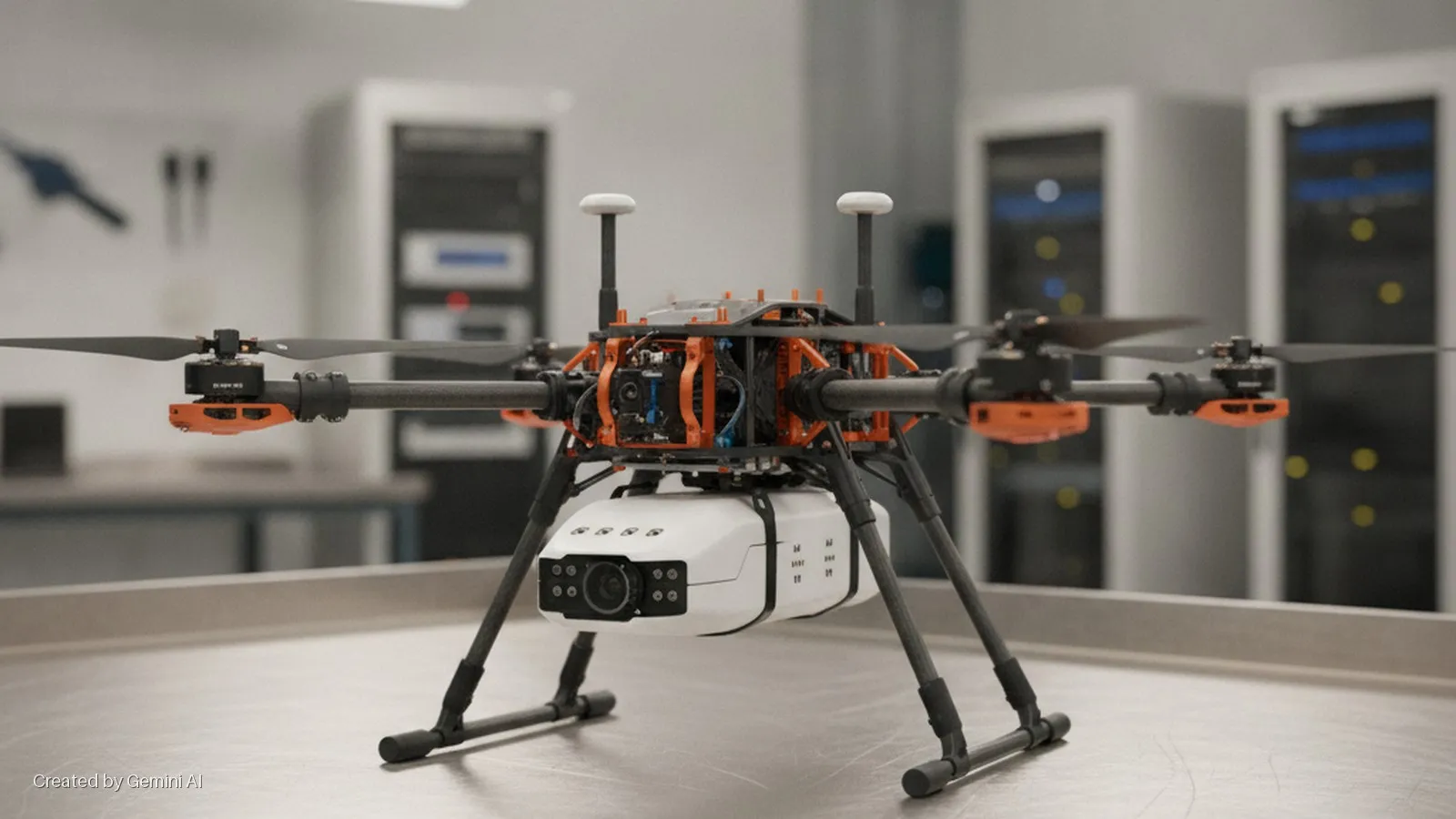
Quantum Systems and NYSE-listed XTEND have announced a partnership to integrate their respective autonomous-systems platforms, targeting defence, homeland security and public safety customers across Europe and allied markets. The agreement centres on embedding XTEND's XOS operating system into Quantum Systems' MOSAIC UXS mission software ecosystem, with the aim of enabling interoperable operations across sensing, swarming and strike tasks within a single operational environment.
The companies say the cooperation is already underpinning a joint programme for a named European NATO customer, and that further customer programmes and demonstrations are planned before the end of 2026. No contract value or procurement timeline was disclosed.
What the integration delivers
At the technical level, the partnership links XTEND's field-deployed autonomous mission capabilities to the MOSAIC UXS backbone, which Quantum Systems positions as the connective layer for its broader unmanned systems portfolio spanning air, land, sea and adjacent domains. According to the release, new operators should be able to reach mission-ready status within days of onboarding, a claim the companies attribute to a shared, intuitive operator interface rather than any disclosed training-simulation tooling.
Martin Karkour, Chief Revenue Officer of Quantum Systems, framed the logic of the tie-up in terms of network architecture rather than individual platforms. "Together with XTEND and through its integration into the MOSAIC UXS software backbone, we are demonstrating how modular architectures can connect complementary autonomous systems into a mission-ready ecosystem, from intelligence collection to mission execution," he said.
XTEND brings operational scale to the partnership: the company says it has deployed more than 12,500 systems across more than 30 countries and has validated its technology in five combat zones. Its XOS platform is designed as an open architecture, intended to facilitate third-party integration, and its manufacturing footprint spans the US, UK, Singapore, Israel and Latvia, providing NDAA-compliant supply routes that matter to US government buyers.
Market context
The announcement arrives at a moment of significant demand-side tailwinds. Under commitments reached at the 2025 Hague Summit, NATO allies are targeting defence expenditure of 5% of GDP annually by 2035, with at least 3.5% directed to core defence requirements. European allies and Canada together increased spending by more than $90 billion in 2025, according to NATO figures cited in the release. That spending environment is accelerating procurement of autonomous and AI-enabled systems across allied militaries, compressing typical development and integration timescales.
The defence autonomy software market has begun to stratify around a small number of interoperability frameworks, with competition emerging between proprietary mission-software ecosystems and open-standard approaches advocated by bodies such as NATO's Allied Command Transformation. Quantum Systems' MOSAIC strategy is a direct bet on proprietary ecosystem lock-in, comparable in structure to the approach taken by US-based competitors building common operating pictures for multi-domain command and control. Whether interoperability between allied vendors' platforms can be maintained as each builds out its own software backbone is a live architectural question for procurement officers.
Export-control and defence-trade compliance is another dimension: XTEND specifically highlights NDAA compliance in its company description, which signals active management of US Congressional restrictions on technology origins, a consideration that will be scrutinised as the platform expands to additional NATO customers. Quantum Systems is a European neo-prime with operations across eight countries, giving the partnership a degree of geographic redundancy that pure US-domiciled vendors cannot easily replicate.
Both companies indicated that joint demonstrations will continue through 2026, with interoperability between their platforms expected to broaden. The next visible milestone will likely be a named second customer win or a public demonstration at a major European defence exhibition.