
SciTec expands USAF CBC2 contract by $1.5m to add counter-drone data
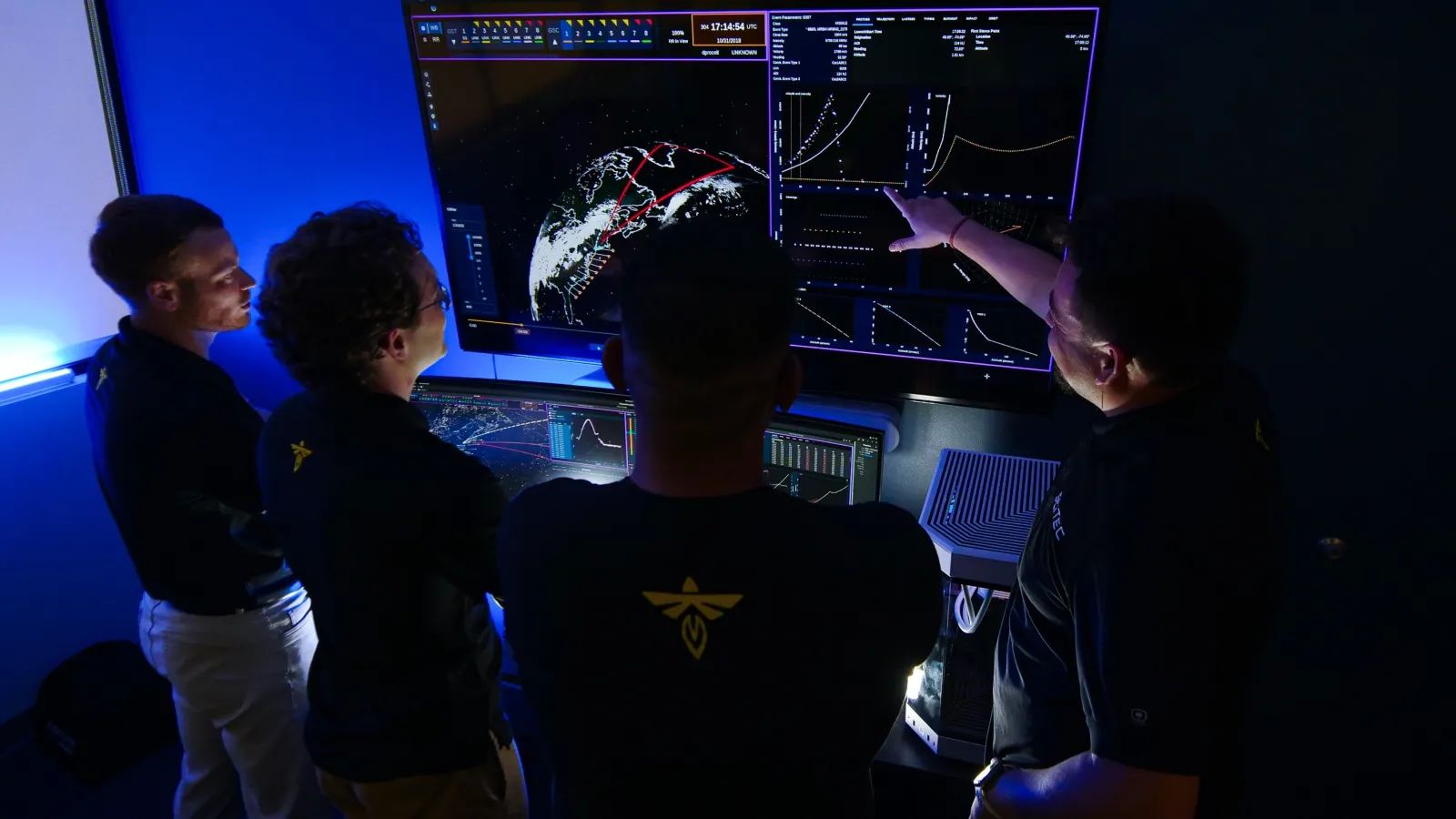
SciTec, a wholly owned subsidiary of Firefly Aerospace, has secured a $1.5 million extension to its existing Cloud-Based Command and Control (CBC2) contract with the US Department of the Air Force, bringing the total contract value to $31 million. The expansion tasks SciTec with integrating a new class of counter unmanned aerial system (CUAS) sensor data into the Advanced Battle Management System (ABMS), the Air Force's overarching programme for connecting sensors, shooters and decision-makers across domains.
The additional sensor layer is intended to improve detection, tracking and characterisation of drone threats for mission partners operating within the CBC2 ecosystem. SciTec has been delivering the operational data fusion system underpinning CBC2 under the original contract; the extension adds approved CUAS data sources to that existing architecture without replacing the underlying infrastructure.
The deal
David Simenc, SciTec's president, said the expansion reflects the adaptability of the company's technical approach. "As new mission needs arise, our scalable architecture is already designed to rapidly integrate additional sensors and data types to strengthen warfighter decision making," he said.
CBC2 sits at the centre of the Air Force Battle Network and supports the Combined Joint All Domain Command and Control (CJADC2) initiative, the Pentagon-wide effort to link military services into a single, real-time data fabric. Counter-drone capability has become a priority area following documented UAS incidents in active theatres; adding dedicated CUAS feeds into a command-and-control platform reflects a broader operational trend toward fusing air-picture data with electronic-warfare and sensor intelligence at the edge.
Market context
The defence data fusion and battle management software market has attracted growing investment from both established primes and specialist vendors. Large integrators such as Leidos, Booz Allen Hamilton and Palantir Technologies compete for ABMS-adjacent contracts alongside smaller software-focused firms. SciTec's position, combining more than four decades of missile-warning and remote-sensing experience with a cloud-native and edge-capable architecture, is presented by Firefly as a differentiator in a field where legacy integration costs are significant.
Counter-UAS specifically is one of the fastest-expanding categories in defence technology. A number of well-funded startups are developing detection and interdiction systems, and established defence contractors have accelerated CUAS product lines following increased threat visibility in recent conflicts. The integration of CUAS data into command-and-control platforms, rather than treating counter-drone as a standalone capability, represents a maturation of the operational concept.
Regulatory and procurement context
US government contracts of this type are subject to the standard risks of federal procurement: they are rarely fully funded at inception, can be modified or terminated for convenience, and are subject to continuing-resolution budget cycles. Firefly's own forward-looking statement disclosures explicitly note these factors. The contract extension is modest in dollar terms relative to the $31 million total, suggesting this is an incremental scope addition rather than a re-compete or a new programme of record.
SciTec is headquartered in Princeton, New Jersey, and operates under security-clearance requirements that limit public disclosure of technical specifics. No named operational customer beyond the Air Force command was identified in the announcement, and no performance benchmarks for the expanded CUAS integration were disclosed.