
Nokia Defense and KNDS integrate 5G into armoured vehicle for field ops
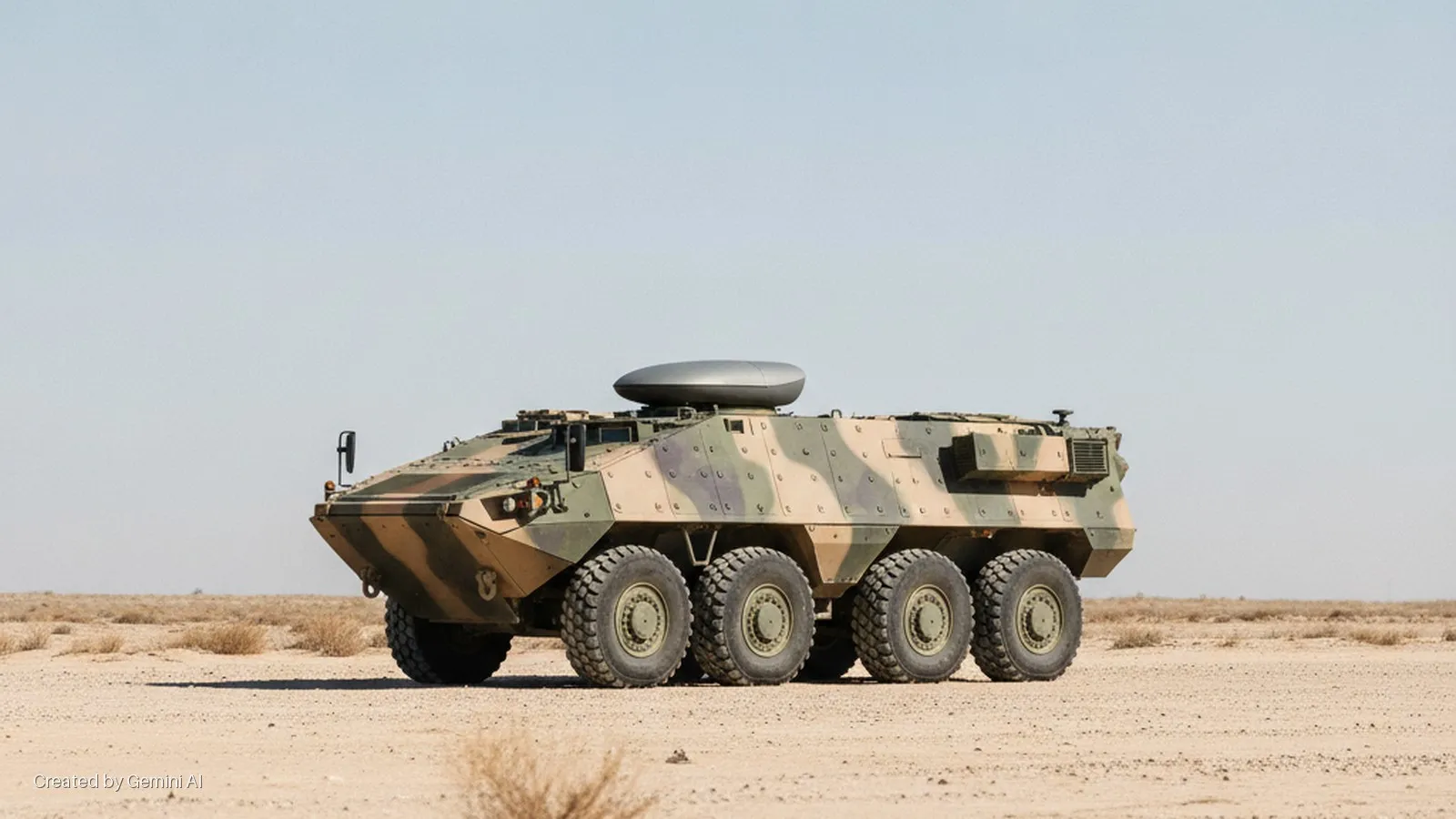
Nokia Defense and KNDS announced a partnership at the Eurosatory 2026 defence show in Villepinte this week, targeting a persistent connectivity gap in modern land operations: the loss of reliable communications the moment troops and unmanned systems step outside an armoured vehicle. The two companies are integrating Nokia's Banshee Deployable Solution into the KNDS VBCI (Véhicule Blindé de Combat d'Infanterie), a tracked armoured infantry fighting vehicle used by several European NATO armies.
The Banshee portfolio, Nokia Defense's range of deployable 5G network nodes, is designed to be stood up rapidly in environments where fixed or commercial infrastructure is unavailable or has been degraded. In this configuration, the VBCI effectively becomes a mobile 5G base station, projecting connectivity to dismounted troops and robotic systems operating in its vicinity. Nokia says the system offers high capacity, low latency, and what it describes as resilient, secure data exchange in contested scenarios, though no specific throughput figures or latency benchmarks were disclosed in the announcement.
Ari Kynäslahti, Head of Nokia Defense, said the collaboration demonstrates "how high-performance connectivity can move with the mission," adding that extending the network beyond the vehicle gives soldiers and autonomous systems the ability to operate more effectively in complex environments. Nicolas Groult, chief executive of KNDS France, described connectivity as "a core enabler of future land operations" and positioned the VBCI integration as a demonstration of next-generation tactical communications.
Market context
The defence sector's appetite for commercial 5G-derived technology has grown markedly since NATO's 2022 Strategic Concept elevated resilient communications as a priority capability. Several European governments are funding trials of private 5G for tactical and garrison use, and vendors including Ericsson, L3Harris and Thales are active in the same space. Nokia's decision to carve out a dedicated Defense business unit reflects a broader industry trend toward selling adapted commercial network technology rather than bespoke military radio systems, which are typically slower to develop and more expensive to sustain.
KNDS, formed from the merger of Nexter and Krauss-Maffei Wegmann, reported €4.4 billion in revenue in 2025 and holds an order backlog of €33.1 billion. With 24 European armed forces among its customers, the company is well placed to carry a Nokia-integrated communications capability across multiple procurement programmes. The VBCI platform is already in service with the French Army and has been exported to several other nations, providing a substantial potential install base for the connectivity solution.
Standards and regulatory read-across
Tactical 5G deployments in NATO member states increasingly need to align with the alliance's interoperability standards, including the NATO Federated Mission Networking framework, which governs how national systems share data across coalition boundaries. The EU's European Defence Fund is also funding interoperability research, and solutions that demonstrate cross-platform integration at events such as Eurosatory carry weight in subsequent procurement competitions.
Export control considerations apply here too. Nokia, headquartered in Finland and therefore subject to EU dual-use regulations, and KNDS, operating across France and Germany, will need to navigate export licensing for any deployment beyond NATO's immediate sphere. Both companies have established compliance frameworks for this, but the integration of commercial 5G chipsets into military platforms can complicate classification under EU and US export-control regimes.
The Eurosatory announcement positions both companies ahead of anticipated European defence spending increases, with several NATO members moving to raise defence budgets toward and beyond the two-percent GDP threshold. Whether the Banshee-VBCI combination moves from demonstration to contracted programme will depend on named national procurement decisions expected later in 2026.