
VisionWave signs term sheet for Tier IV data centre JV in Israel
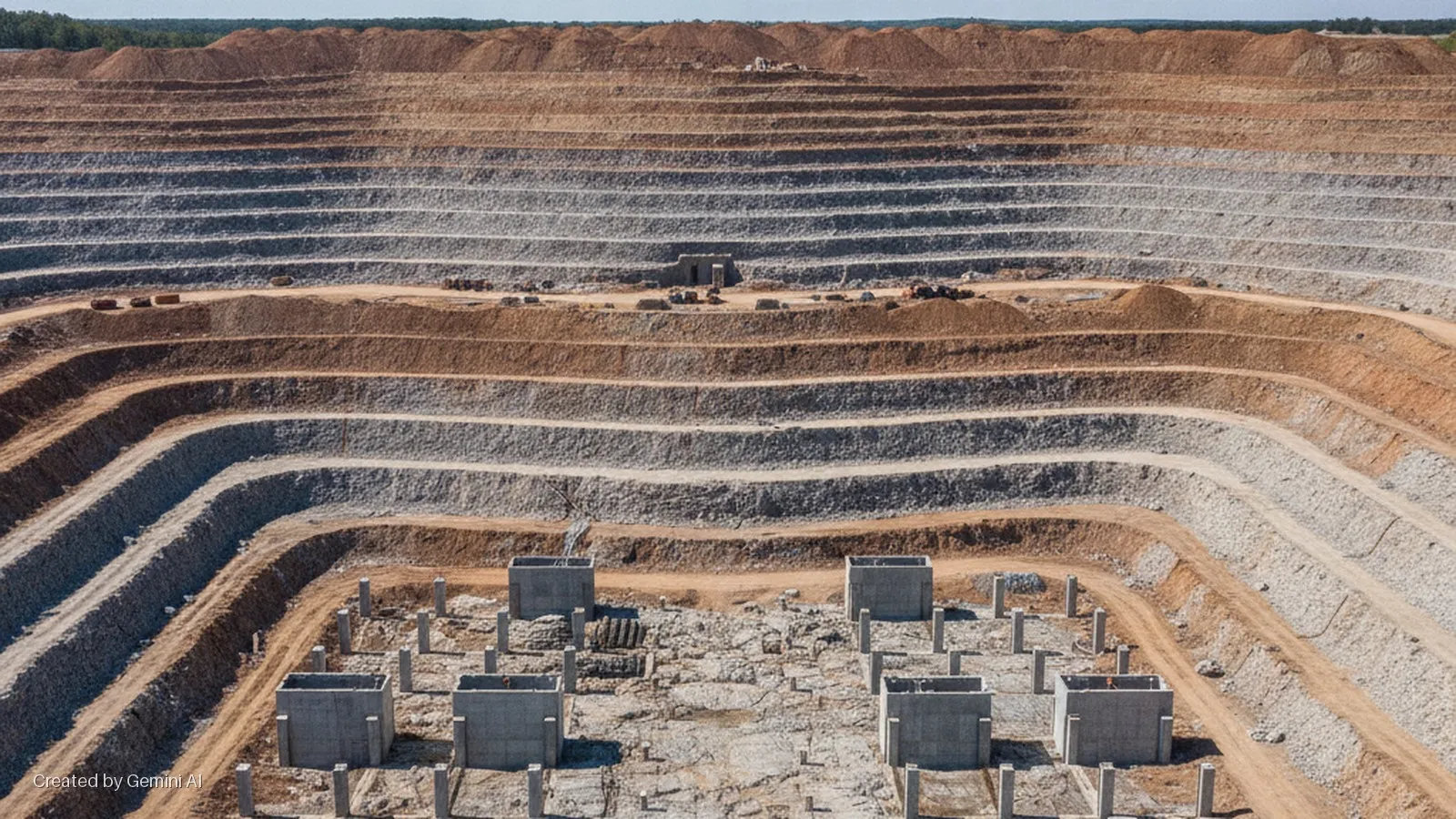
VisionWave Holdings (NASDAQ: VWAV) has signed a term sheet with Hong Kong-incorporated Lucky Whale Production Limited to establish a jointly held company for the development, ownership and operation of a Tier IV data centre campus in Beth Shemesh, in the Jerusalem district of Israel. The deal remains at the term-sheet stage; definitive agreements have not been executed and the transaction is subject to due diligence, SEC and Nasdaq approvals, and stockholder consent.
Under the proposed structure, VisionWave would hold a 68% stake in the joint company, which in turn would hold 75% of the project-level special purpose vehicle, giving VisionWave an effective look-through interest of 51% in the land, building permit and project. Consideration to the land owner is structured entirely in VisionWave common stock valued at approximately $40 million, priced by volume-weighted average price near closing. No cash will change hands at signing. VisionWave has acknowledged that the share issuance, combined with other recent and pending equity activity, will be dilutive to existing stockholders.
The project
The Phase-1 build is designed as an underground campus comprising approximately 15,000 square metres across ten data halls, targeting 10.5 MW of IT load. The facility is engineered to a 2N redundant topology and is intended to seek Tier IV certification from the Uptime Institute, the industry body whose four-tier classification is the de facto standard for mission-critical facility resilience. The design includes dual 2 x 16 MVA power feeds, 24-hour autonomous on-site fuel and water reserves, and direct liquid cooling provision to support AI and HPC workloads. The campus is planned as carrier-neutral with two physically separated meet-me rooms.
VisionWave's chief executive Doug Davis said the all-share structure allows the company to pursue a majority interest in the project without an upfront cash outlay while due diligence proceeds. Yuval Birman, chief executive of Lucky Whale, described the facility as "an underground, hardened Tier IV-targeted design."
The company has filed a Form 8-K with the SEC concurrent with the announcement. VisionWave noted that the Phase-1 specifications are preliminary, have not been independently verified by the company, and are subject to change.
Market context and risk profile
Israel has attracted growing data centre investment interest, partly driven by domestic cloud adoption and the country's position as a technology-export hub, but the Beth Shemesh project carries an unusual design rationale: an underground hardened structure explicitly engineered for protection against long-range threats. That specification reflects the security environment in the region and is likely to be a differentiator for certain government and defence-adjacent tenants, though it also adds engineering complexity and construction cost risk.
VisionWave describes itself as a defence and advanced sensing technology company; the data centre venture represents a notable strategic extension for a company whose stated focus is RF-based sensing, autonomy, and computational acceleration for defence and homeland security. The rationale for a majority-owned colocation asset in Israel is not fully articulated in the release.
The broader data centre market is experiencing strong demand growth, particularly for AI and HPC-capable facilities with direct liquid cooling. Tier IV certification projects, however, are capital-intensive and carry long development timelines. VisionWave has stated explicitly that it has not yet secured the construction financing required to complete the project, and there can be no assurance that such financing will be available on acceptable terms. The combination of an early-stage issuer, an all-share consideration structure, and an unfinanced development in a geopolitically complex market means this announcement carries material execution risk that investors will need to weigh carefully.