
Acer launches Iconia Duo tablet trio and AR and AI glasses
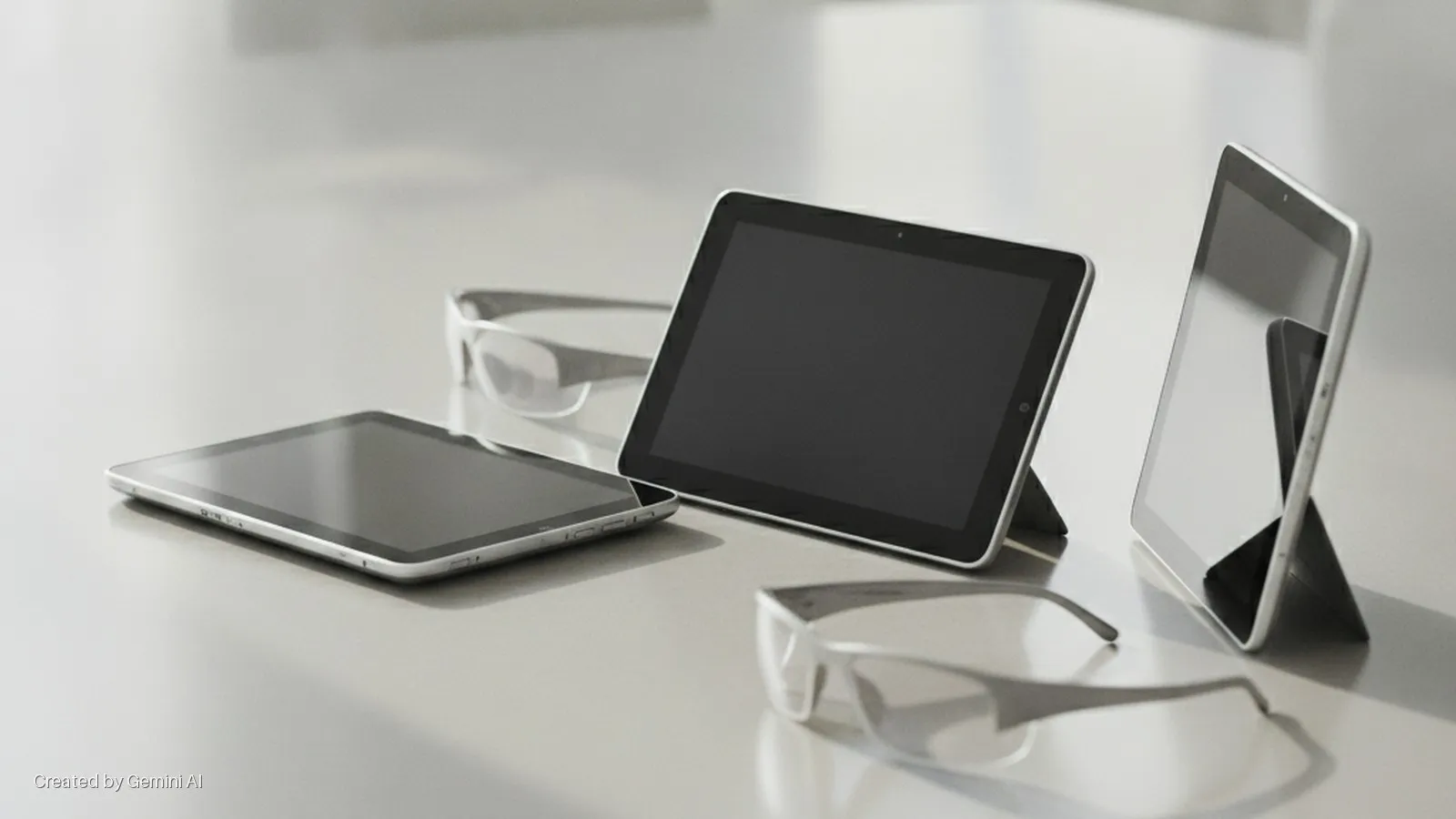
Acer has announced five new mobile devices spanning its Iconia Duo tablet range and a pair of smart glasses, targeting creative professionals, engineers, and on-the-go workers. The launch was announced from Dubai on 4 August 2026 and covers the Iconia Duo S14 and S12 premium tablets, the entry-level Iconia Duo D12, the AR Vision GR0 augmented reality glasses, and the GI0 AI glasses.
All three tablets share a 3:2 aspect ratio display, which Acer says is designed to serve both productivity and media consumption use cases in a single form factor. The devices run Android 16 and support a microSD card slot expandable to 1 TB, an Active Stylus, a magnetic kickstand, and an optional keyboard.
The tablet range
The flagship Iconia Duo S14 features a 14.2-inch 2.8K OLED panel at 2,880 x 1,840 resolution, a 120 Hz refresh rate, 100% DCI-P3 colour coverage, and a 91% screen-to-body ratio. It is powered by a MediaTek Dimensity 8300 SoC and carries dual USB Type-C ports with DisplayPort input and output, enabling use as a portable monitor. A dual-camera system (13 MP main, 5 MP macro), Wi-Fi 6E, and quad stereo speakers complete the specification.
The Iconia Duo S12 uses the same 2.8K OLED panel at 12.2 inches, paired with a MediaTek Dimensity 7400 SoC. It adds nano-texture anti-glare and anti-fingerprint glass, and is positioned as a lighter, more compact option for illustrators and executives. The entry-level Iconia Duo D12 steps down to a 12.2-inch 2,400 x 1,600 display, a 90 Hz refresh rate, and a MediaTek Helio G99 SoC with 8 GB of RAM.
Acer says all three models offer up to 10 hours of battery life, though the company's own footnotes acknowledge that real-world endurance will vary by configuration and workload.
AR glasses and AI glasses
The AR Vision GR0 connects to a smartphone, laptop, or tablet via a wired connection and uses dual micro OLED screens to create what Acer describes as an experience equivalent to a 172-inch display viewed from six metres. Compatible with Android, iOS, and Windows, the glasses weigh 69 g and support both 2D and 3D content sources. The device targets use cases across immersive gaming, remote work, and on-the-go privacy screens.
The GI0 AI glasses take a different approach, operating wirelessly over Bluetooth and Wi-Fi and integrating a Google Gemini-powered voice assistant. Built-in camera hardware supports hands-free photo and video capture, and the glasses can provide real-time image analysis and language translation. They are managed via the Acer AspireSync companion app on Android or iOS.
Market context
The 3:2 tablet form factor has been steadily gaining traction since Microsoft established it as the preferred aspect ratio for productivity-oriented Surface devices. Samsung, Lenovo, and Huawei have all introduced tablets in this segment, making it increasingly competitive. Acer is entering the premium tier with OLED displays, a differentiator that remains less common in the Android tablet category outside Samsung's flagship lines.
In the AI glasses space, Google Gemini integration echoes the direction Meta took with its Ray-Ban smart glasses, which saw meaningful consumer uptake in 2024 and 2025. The wearables segment is early-stage but attracting growing enterprise interest, particularly for hands-free workflows in field service, logistics, and professional training. Acer has not disclosed pricing for any of the five devices, nor named retail or carrier distribution partners. Availability by market and region also remains unconfirmed at time of publication.