
Alstom consortium wins €690m contracts to modernise Egypt rail
Alstom, leading a consortium with Rowad Modern Engineering and Concrete Plus, has signed four contracts with Egyptian National Railways (ENR) worth a combined €690 million to modernise two strategically significant rail corridors. Alstom's own share of the work amounts to approximately €300 million, with the balance split across its consortium partners.
The larger of the two packages, the 6th of October to Alexandria corridor, is valued at €550 million (Alstom share: roughly €240 million) and will be delivered across three implementation lots. It will see the installation of ETCS Level 1 signalling, upgraded telecommunications, reinforced power supply, and civil and track rehabilitation. ENR says the upgrades will cut end-to-end travel time on the corridor by nearly 80 minutes and materially increase line capacity. The second project, the Belbes to 10th of Ramadan line (known as B10), carries a price tag of approximately €140 million and targets improved rail connectivity to one of Egypt's largest industrial zones in the eastern logistics corridor.
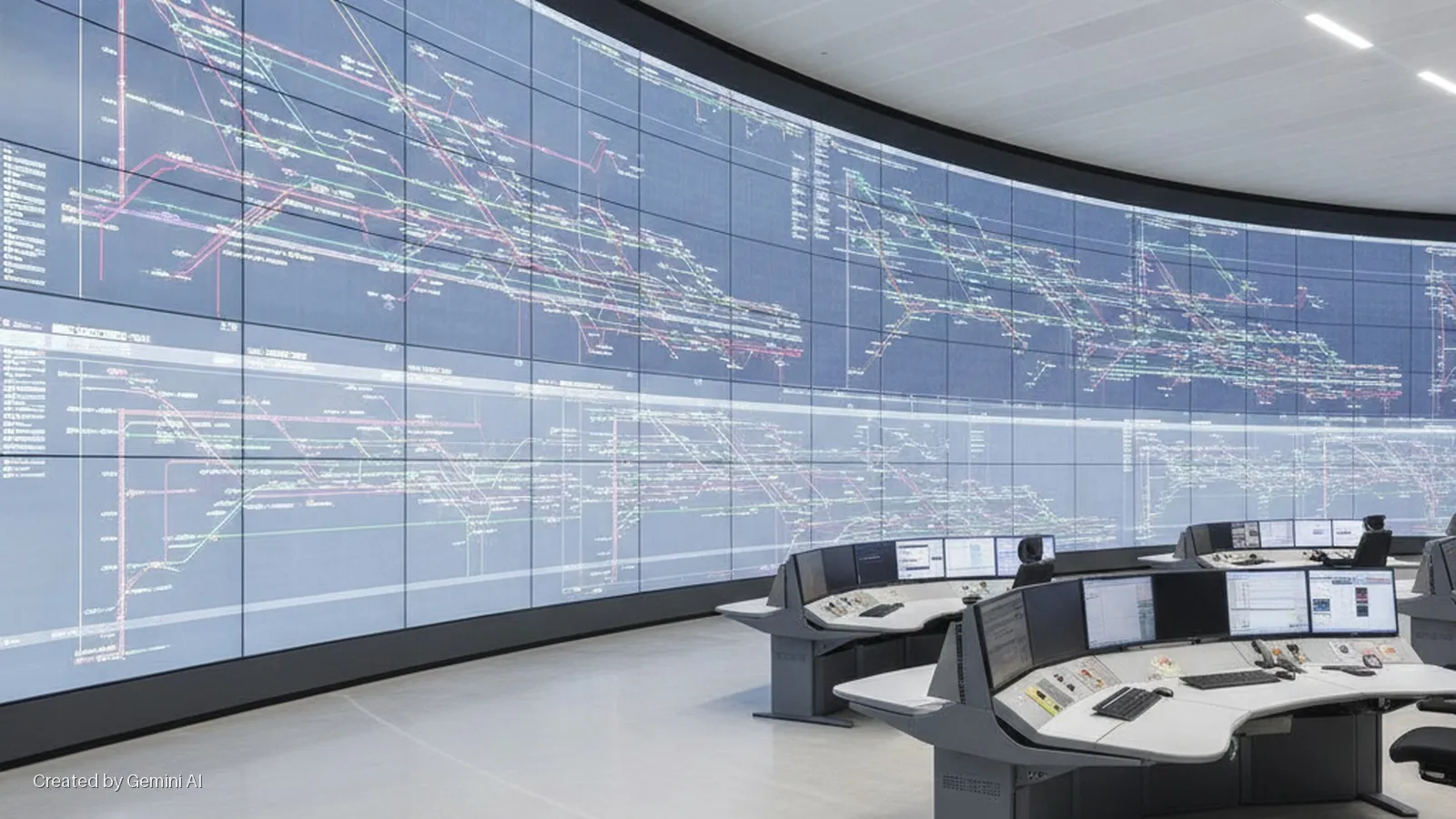
As consortium leader, Alstom will take responsibility for end-to-end engineering, design, supply, testing, and commissioning of the digital railway systems on both corridors, including operations control capabilities for real-time network management.
The deal
Martin Vaujour, President for Africa, Middle East and Central Asia at Alstom, said the contracts demonstrate the company's "capacity to deliver large-scale, complex signalling programmes" and its intention to serve as a long-term infrastructure partner in the region. Both projects carry an approximately 50% local content requirement, delivered through Egyptian engineering talent and domestic sourcing, a condition increasingly common in large public-infrastructure contracts across the Middle East and Africa.
The two corridors are designed to link Egypt's 6th of October Dry Port with the Alexandria Seaport and to serve the 10th of Ramadan industrial zone, creating integrated freight routes between major inland logistics hubs and maritime gateways. The Egyptian government frames both projects within its Vision 2030 programme, which targets expanded industrial output and stronger trade flows through modernised infrastructure.
Alstom notes the contracts will be reflected in the group's order intake for the first quarter of the 2026/27 fiscal year. The company reported revenues of €19.2 billion for the fiscal year ending March 2026 and employs around 800 people in Egypt.
Market context
Alstom has operated in Egypt for more than 40 years and has established signalling, power supply, and depot-equipment centres of excellence in the country. That embedded local presence gives the group a competitive advantage in large ENR tenders, where local-content rules and long-standing operational relationships carry weight alongside technical capability.
More broadly, railway modernisation across the Africa, Middle East and Central Asia region is accelerating as governments invest in freight infrastructure to reduce road congestion and carbon emissions. Alstom faces competition on signalling and digital-rail contracts from Siemens Mobility, Thales, and Hitachi Rail, each of which has been active in the region. ETCS Level 1, the signalling standard deployed here, is a well-established European interoperability baseline; customers in the region are beginning to evaluate moves toward Level 2 and Level 3 deployments as network ambitions scale.
The emphasis on digital operations control and real-time network management also reflects a wider industry shift toward software-intensive rail systems, where lifecycle services and data analytics increasingly form part of the revenue model alongside capital-equipment supply. Investors will watch whether Alstom books service and maintenance extensions on the Egyptian network as the modernisation phase completes.