
CMG and Petrobras renew five-year reservoir simulation agreement
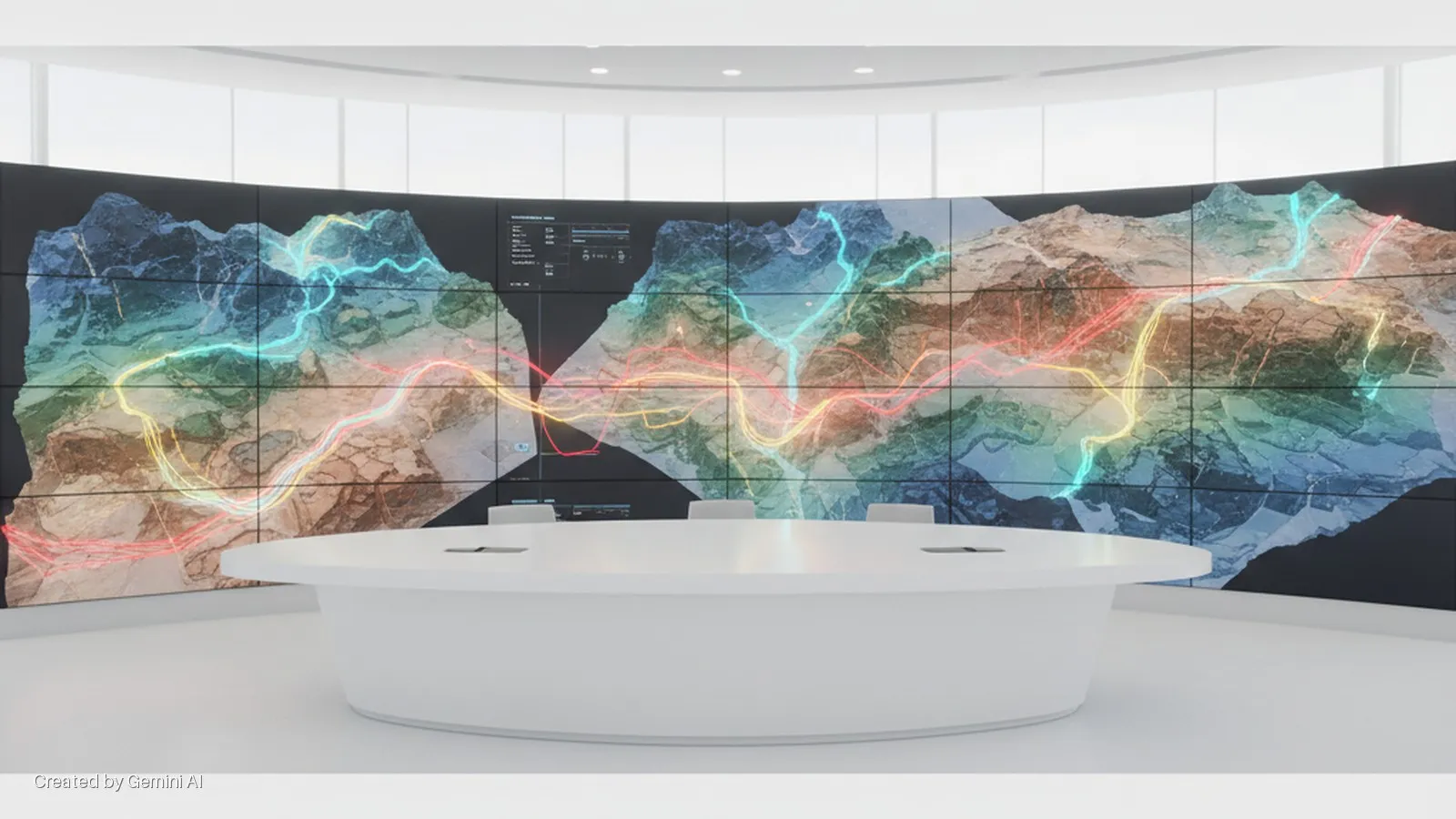
Computer Modelling Group (TSX: CMG) has signed a five-year software licensing and support agreement with Petroleo Brasileiro S.A. (Petrobras), renewing and expanding an existing arrangement that covers reservoir and production simulation software. The deal, announced on 17 September 2026, marks 40 years of continuous collaboration between the two organisations, making Petrobras one of CMG's longest-standing enterprise customers.
Under the renewed contract, Petrobras engineers will continue to use CMG's simulation platform across technically demanding asset classes: ultra-deep offshore fields, pre-salt reservoirs where extracted hydrocarbons carry high associated CO2 concentrations, and mature fields that require enhanced oil recovery (EOR) techniques to sustain production. CMG did not disclose the financial value of the agreement.
The deal
Pramod Jain, chief executive of CMG, said the longevity of the relationship had directly shaped the company's technology roadmap. "Petrobras operates in some of the world's most complex and technically demanding reservoirs and their engineers bring us problems that don't have easy answers," he said. "Working through them together has moved our technology roadmap forward and built capability on both sides."
Marcos Machado, Senior Technical Advisor at Petrobras, confirmed the strategic rationale from the operator's perspective, citing the value of simulation in informing subsurface decision-making and long-term capital-allocation choices. The renewed agreement is focused on evaluating recovery strategies across Petrobras's portfolio, which spans frontier deepwater positions in the Santos and Campos basins as well as a large base of long-producing onshore and offshore assets.
Market context
Reservoir simulation software sits within a relatively concentrated enterprise-software niche dominated by a small number of specialist vendors, including Schlumberger (now SLB) with its Intersect and Eclipse platforms, Halliburton's Nexus, and CMG itself. Competitive differentiation typically comes from solver performance on structurally complex models, integration with geological interpretation tools, and domain expertise embedded in technical support teams. Long-term licensing relationships with national oil companies are a structural feature of the market: switching costs are high given the depth of model calibration and the retraining required for large engineering teams.
The Petrobras partnership is notable in that Brazil's pre-salt geology presents a specific set of modelling challenges, including carbonate reservoirs with strong heterogeneity and high CO2 content, that push simulation software to its limits. CMG's position here reflects both technical capability and institutional knowledge built over four decades. For CMG, national oil companies and large independents represent the most stable segment of its customer base, providing multi-year revenue visibility that smaller exploration and production customers typically cannot.
Energy transition read-across
The agreement comes at a point when simulation vendors are broadening their platforms beyond conventional hydrocarbons. CMG describes itself as serving the "new energy industry", and reservoir simulation methods are increasingly being applied to carbon capture and storage (CCS) site evaluation, geothermal resource assessment, and hydrogen storage. Petrobras has its own stated decarbonisation targets and is actively managing the CO2 re-injection challenge inherent in its pre-salt operations, where simulation tools inform injection strategy and reservoir integrity monitoring.
The EU's Carbon Border Adjustment Mechanism and broader pressure on Scope 3 emissions disclosures are beginning to affect how international oil producers quantify and communicate reservoir-level emissions. Simulation software that can model CO2 behaviour in situ is increasingly relevant to that reporting burden, adding a compliance dimension to what has historically been a pure production-optimisation tool. CMG's next milestone will likely be demonstrating traction in the energy-transition segment to diversify revenue beyond traditional upstream oil and gas.