
CBAK Energy reports sodium-ion cell test data and plans 12 GWh capacity
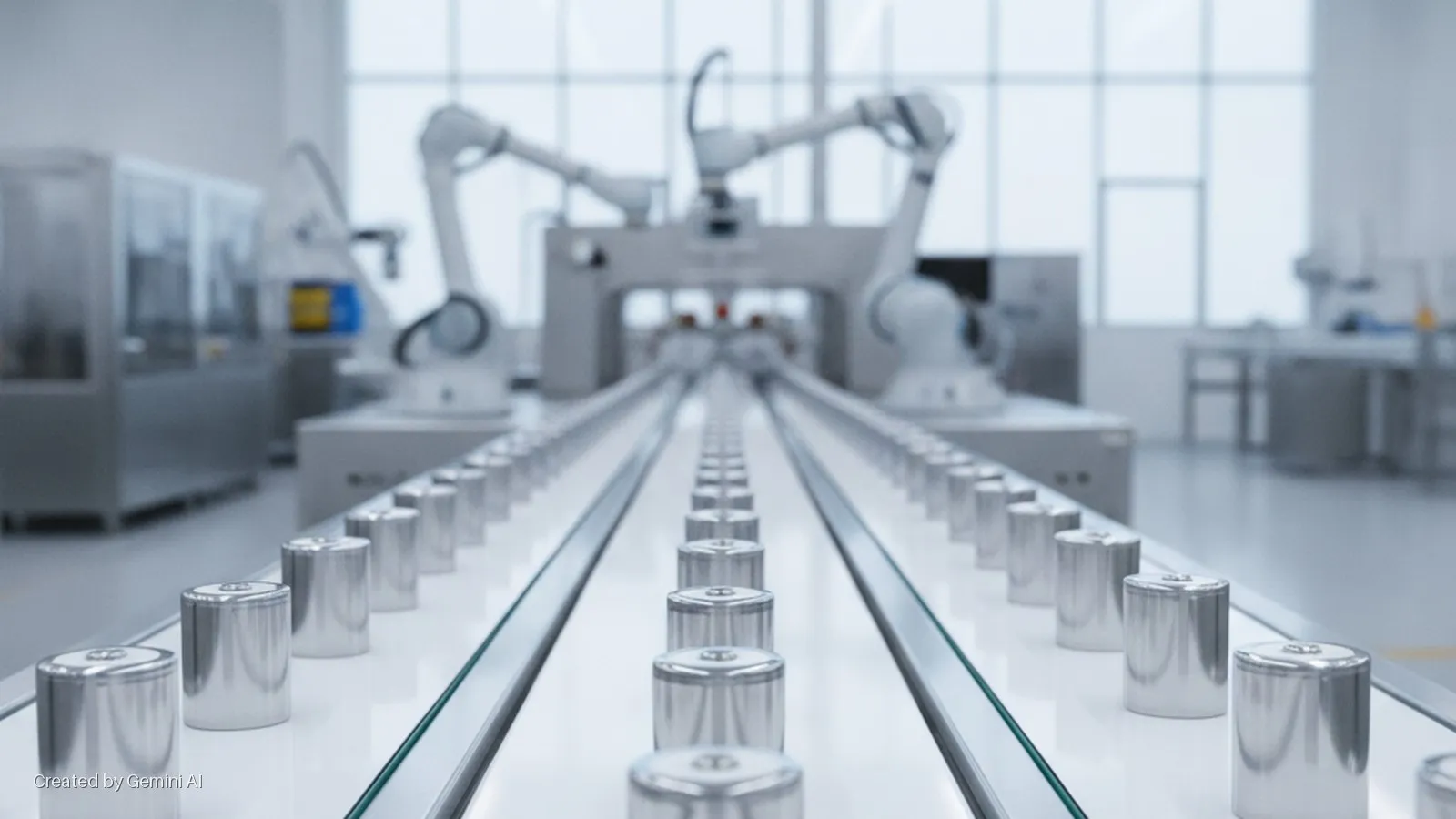
CBAK Energy Technology (NASDAQ: CBAT) has released internal laboratory results for its 32140 NH-7Ah full-tab sodium-ion cell and set out a long-term conditional plan to build 12 gigawatt-hours of annual sodium-ion production capacity. The Dalian-based battery manufacturer says the planned production lines would be designed for compatibility with its existing lithium-ion equipment, preserving the flexibility to serve demand for either chemistry.
The company targets the cell at energy storage, light electric mobility and backup power applications. CBAK is careful to note that the 12 GWh figure is a planning objective rather than installed capacity, and that timing and scale of deployment will depend on customer qualification, commercial demand and implementation requirements.
Cell-level performance figures
The cylindrical 32140 format uses a sodium iron phosphate pyrophosphate cathode paired with CBAK's full-tab design, which the company says supports high-current operation and heat dissipation. Under internal laboratory conditions, the cell reached 90% state of charge in 15 minutes. Capacity retention remained above 95% during continuous discharge at a 15C rate, and the cell demonstrated pulse discharge at 28C under the company's internal protocol.
Temperature range is a headline claim. At minus 40 degrees Celsius, the cell retained 87.68% of its discharge capacity relative to the 25-degree baseline. Internal testing at 70 degrees Celsius, covering a 110-degree span, supports a projected cycle life of approximately 3,500 cycles to 80% capacity retention, based on trend analysis rather than completed long-run data. Under standard cycling protocols, the cell is projected to reach at least 10,000 cycles. CBAK acknowledged that projected cycle-life figures draw on trend analysis and that actual performance in customer systems may differ.
Dr Senlin Wang, Head of Sodium-Ion Battery R&D at CBAK Energy, said: "We view sodium-ion as a complement to lithium-ion, with the strongest potential in applications where power, cycle life, performance across a wide temperature range and supply-chain flexibility must be balanced at the system level."
Customer sample testing is under way across residential and portable energy storage, electric two- and three-wheelers, specialty vehicles, start-stop systems and backup power. CBAK says feedback from those programmes is informing further work on charging performance, high-rate discharge and thermal management.
Market context and competitive landscape
The sodium-ion segment is attracting significant commercial interest as battery makers look to reduce exposure to lithium and cobalt pricing cycles. CATL, the world's largest battery cell manufacturer, began shipping sodium-ion cells into low-speed electric vehicles in 2023, and a number of Chinese and European startups are pursuing scaled production. The cathode chemistry CBAK uses, NFPP, competes with sodium layered-oxide formulations favoured by some peers; each approach involves trade-offs between energy density, cycle stability and material cost.
For energy storage applications, sodium-ion cells face competition not only from lithium iron phosphate packs but also from longer-duration technologies such as flow batteries, where utility-scale projects are being developed across Asia and Europe. In the backup power segment, CBAK flags emerging interest in high-rate cells for AI data centre applications, where the combination of dense power delivery and wide-temperature tolerance could be relevant; that programme remains at the planning stage.
The wider regulatory environment is relevant to CBAK's raw-material argument. US and EU policymakers are actively incentivising supply-chain diversification away from critical minerals, including lithium. The EU Critical Raw Materials Act and the US Inflation Reduction Act both include provisions that could benefit battery chemistries with less constrained input sourcing, though the degree to which sodium-ion ultimately benefits will depend on commercial-scale cost realisation.
CBAK says its next development priorities include larger 46- and 60-series cylindrical formats for higher-capacity applications. Near-term milestones for investors to watch are named customer qualifications and confirmation of production-line conversion costs.