
Progress Chef adds enterprise management for NVIDIA DGX Spark fleet
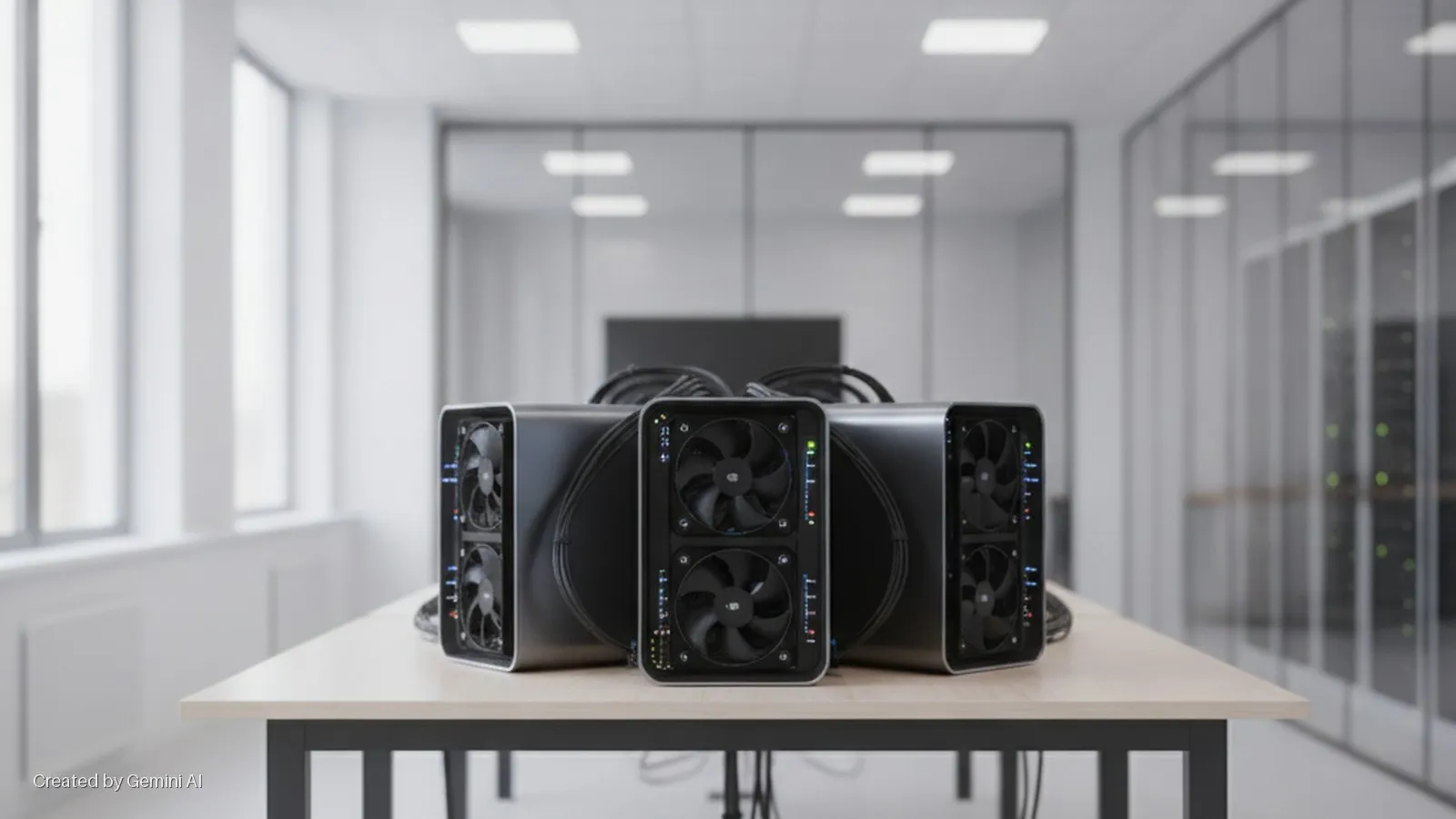
Progress Software has extended its Chef configuration management platform to cover NVIDIA DGX Spark, the compact desktop AI system that NVIDIA positions as a personal AI supercomputer for developers. Available immediately, the offering is priced at $189 per system per year and targets IT and platform engineering teams that need to provision, govern and maintain fleets of DGX Spark units with the same operational rigour applied to conventional enterprise infrastructure.
The NASDAQ-listed vendor said NVIDIA referenced Chef's capabilities in a developer blog post earlier in June, describing Progress as an enterprise manageability partner for DGX Spark deployments. Progress did not disclose the number of existing DGX Spark deployments under management, nor any committed customer wins at launch.
What Chef brings to the DGX Spark stack
DGX Spark ships with NVIDIA's own Enterprise Manageability framework, which uses an agentless SSH execution model and standardised JSON output to cover procurement, provisioning, monitoring and retirement workflows. Progress Chef layers continuous configuration convergence and governed orchestration on top of that baseline.
In practice, that means IT teams can group DGX Spark units into staged cohorts, push configuration changes in controlled waves, detect drift from approved baselines and trigger automated diagnostics when incidents occur. The platform also enforces role-based access controls and maintains auditable change records, which matters in regulated environments such as financial services, healthcare and defence, where AI model development is increasingly moving out of cloud environments and onto local hardware.
Sundar Subramanian, Executive Vice President and General Manager, Infrastructure Management at Progress Software, said: "As this new class of infrastructure scales, organisations must maintain confidence that every system remains secure, compliant and aligned with its intended state."
Market context and competitive read-across
DGX Spark represents a broader push by NVIDIA and its ecosystem partners to establish desktop AI hardware as a persistent, managed infrastructure category rather than a one-off developer toy. The device competes for mindshare with cloud-based notebook instances and with AMD's emerging workstation AI platforms, but its primary differentiation is local petaflop-class performance without data leaving the premises, an increasingly valuable proposition as enterprises weigh data-sovereignty and latency requirements.
For Progress, the integration extends Chef's historical strength in server and cloud configuration management into the edge and desktop AI segment. Chef competes with HashiCorp (now part of IBM), Red Hat Ansible and Puppet in the infrastructure-as-code and configuration management space. Those incumbents have not yet announced equivalent DGX Spark support, giving Progress a first-mover window in this niche, though the durability of that advantage will depend on how rapidly NVIDIA's own tooling or competing integrations mature.
From a compliance standpoint, enterprises deploying DGX Spark in regulated industries will need to demonstrate that AI model development environments meet the same hardening and audit standards as production systems. Frameworks such as NIST SP 800-53, ISO 27001 and the UK NCSC's Cyber Essentials all require continuous configuration assurance, precisely the capability Chef is positioning here. As the EU AI Act's obligations for high-risk AI systems continue to phase in through 2026 and 2027, documented governance of the environments in which models are trained and fine-tuned is likely to become an audit expectation rather than a best practice.
Progress has not disclosed a revenue target for the DGX Spark integration. At $189 per unit per year, meaningful ARR contribution would require tens of thousands of managed systems, a scale that will take time to materialise as DGX Spark adoption builds across enterprise accounts.