
Diraq reaches DARPA QBI final stage with $51m funding tranche
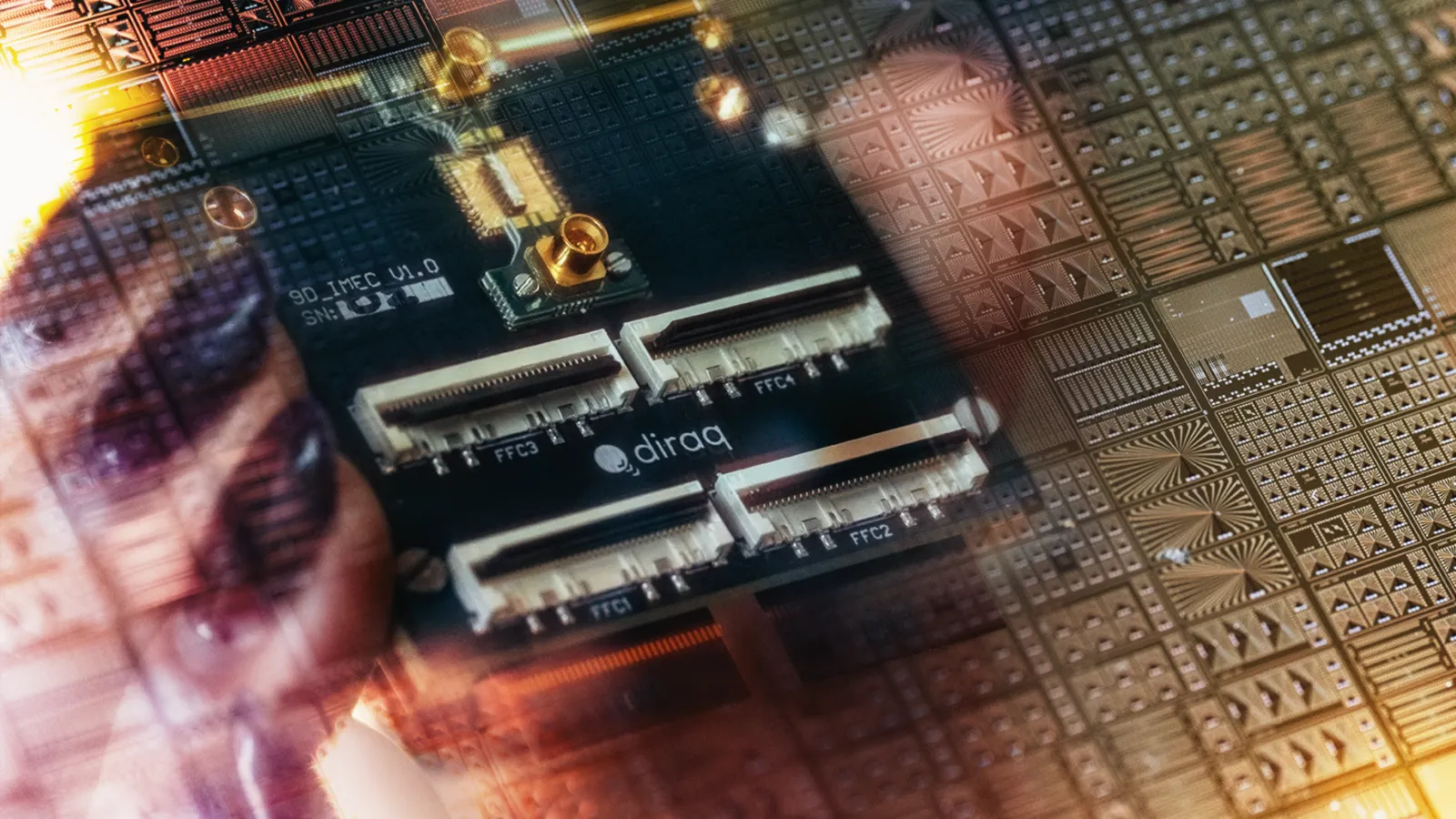
Diraq, the Sydney-founded silicon quantum computing company, has been selected by the US Defense Advanced Research Projects Agency (DARPA) to progress to Stage C of its Quantum Benchmarking Initiative (QBI), the programme's final and most demanding phase. An initial funding tranche of $51 million will support the next twelve months of development as the company works with DARPA's independent verification and validation team to assess its silicon-based architecture against the benchmarks required for utility-scale operation.
DARPA defines utility scale as the point at which a quantum computer can solve problems delivering more value than the cost of building and running the machine. The QBI sets 2033 as the target date for demonstrating that threshold; Diraq is claiming a 2031 delivery, two years ahead of the programme schedule, with a target of more than two million physical qubits on a single chip.
The silicon spin advantage
Diraq's central competitive claim is that its silicon spin qubits are manufactured using existing 300mm CMOS-compatible foundry processes, the same production infrastructure that underpins today's conventional semiconductor industry. The company says it has already demonstrated coherent operation of an eight-qubit array fabricated using this process, and projects it can reach 150,000 qubits by 2029 by leveraging that foundry compatibility.
Andrew Dzurak, Diraq's founder and chief executive, said Stage C represents "a crucial independent validation that our path to utility-scale quantum computing holds up under rigorous technical scrutiny." Scott McGregor, the company's chairman and former chief executive of Broadcom, framed the manufacturing economics argument more bluntly: "Stage C is where that gets tested rather than asserted. DARPA is examining whether the cost and manufacturability hold up, which is exactly the test the industry should be applying."
Alongside the DARPA milestone, Diraq has received a Letter of Intent for $38 million from the US Department of Commerce under the CHIPS and Science Act to support domestic production of its fault-tolerant systems. The company has also announced plans to deploy what it describes as the world's first silicon spin quantum computer in a shared commercial data centre, in partnership with Equinix in Sydney, before the end of 2026.
Market context and competitive landscape
Diraq enters Stage C at a moment of intensifying competition across quantum computing architectures. IBM and Google are pursuing superconducting qubit roadmaps, with IBM targeting a 100,000-qubit system by the end of the decade. IonQ and Quantinuum lead the trapped-ion camp, while neutral-atom startups including QuEra and Atom Computing have attracted significant capital. Each architecture presents distinct trade-offs in gate fidelity, error-correction overhead, and scalability.
The CMOS-compatibility argument Diraq is making is not unique: Intel's silicon spin qubit programme, developed at its research labs, has pursued a similar foundry-compatible thesis, though Intel has not publicly committed to a commercial quantum timeline comparable to Diraq's 2031 claim. The practical question DARPA's Stage C is designed to answer is whether the fidelity and error-correction overhead of silicon spin qubits at scale can realistically be brought within utility-scale economics, not merely whether the fabrication process is familiar.
For enterprise and government buyers, the DARPA selection carries weight as an independent technical endorsement. The QBI is widely regarded as one of the more rigorous public benchmarking efforts, and progression to Stage C signals that Diraq's architecture has at minimum survived detailed technical scrutiny at Stages A and B. Whether the 2031 utility-scale projection survives Stage C will be a more consequential signal still. Investors will watch for the technical demonstration milestones Diraq is committed to delivering over the coming months as the clearest near-term indicator of programme progress.