
VSORA secures Ardian-led round to commercialise Jotunn8 AI chip
VSORA, a French semiconductor startup designing AI inference processors, has closed an interim funding round led by private markets firm Ardian, with co-investors including Otium, XAnge, NJJ Capital, Capgemini's ISAI Cap Venture fund, hyperscale data-centre operator CloudHQ, and Germany's federal breakthrough-innovation agency SPRIND. Existing backers the European Innovation Council (EIC) Fund, Omnes Capital and Critical Path also participated. The company did not disclose the total amount raised.
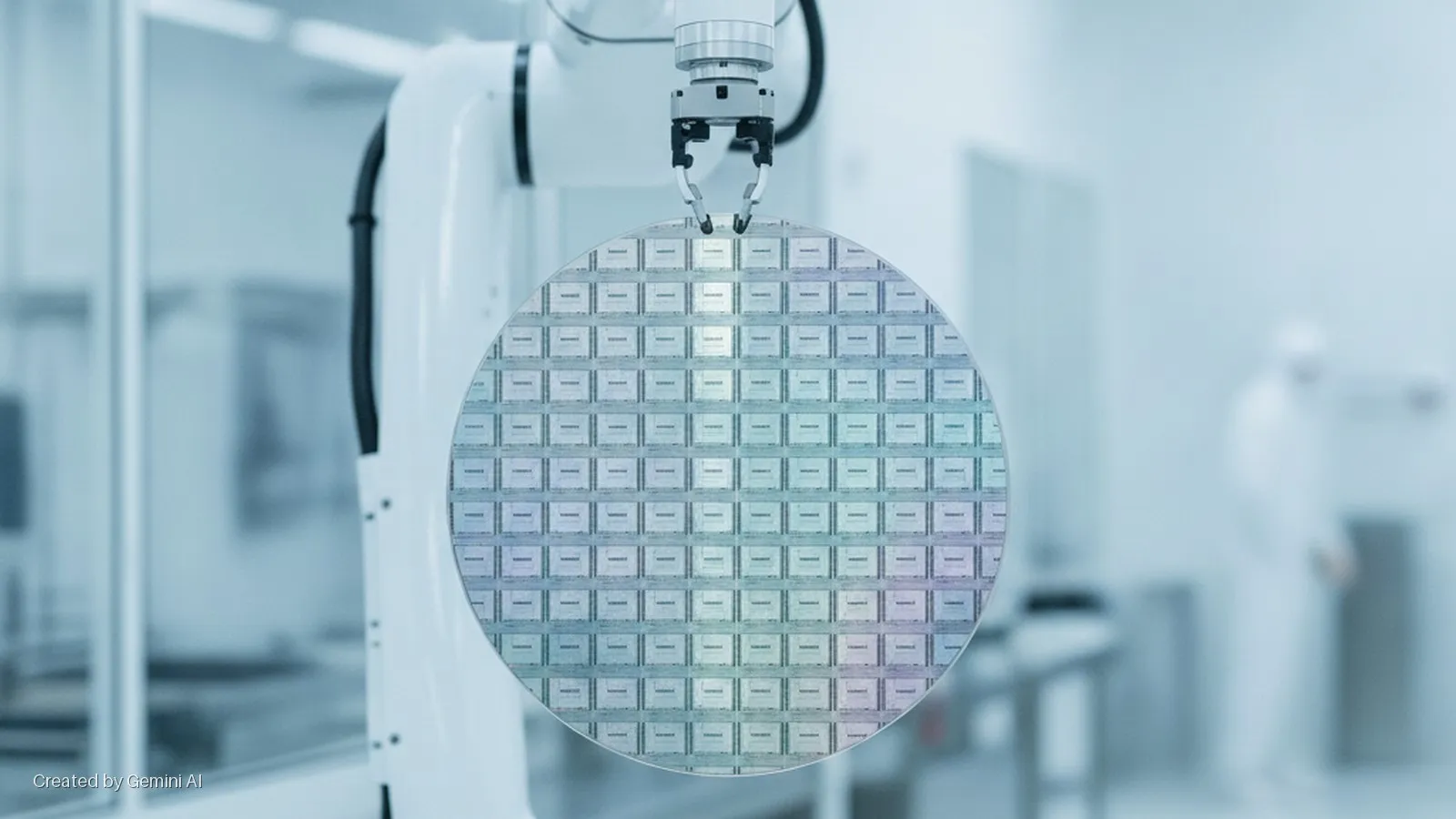
The proceeds are intended to accelerate commercialisation of Jotunn8, VSORA's purpose-built inference processor, which completed a tape-out in 2025 and is now entering manufacturing. VSORA said it is advancing toward large-scale datacenter deployments and is preparing a larger financing round in 2027 to support international expansion.
The chip and the commercial case
Jotunn8 is designed to address what the company calls the "memory wall" constraint in AI inference, a bottleneck that limits how efficiently large models can be served at scale. VSORA says the processor delivers high throughput and low latency while reducing energy consumption and infrastructure costs relative to alternatives. The chip is being manufactured with TSMC, with design services support from Global Unichip Corp (GUC). No third-party benchmark figures were included in the release, and no launch customers were named.
Khaled Maalej, co-founder and CEO of VSORA, said Ardian's involvement "is a strong endorsement of our strategy and strengthens our ability to accelerate the deployment of Jotunn8, in service of a clear ambition: establish VSORA as a global leader in AI inference."
Lise Fauconnier, co-head of Ardian Semiconductor, described VSORA as having "the potential to become a key player in AI inference for datacenters," and said the firm would provide strategic, operational and financial resources to support the company's ambitions. Rafael Laguna de la Vera, director of SPRIND, framed his agency's participation in terms of European technological sovereignty, arguing that Jotunn8 "matches the global leaders on compute while beating them on efficiency and cost."
Market context and competitive landscape
The AI inference accelerator market is one of the most intensely contested segments in semiconductors. Nvidia currently dominates datacenter inference with its H100 and B200 GPU lines, while AMD, Intel (Gaudi), and a wave of well-funded startups including Groq, Cerebras, Tenstorrent and SambaNova are all competing on performance-per-watt and total cost of ownership metrics. European challengers have historically struggled to achieve the manufacturing scale and ecosystem integration needed to displace incumbent silicon at hyperscaler volumes.
VSORA's investor mix is notable for its industrial and policy depth. Capgemini's participation through ISAI Cap Venture signals potential enterprise distribution through one of Europe's largest systems integrators. CloudHQ's involvement as a hyperscale data-centre operator could provide an early deployment pathway. SPRIND's presence reflects a broader German and EU policy drive to reduce dependency on non-European chip suppliers, a concern that has intensified since the US CHIPS Act and EU Chips Act reshaped subsidy landscapes on both sides of the Atlantic.
The company will need to publish independently verified performance and efficiency benchmarks, and announce named customer wins, to build credibility with large-scale buyers ahead of its planned 2027 round. The inference market is moving quickly; by the time a larger fundraise closes, the competitive landscape will have shifted further toward next-generation accelerators and disaggregated memory architectures. Investors and customers will be watching closely for concrete deployment evidence before that round opens.