
3D Systems signs CRADA with Savannah River lab for nuclear AM
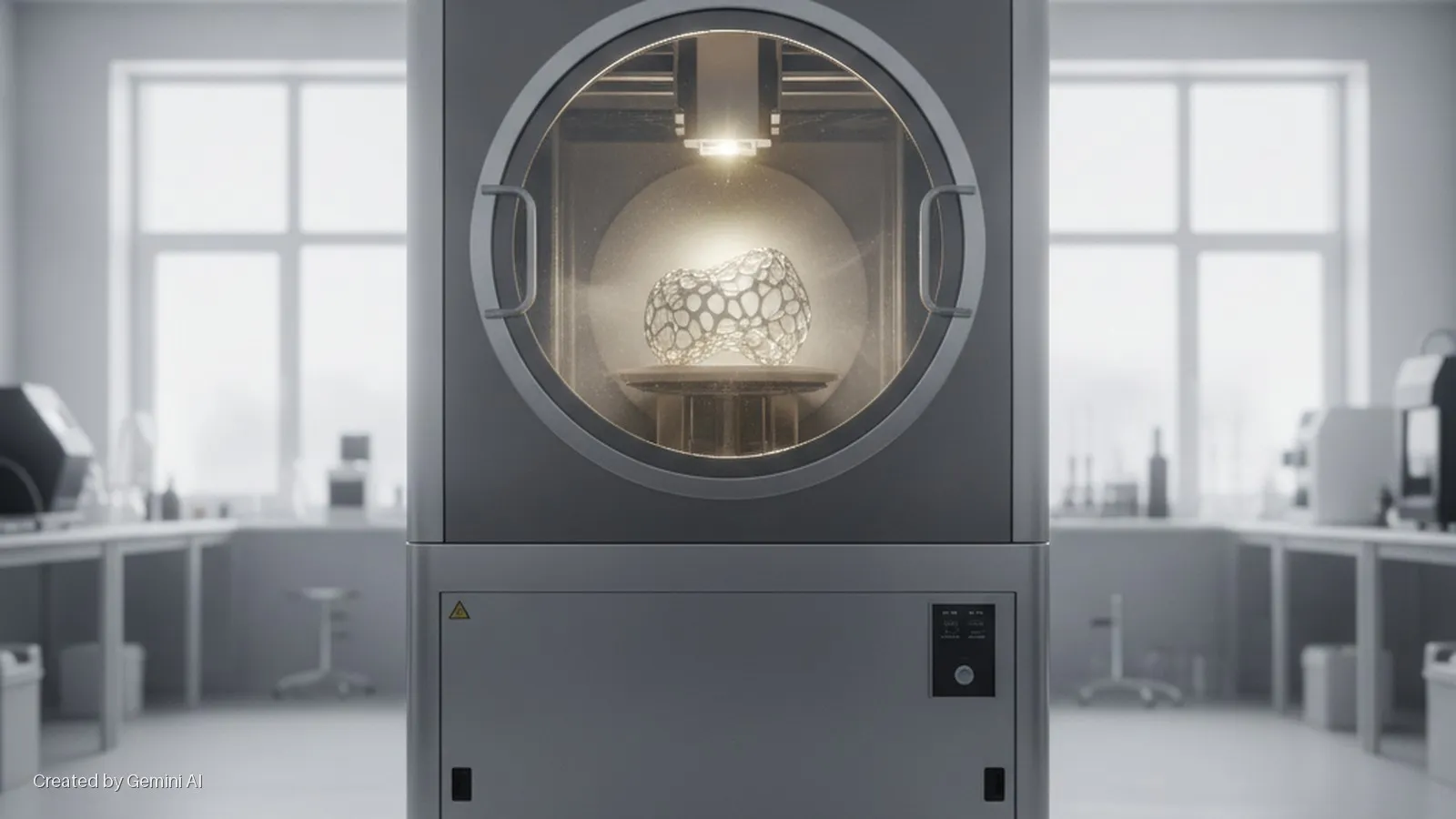
3D Systems (NYSE: DDD) has signed a Cooperative Research and Development Agreement (CRADA) with Savannah River National Laboratory (SRNL) to advance additive manufacturing (AM) for nuclear energy systems and national security applications. The partnership is anchored at SRNL's Advanced Manufacturing Collaborative (AMC), a facility that opened in August 2025 on a South Carolina public university campus.
Under the agreement, the two organisations will pursue joint work across materials development, equipment enhancements, AI/ML-enabled process optimisation, cybersecurity integration and workforce training. 3D Systems has already installed commercial AM equipment at the AMC, supported by facility upgrades and resident subject-matter experts. The stated intention is to move from laboratory-scale research to production-ready, commercially transferable processes.
The deal
Jeff Graves, president and chief executive of 3D Systems, said the partnership demonstrates the relevance of high-quality AM technologies to energy and national security markets and to building the skilled workforce those markets need. The release does not disclose the financial terms of the CRADA, any revenue-sharing arrangements, or a timeline for specific deliverables beyond the broad goal of technology transfer and commercial application.
The collaboration carries particular relevance for components that are difficult or impossible to fabricate by conventional means: high-temperature nickel-based superalloys, radiation-tolerant materials, and intricate heat exchangers with internal cooling channels. These are precisely the part families needed for advanced nuclear reactor internals, pumps and valves. Roderick Jackson, associate laboratory director for science, energy and innovation at SRNL, said the partnership is positioned to "deliver groundbreaking additive manufacturing technologies" and strengthen US manufacturing competitiveness.
Market context
The timing is deliberate. The International Energy Agency projects that small modular reactor (SMR) capacity could reach roughly 40 gigawatts under current policies or up to 120 gigawatts in accelerated scenarios by 2050, a trajectory that would represent a substantial uplift in demand for precision-manufactured nuclear components. Domestic US supply chains for such components are currently limited, and long lead times for conventionally manufactured reactor parts are a recognised bottleneck for advanced reactor programmes.
Several AM vendors have pursued nuclear-adjacent qualification work in recent years, but achieving materials certification for safety-critical nuclear applications is a lengthy, regulation-intensive process. The US Nuclear Regulatory Commission has been developing guidance for AM components, and ASME has published additive manufacturing standards relevant to nuclear pressure equipment. The CRADA structure means that SRNL's status as a Department of Energy federally funded research and development centre brings regulatory credibility and access to DOE testing infrastructure, which could accelerate qualification timelines for 3D Systems' materials and processes.
3D Systems operates across medical, aerospace, defence and industrial markets; nuclear energy represents a newer vertical push for the company. Competitors including GE Additive, Trumpf and a number of specialist powder-bed fusion vendors have also signalled interest in nuclear and defence fabrication. The workforce development strand of the CRADA is notable: attracting and retaining AM engineers with nuclear domain knowledge is widely cited as a constraint on the sector's growth, and embedding training at a national laboratory campus addresses that gap directly.
The partnership adds weight to a broader pattern of US government laboratories formalising industrial AM relationships as the country looks to de-risk critical energy infrastructure supply chains. Whether 3D Systems can convert the research relationship into named commercial contracts and qualifying components will be the metric investors and customers will watch.