
Cerebras and Compute Nordic plan 165 MW AI data centre in Finland
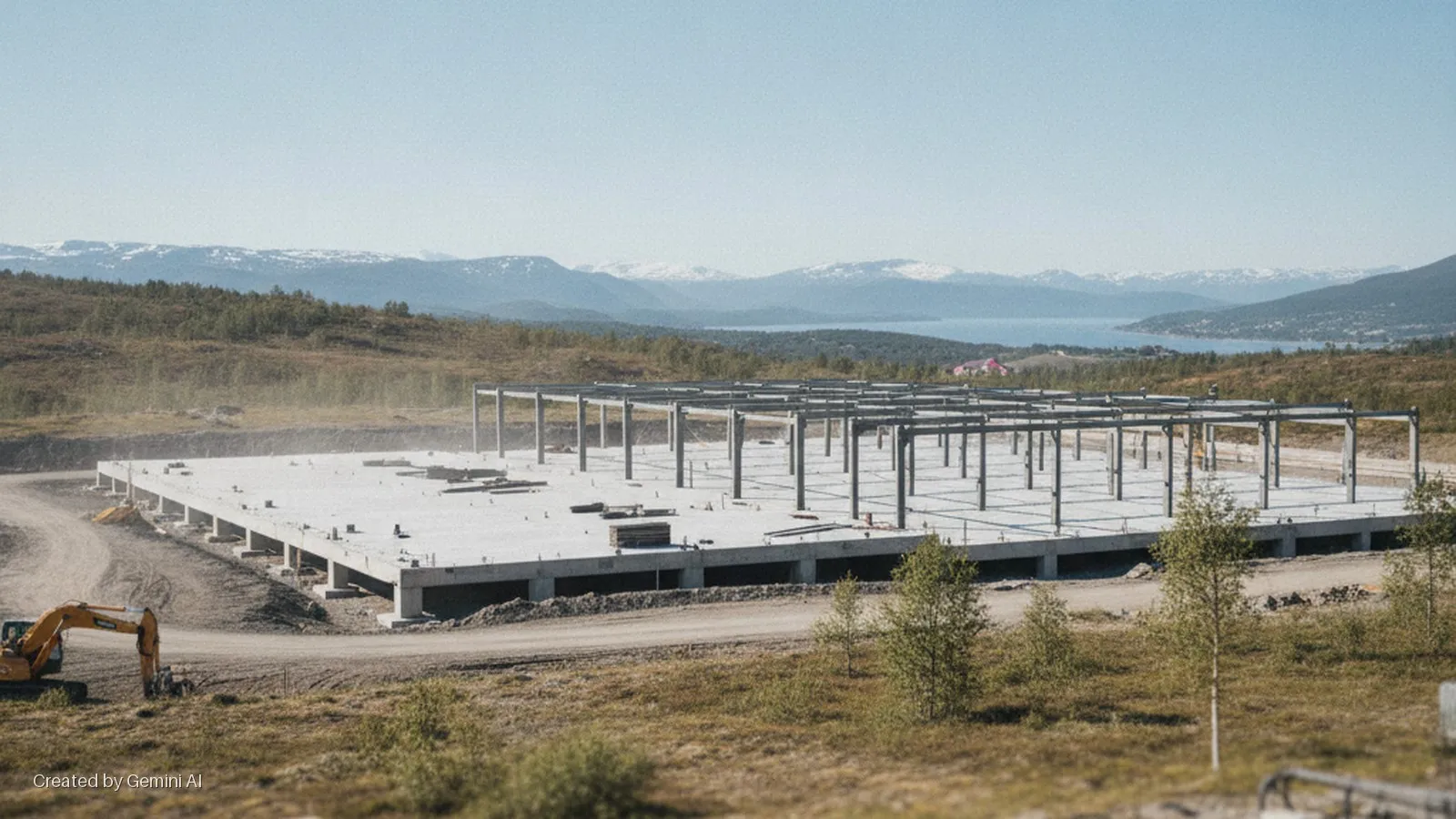
Cerebras Systems (NASDAQ: CBRS) has announced a purpose-built AI data centre in Mikkeli, Finland, developed in partnership with Compute Nordic Finland. The facility is designed to scale in three phases, from an initial 50 MW build currently under construction through 80 MW and ultimately to 165 MW of contracted IT capacity. The agreement is structured as a series of service orders, each carrying seven-year contract terms, giving both parties a long-duration commercial anchor.
Independent analysis from consultancy Ramboll, published in a Finnish Data Center Market Study dated September 2025, estimates the full 165 MW project represents an indicative regional investment of €1.0 to €1.7 billion, supporting between 80 and 250 direct permanent jobs and generating €0.8 to €2.5 million annually in property tax revenue for the South Savo region.
Design and efficiency
The Mikkeli campus has been designed with power and water efficiency as core requirements. Cooling will use closed-loop systems that recirculate water rather than draw continuously from municipal supply, reducing freshwater consumption compared with conventional open-loop or evaporative approaches. The facility has also been designed to enable waste-heat recovery, allowing thermal energy produced by AI compute workloads to be fed back into the local district heating network.
Andrew Feldman, chief executive and co-founder of Cerebras, framed the site selection around the alignment between the company's wafer-scale chip architecture and the facility's efficiency-first design. "Our architecture is built to get more useful AI output out of every megawatt we deploy," he said. "Mikkeli lets us pair that efficiency with a data centre designed for closed-loop cooling and heat reuse from the ground up."
Pyry Virrantaus, chief executive of Compute Nordic Finland, described the arrangement as a contracted commitment rather than a speculative build, noting that the phased structure reflects current and projected market demand rather than anticipated future supply.
Market context
The announcement places Cerebras in the company of a growing field of AI-compute specialists building dedicated inference and training infrastructure in Northern Europe. Finland's combination of relatively low electricity costs, cool ambient temperatures that reduce mechanical cooling loads, and access to renewable energy from hydro and wind sources has made the country an increasingly attractive location for hyperscalers and AI-native operators alike. Microsoft, Google and Amazon Web Services have all expanded Nordic data centre footprints in recent years.
For Cerebras specifically, the Mikkeli facility extends an infrastructure strategy centred on its wafer-scale engine, a chip design that integrates an entire silicon wafer as a single processor die and is positioned by the company as delivering substantially higher memory bandwidth and lower latency than multi-chip GPU clusters for large AI model workloads. The company's customer base currently includes OpenAI, Group 42 and the Mohamed bin Zayed University of Artificial Intelligence.
The EU AI Act's general-purpose AI obligations and the NIS2 directive's requirements for operators of essential services will apply to infrastructure of this scale and strategic significance. Finland's position as an EU member state also means the facility will need to comply with GDPR data-residency requirements for any European customer data processed on-site. Neither Cerebras nor Compute Nordic addressed these regulatory dimensions in the announcement.
Ramboll's economic impact figures are presented as estimates and are subject to the project completing all three capacity phases on schedule. The forward-looking revenue and employment projections carry material uncertainty, as Cerebras acknowledges in the boilerplate forward-looking-statements section of the release.