
HUMAIN and Applied Intuition to build Saudi autonomous truck network
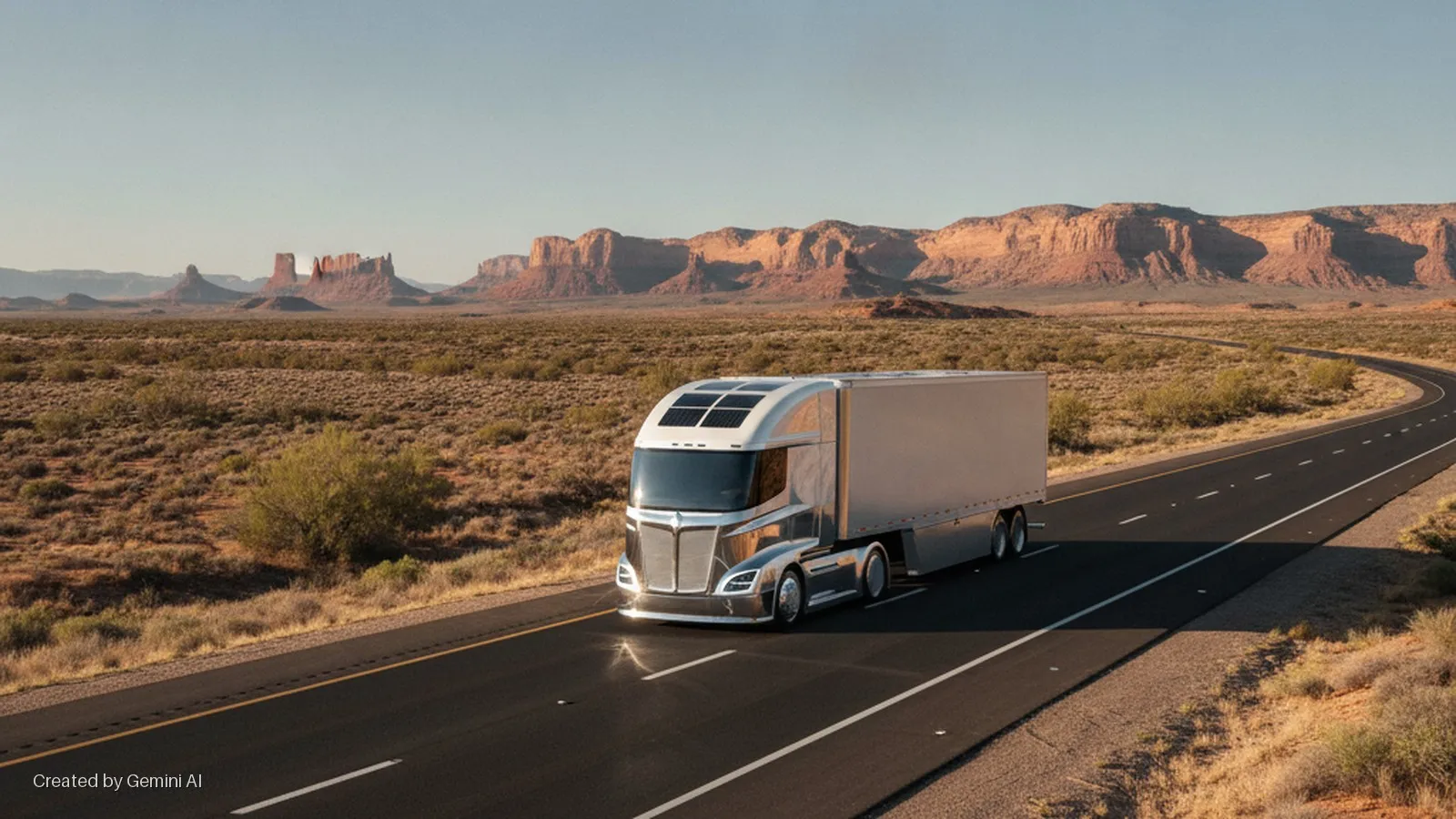
HUMAIN, the Saudi Public Investment Fund's full-stack AI subsidiary, and Applied Intuition, a Silicon Valley physical-AI platform company, have announced a strategic collaboration to deploy autonomous trucking across Saudi Arabia, with ambitions to extend the technology into robotaxis, ports, mining, manufacturing, agriculture and construction. The initial phase targets thousands of self-driving trucks operating across key freight corridors by 2030, which the companies describe as the largest autonomous trucking network in the world.
Applied Intuition will provide its end-to-end physical AI stack under a long-term commercial agreement. At the core is its Self-Driving System, a Level 4 autonomy stack already operating on public roads in the United States, Europe and Japan. The platform is complemented by Vehicle OS and a broader suite of vehicle-intelligence software. The company has established a Riyadh office and says it will build a local technical team to support fleet launch, operations and scaling.
The deal
Tareq Amin, chief executive of HUMAIN, said thousands of autonomous trucks operating continuously could "transform the speed, cost, and capacity" of the Kingdom's logistics network, with an economic multiplier effect across sectors. Qasar Younis, co-founder and chief executive of Applied Intuition, framed the partnership as a flagship deployment in the company's stated mission to bring intelligence to "a billion machines" globally.
The release does not disclose the financial terms of the commercial partnership, the number of trucks in the initial deployment tranche, the specific freight corridors targeted, or the OEM truck partners involved. No customer revenue figures or contracted fleet sizes were provided. HUMAIN is a company of the Public Investment Fund, Saudi Arabia's sovereign wealth fund, giving the initiative both sovereign backing and strategic alignment with Vision 2030's diversification agenda.
Market and regulatory context
Autonomous trucking has attracted significant capital over the past decade, with a cohort of well-funded players including Aurora Innovation, Waymo Via and Kodiak Robotics pursuing US highway freight deployment. Applied Intuition has historically focused on simulation and development tooling for automotive and defence programmes; this partnership represents a notable pivot toward operating large-scale commercial fleets rather than supplying platform software to other operators.
The Saudi geography presents a specific opportunity: high freight volumes along the King Abdulaziz Port corridor and the land bridge linking Red Sea and Gulf ports, relatively predictable weather conditions, and a government willing to move quickly on regulatory frameworks. Saudi Arabia does not yet have a published autonomous vehicle regulatory code equivalent to the US FMCSA's AV policy framework or Germany's Autonomous Driving Act, but the Vision 2030 programme has typically created bespoke regulatory sandboxes for strategic technology initiatives.
For Applied Intuition, the Riyadh office deepens a pattern of international expansion across London, Munich, Tokyo and Seoul. The partnership also carries geopolitical dimensions: sovereign AI infrastructure investment by Gulf states has accelerated sharply since 2024, with HUMAIN having previously announced data-centre and model-development collaborations with US hyperscalers. Autonomous logistics fits within HUMAIN's stated four-pillar strategy, which sits alongside next-generation data centres, cloud platforms and Arabic large language models.
Outlook
The 2030 target for a full-scale national trucking network is ambitious. Rolling out thousands of autonomous vehicles across a new geography requires local HD mapping, regulatory clearance, roadside infrastructure, remote operations centres and maintenance ecosystems, none of which are addressed in the announcement. Investors and industry observers will look for named OEM partners, regulatory milestones and a committed fleet-size figure as the clearest early indicators of progress. The expansion into robotaxis and industrial sites such as ports and mines represents a longer runway still, dependent on the trucking phase demonstrating safety and economic performance at scale.