
HPE and Intel launch Saudi AI initiative at LEAP 2026
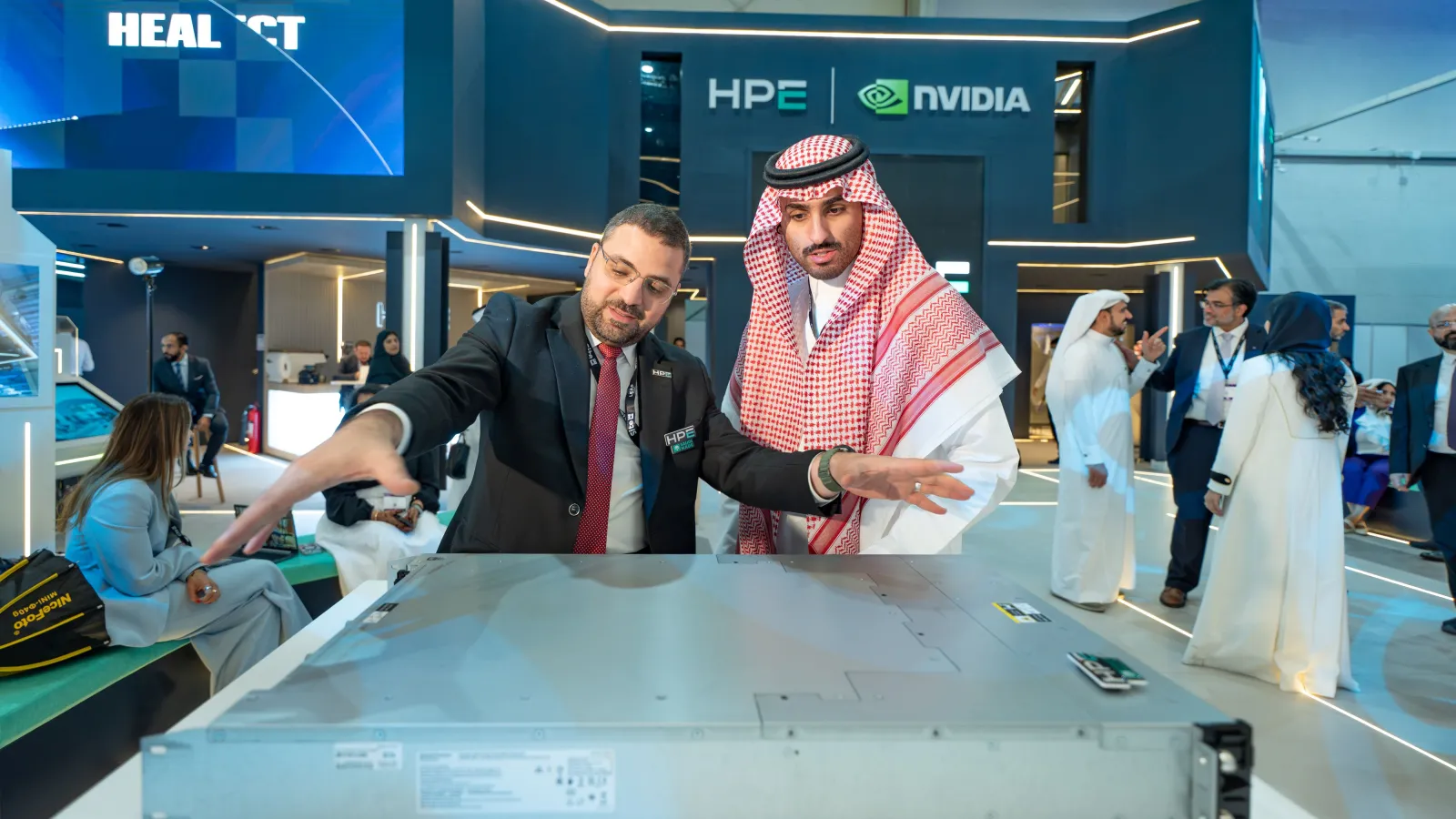
Hewlett Packard Enterprise and Intel have announced a series of initiatives at the LEAP 2026 conference in Riyadh designed to deepen the two companies' footprint in Saudi Arabia's technology ecosystem. The centrepiece is the launch of "Saudi Made, Developed, Deployed", a trilateral programme with the Ministry of Communications and Information Technology (MCIT) that aims to connect locally produced infrastructure with Saudi-built software and in-country delivery capabilities.
The programme will give participating Saudi companies access to HPE's hybrid cloud platforms and engineering resources, alongside Intel's AI compute technologies, developer enablement tools and model-optimisation guidance. MCIT will align the initiative with the Kingdom's broader Vision 2030 digital transformation objectives. Founding software partners include ShaheenAI, MOZN and OmniOps; Alnahil Computers will serve as the primary systems integration and deployment partner.
Expanded local production
HPE also announced an extension to its existing "Saudi Made" hardware portfolio. The HPE Alletra Storage MP B10000 and X10000 platforms will now be locally produced in the Kingdom, adding resilient block, file and object storage to a portfolio previously anchored around server infrastructure. The systems will be managed through HPE's GreenLake cloud console and are positioned for data-intensive and AI workloads.
The company has formalised its manufacturing relationship with Saudi industrial conglomerate alfanar, which will act as HPE's assembly and integration partner in-country. The expanded arrangement goes beyond basic assembly, encompassing component integration, configuration, testing, quality assurance, logistics and lifecycle service readiness. Abdullah Al Sulami, General Manager for Power Solutions at alfanar, said the partnership was "moving beyond local assembly to provide integrated, tested and application-ready systems."
HPE and Intel also announced plans for a Saudi Innovation Centre to be housed at HPE's new Riyadh offices. The facility is intended as a shared environment for customers, startups and ecosystem partners to test, validate and demonstrate locally developed technologies, with AI talent development and developer training also forming part of its remit.
Market context
Saudi Arabia has become one of the most active markets in the world for technology localisation investment, with Vision 2030 creating structured incentives for foreign vendors to shift production and R&D activity in-country rather than simply exporting finished products. HPE's "Saudi Made" programme, which began with server production, is representative of a wider pattern: large enterprise infrastructure vendors establishing local manufacturing and services capabilities as a condition of significant public-sector and quasi-governmental contracts.
Intel's involvement adds meaningful AI compute and software depth to what had been a primarily hardware-led local-production story. The participation of Saudi-founded AI firms ShaheenAI and MOZN suggests the initiative is also intended to accelerate commercial readiness for domestically developed models and applications, a stated priority of MCIT.
The initiative sits within a competitive regional technology landscape. Microsoft, Google and AWS have each announced cloud region investments in Saudi Arabia in recent years, and a number of Asian and European hardware vendors are pursuing similar localisation strategies. HPE's differentiator is the depth of its in-country manufacturing relationship, which now extends to pre-integrated, pre-tested systems rather than simple kit assembly. Whether that translates into a durable commercial advantage will depend on how quickly the Innovation Centre can move partner solutions from validation to revenue-generating deployment.