
Cerence EVD deployed in AS Mobi autonomous buses across Japan
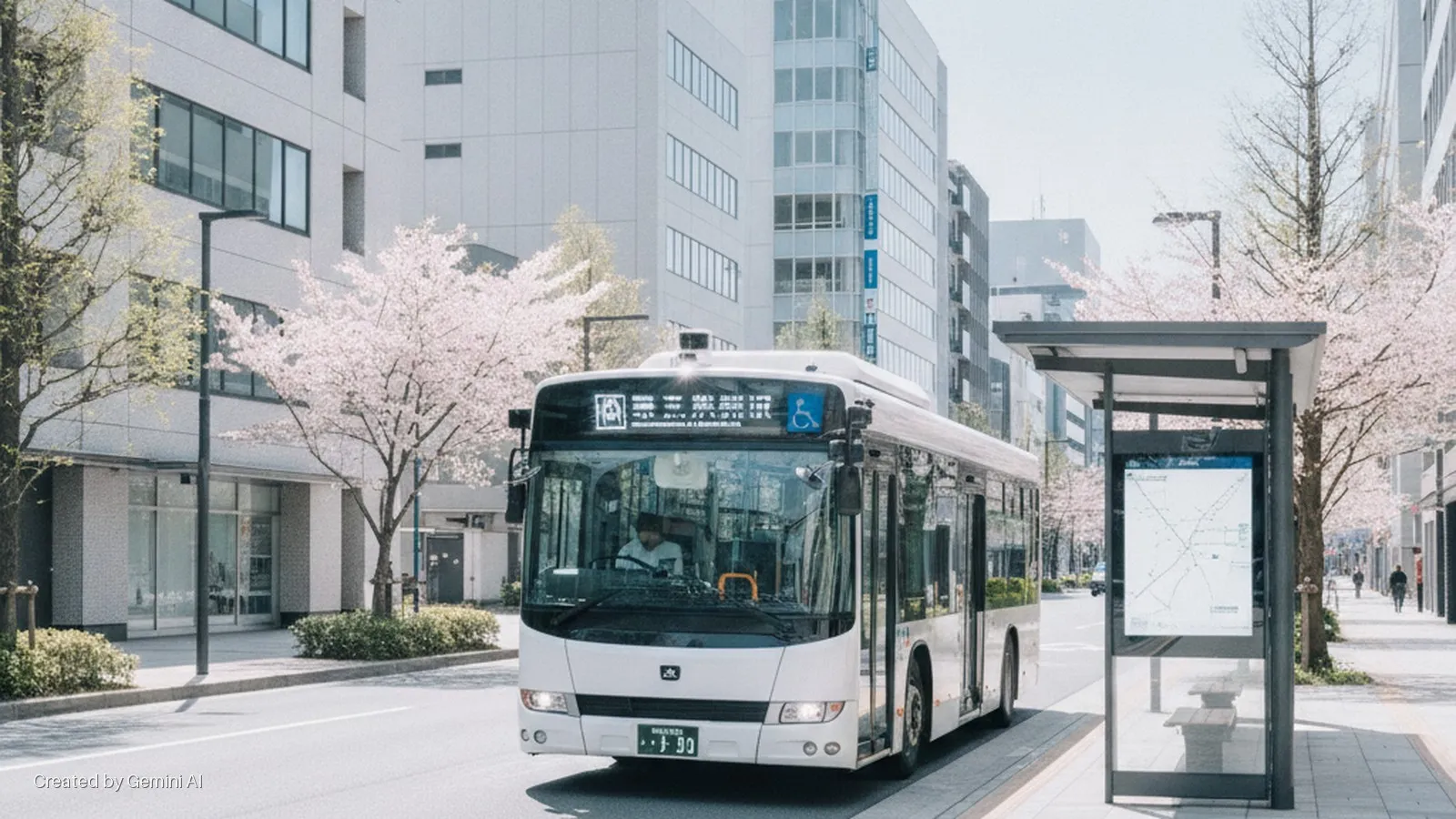
Advanced Smart Mobility Co., Ltd. (AS Mobi) has begun field trials of Cerence Emergency Vehicle Detection (EVD) in its autonomous bus platform across multiple regions in Japan. The collaboration, announced on 25 August 2026, marks Cerence AI's first autonomous bus programme in the country and the first deployment of its EVD system using exterior microphones.
AS Mobi was founded in 2014 in partnership with the University of Tokyo's Advanced Mobility Research Center and has since run trials with several Japanese government bodies, including the Cabinet Office and the Ministry of Land, Infrastructure, Transport and Tourism. The company is targeting commercial deployment of its autonomous bus services for 2027, with emergency vehicle awareness positioned as a core safety capability required before that transition.
How the technology works
Cerence EVD uses what the company calls Audio AI to detect approaching ambulances, police vehicles and fire engines from sound alone. The system is said to distinguish emergency sirens from ambient traffic noise and supports more than 1,500 siren signatures across 47 countries. In autonomous driving systems, the technology operates alongside cameras, radar and LiDAR rather than replacing them, providing an additional sensing layer that is particularly relevant where emergency vehicles may be audible before they enter a camera's field of view.
Masaya Segawa, President at AS Mobi, said emergency vehicle awareness is "an important capability for autonomous bus operations" and that the Cerence collaboration supports efforts to build services that are "safer, more accessible, and better equipped for the dynamic challenges of real-world environments."
Christian Mentz, Chief Revenue Officer at Cerence AI, framed the deployment in terms of real-world operational complexity: "As autonomous mobility moves from controlled testing environments to real-world transportation services, vehicles need a broader understanding of their surroundings."
Market context and regulatory backdrop
Japan presents a structurally motivated case for autonomous public transport. An ageing population and a widening commercial driver shortage have prompted national and local government investment in automated mobility, and AS Mobi's government trial history gives it a credibility advantage in a market where regulatory approval can be protracted.
Acoustic detection is an underserved dimension of the broader autonomous vehicle sensor stack. The dominant development effort in the sector has centred on visual perception, radar and LiDAR, with audio treated as a secondary or optional input. A handful of startups and academic groups have explored siren detection, but commercial-grade, multi-country siren databases of the scale Cerence claims are not widely available from competing vendors. Whether audio AI becomes a mandated safety element in autonomous vehicle certification frameworks, rather than a differentiating add-on, may shape how much weight buyers ultimately place on it.
Japan's Cabinet Office has been advancing its mobility-as-a-service regulatory agenda, and the Ministry of Land, Infrastructure, Transport and Tourism introduced a framework for Level 4 autonomous vehicle operations on public roads in 2023. AS Mobi's government relationships and the 2027 commercial target suggest the company is aligning its technical readiness with expected regulatory milestones rather than racing ahead of them.
Cerence Inc. is listed on NASDAQ under the ticker CRNC and is headquartered in Burlington, Massachusetts, with operations worldwide. The company reports over 525 million vehicles shipped with its technology, principally in in-cabin voice and conversational AI, making automotive audio processing a core rather than peripheral competency. The autonomous mobility segment represents a strategic extension of that heritage into exterior sensing and safety systems.