
UN:BLOCK Fintech conference to gather 600+ in Riga on 15 October
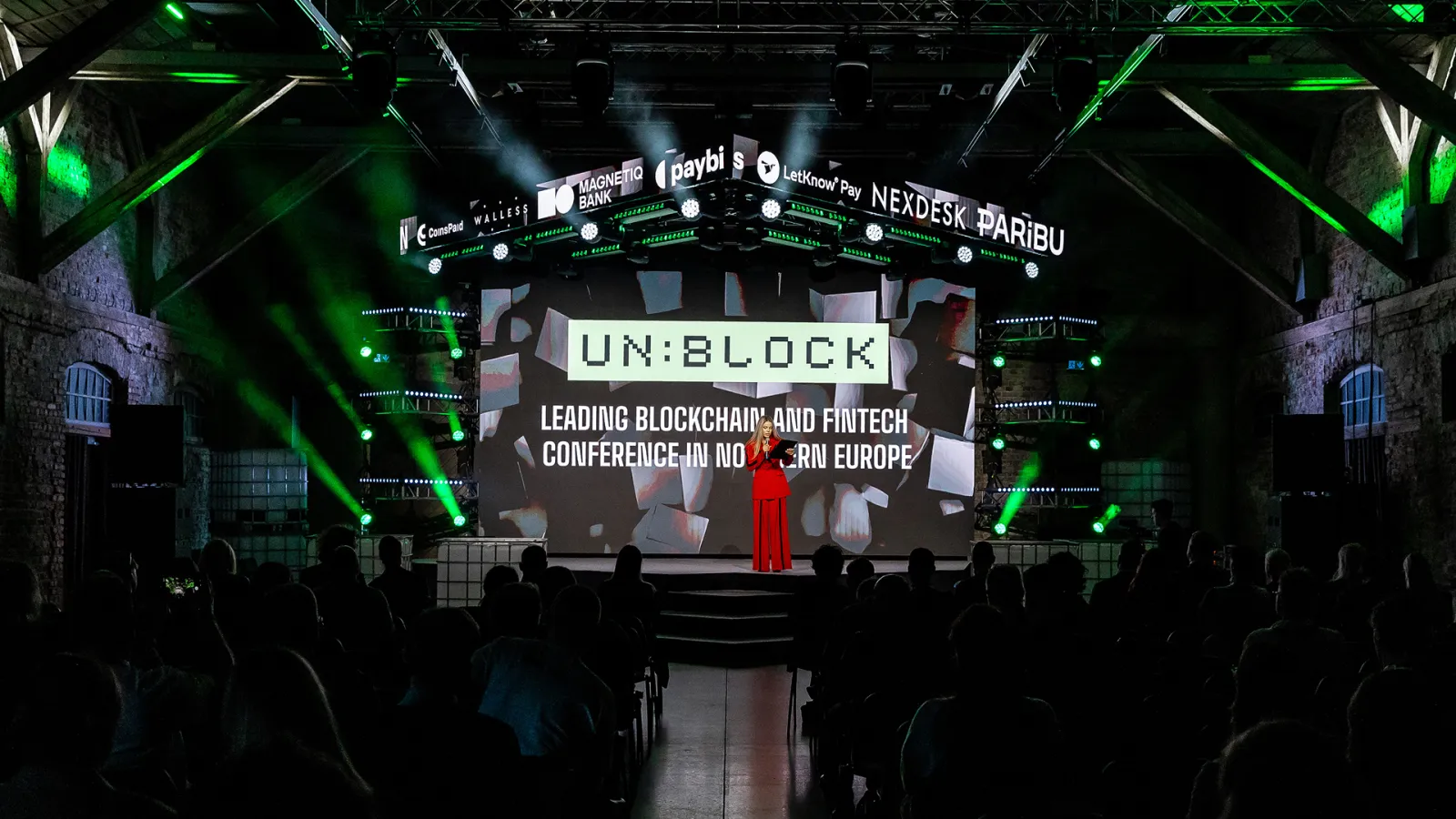
UN:BLOCK Fintech, a new one-day conference organised by the team behind the annual UN:BLOCK Europe blockchain event, is set to convene more than 600 fintech professionals, private investors and EU regulators in Riga on 15 October 2026. Hosted at Fantadroms, the event will tackle MiCA regulation, cross-border payments, AI in financial services, capital mobilisation and bank-fintech partnerships.
The conference is organised in cooperation with the Latvian Blockchain Association, with support co-financed by the European Regional Development Fund and the Latvian state budget. Partners include the Investment and Development Agency of Latvia, Mastercard, Mintos, Bolt, Nexpay, Magnetiq Bank and Tribe Payments.
Key sessions
One of the headline discussions will centre on approximately €9 billion in Latvian savings and pension assets described in the programme as "dormant capital." The session, titled "Who Wakes Up Latvia's €9 Billion Dormant Capital?", will feature panellists from Digilo, Twino, Mintos and AS Crefo Birojs examining how more of that pool can be directed toward productive investment.
A separate session, "5 CEOs Behind Latvia's First MiCA Licences", will bring together executives from Backpack EU, Nodu, Kanga Exchange and H Finance to discuss their experiences navigating the EU's Markets in Crypto-Assets framework and what authorisation means for pan-European growth. A third panel on cross-border payments will include representatives from Bolt, Paybis, Nexpay, SEB and Latvijas Banka, addressing the persistent cost and speed challenges in international transfers. Practical workshops will cover MiCA compliance, payment and e-money institution licensing, crowdfunding regulations and AML requirements.
Reinis Znotiņš, Executive Director of the Latvian Blockchain Association, said: "Northern Europe's fintech scene continues to grow, attracting increasing interest from businesses and retail investors alike. We believe the UN:BLOCK Fintech Forum will create valuable opportunities for business development."
Market context
Latvia has been positioning itself as an EU gateway for fintech and crypto-asset businesses, pointing to relatively streamlined licensing, a legal framework that permits company share capital to be paid in cryptocurrency, and proximity to Nordic financial markets. That positioning has gained traction as MiCA creates a single passportable crypto licence valid across all 27 EU member states, encouraging firms to consolidate their regulatory footprint in a single jurisdiction rather than seek licences country by country.
The Baltic fintech ecosystem more broadly has attracted capital from pan-European venture investors over the past several years, with Riga, Tallinn and Vilnius each competing on regulatory clarity and cost of operations. The MiCA licensing race is adding a new competitive dimension: early movers that secure authorisation before the framework's full-scope application deadline gain a head start in cross-border distribution. Events such as UN:BLOCK Fintech serve as a useful barometer of how quickly the region's regulatory and commercial infrastructure is maturing relative to more established European fintech hubs such as Dublin, Amsterdam and Luxembourg.
The UN:BLOCK Fintech event is positioned as a precursor to UN:BLOCK Europe, the organisers' larger annual conference scheduled for Riga on 10-11 March 2027. Attendees and observers will be watching to see whether the October gathering generates concrete licensing announcements or partnership deals that signal the depth of Latvia's ambition as a fintech hub.