
Micware and Vissel Kobe launch digital twin stadium app PreSpot
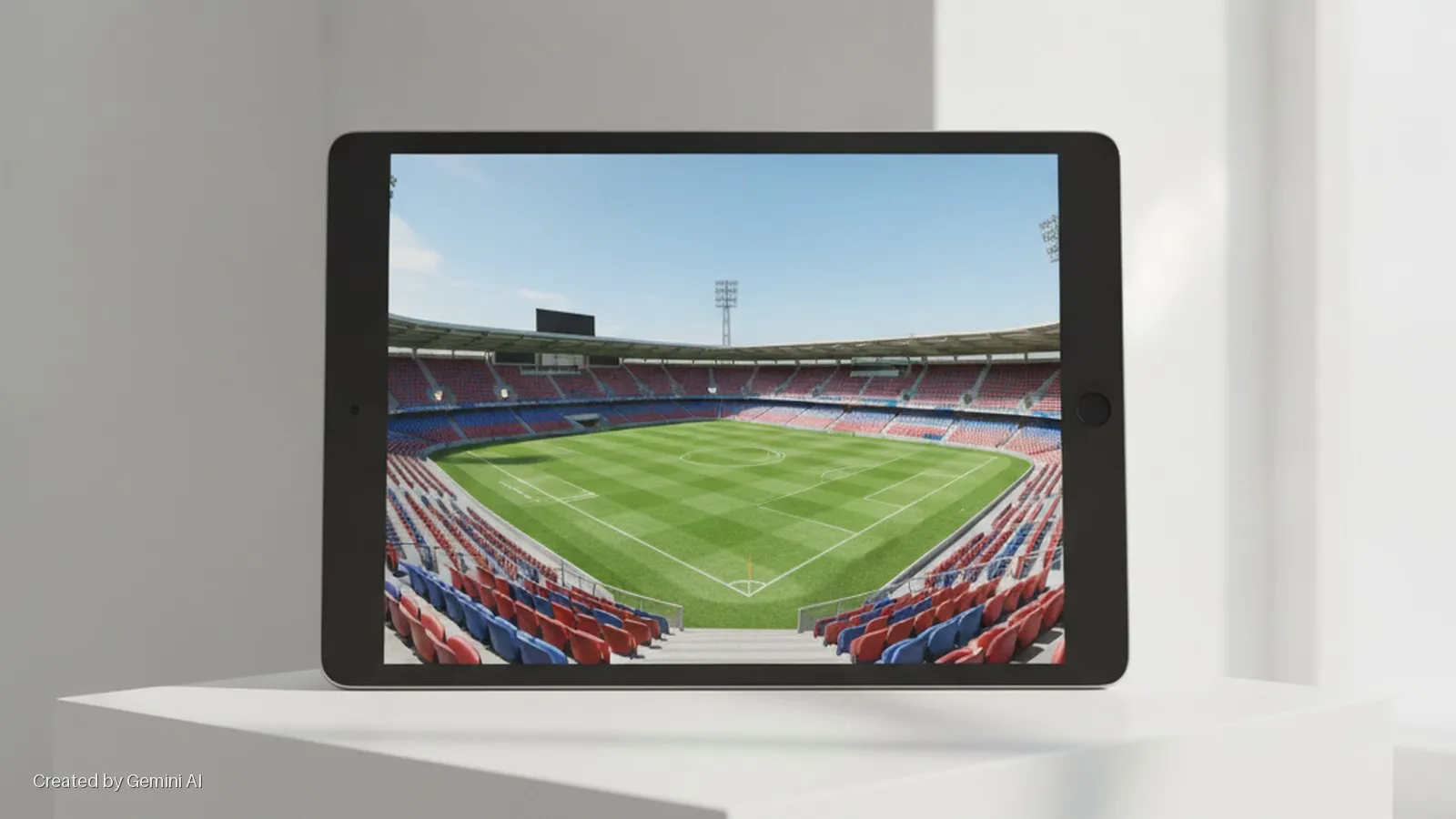
Micware (Nasdaq: MWC) and Japanese football club Vissel Kobe have formed a joint venture to deploy PreSpot, a stadium-focused indoor digital twin service, at Noevir Stadium Kobe. The partnership launched on 13 August 2026 and integrates directly with Vissel Kobe's official mobile app.
PreSpot is built on DynaPlanet, Micware's 3D spatial digital platform released in March 2026. The service lets fans explore a photorealistic rendering of the stadium interior, preview the pitch view from any seat before purchasing tickets, and receive turn-by-turn navigation from the nearest entrance gate to their seat. A companion-sharing feature allows groups to coordinate positions within the venue. The two companies say they will also use the partnership for technical verification of live operational scenarios, with a stated aim of reducing congestion and improving in-venue circulation on matchdays.
Kenji Narushima, representative director, president and chairman of Micware, said the company intends PreSpot to "evolve into a service that connects everything, from the anticipation before a stadium game to travel on the day of the event and movement within the venue after the game, into a single experience, thereby fostering a new relationship between fans and the venue."
Alongside the joint venture, Micware will become an official gold partner of Vissel Kobe for the 2026 to 2027 season. The commercial terms of either arrangement were not disclosed.
Market context
Stadium digital twin technology sits at the intersection of location-based services, spatial computing and venue operations, a niche that has attracted growing interest from venue operators, sports rights holders and smart-city platforms. Suppliers including Inpixon, MappedIn and several hyperscaler-adjacent startups have been building indoor mapping and wayfinding tools for large public venues, driven by fan experience investments from major sports leagues and venue refurbishment cycles. The appeal for clubs lies partly in sponsorship integration and partly in data on fan movement patterns, which can inform concession layout, staffing and ticketing strategy.
For Micware, the move represents a deliberate pivot beyond its automotive and mobility heartland. The company has spent more than two decades building in-vehicle infotainment systems for Honda, Toyota and other OEMs, and ranked ninth among Japan-based Tier 1 IVI suppliers by revenue as of February 2024, according to a Frost & Sullivan study commissioned by the company. DynaPlanet is clearly positioned as the vehicle for diversification, with Micware citing potential expansion to sports facilities, event venues and tourism applications more broadly.
Standards and regulatory read-across
Indoor positioning services of this type rely on a combination of GPS handoff, Bluetooth beacons, Wi-Fi triangulation and visual data captured on-site. Deployment at a public venue in Japan will involve compliance with the Act on the Protection of Personal Information (APPI) where location data is collected from identifiable users. Micware has not disclosed which positioning technologies are active in the current deployment or the data-retention policies applied to fan location traces. As the service expands, particularly if Micware pursues European venues, GDPR obligations around continuous location tracking in public spaces will require careful structuring.
The joint venture's near-term milestones will centre on live matchday performance at Noevir Stadium Kobe. Investors and potential venue partners will be watching for published dwell-time or congestion-reduction metrics, alongside any announcement of a second venue deal that would validate the scalability of the DynaPlanet platform beyond a single club relationship.