
Splashtop Shield launches in Japan via SOURCENEXT partnership
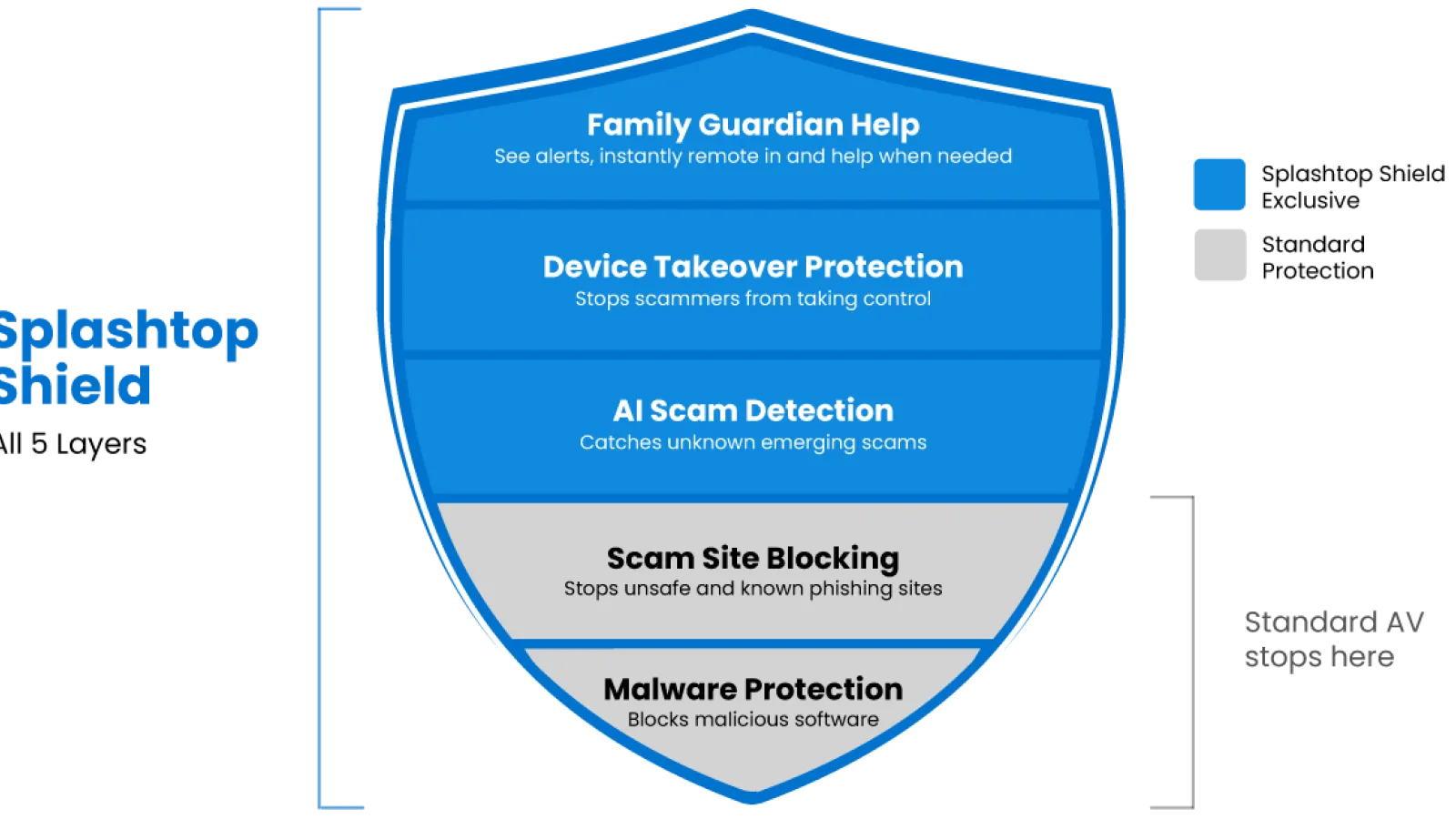
Splashtop K.K., the Japanese subsidiary of Cupertino-based Splashtop Inc., has signed a distribution agreement with SOURCENEXT Corporation to sell Splashtop Shield for 5 Devices through the SOURCENEXT website. The product combines antivirus, phishing and scam-site blocking, unauthorised-remote-access prevention, and a remote-support function into a single consumer licence covering up to five Windows or macOS computers.
The partnership was announced on 27 August 2026. Pricing runs from JPY 9,780 for a one-year licence to JPY 29,340 for five years. SOURCENEXT, best known in Japan as a packaged-software retailer and localisation partner, will handle sales and customer support.
Product and threat context
Splashtop is pitching Shield explicitly at adult children who want to monitor and assist elderly parents living separately. The positioning is anchored in official Japanese data: the National Police Agency recorded 2.45 million phishing reports in 2025, a 43 per cent year-on-year rise, and internet-banking fraud losses for the same period reached approximately JPY 10.4 billion. Japan's Cabinet Office puts the over-65 population at 36.24 million, or 29.3 per cent of the total, a demographic pressure that makes digital-safety support for older relatives a recognisable consumer need.
The product's security architecture is described by Splashtop as a five-layer defence combining conventional malware scanning, scam-site blocking, an AI-powered behavioural detection layer, a dedicated module to block unauthorised remote-access tools, and scheduled device scans including removable media. Remote-help sessions require approval from the person receiving support, which Splashtop frames as a privacy safeguard. The platform is ISO/IEC 27001 certified and SOC 2 compliant; communications use TLS with AES-256 encryption.
Market landscape and competitive positioning
Japan's consumer security market is well served by globally recognised names including Norton (NortonLifeLock), Trend Micro (headquartered in Tokyo and dominant in the Japanese retail channel), Eset and Kaspersky, as well as locally developed products. Splashtop's differentiation here rests on bundling its established remote-access technology with the security stack, giving technically confident family members a licensed, privacy-respecting route to support relatives, rather than relying on ad-hoc screen-sharing tools that may lack enterprise-grade encryption.
SOURCENEXT adds meaningful reach: the firm operates one of Japan's larger direct-to-consumer software retail channels and has a history of successful localisation partnerships for foreign software titles. That distribution relationship could accelerate adoption among older PC users who still favour packaged or code-delivered software over direct app-store downloads, a buying pattern that remains more prevalent in Japan than in comparable Western markets.
The consumer endpoint-security segment has broadly consolidated around subscription models, with average selling prices compressing. Splashtop's multi-year pricing, which offers proportionally lower cost as the licence term extends, follows an established playbook for locking in household renewals.
Regulatory and compliance read-across
Japan's Act on Protection of Personal Information (APPI), updated in 2022, imposes data-handling obligations that international software vendors must navigate, particularly for products that process family members' device telemetry and remote-session data. Splashtop's stated GDPR compliance suggests a broadly aligned data-handling posture, but Japanese buyers will likely seek clarity on domestic data-residency and incident-notification obligations as part of any procurement decision, even at the consumer level.
The unauthorised-remote-access blocking layer also places Splashtop Shield adjacent to the regulatory category of "support scam" countermeasures, an area where Japan's Consumer Affairs Agency has issued guidance in recent years. A product that can block inbound remote-access attempts from fraudulent "tech support" callers addresses a specific vector the agency has highlighted, which could support public-sector endorsement or partnership opportunities over time.