
Diraq to deploy silicon spin quantum computer at Equinix Sydney
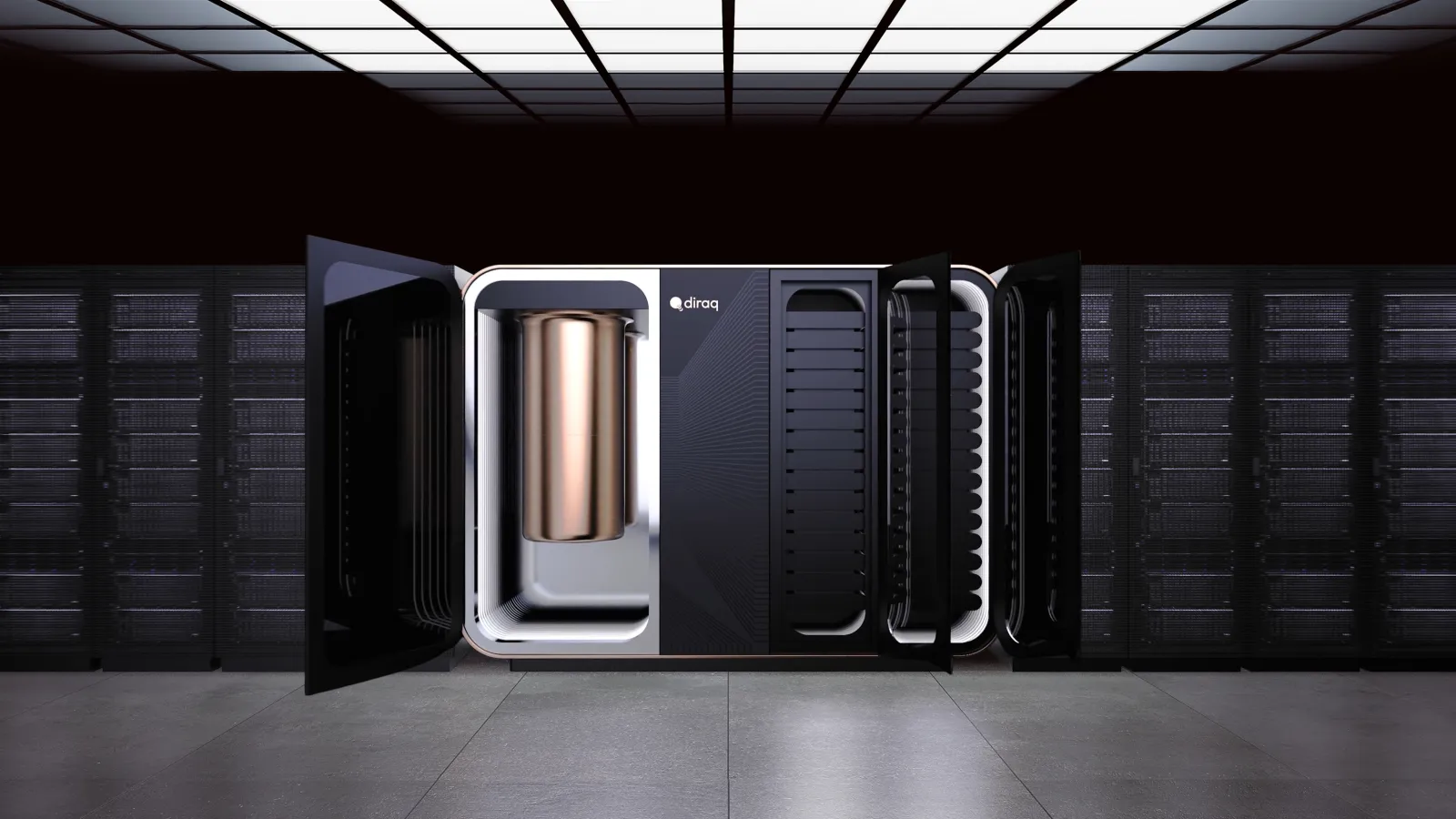
Diraq and Equinix have announced plans to deploy a Diraq quantum computer inside Equinix's Sydney data centre, with installation work scheduled for completion in October 2026. The companies say it will be the first silicon spin quantum computer to operate inside a shared commercial data centre, a milestone they position as a step towards large-scale commercial adoption of quantum computing.
The system centres on an 8-qubit silicon chip, with all cryogenic cooling and control electronics self-contained within the unit. Diraq says the complete system draws less than 20 kW of power and fits within standard rack space alongside conventional servers. Crucially, the company claims that scaling to higher qubit counts requires only a chip swap, with no changes to surrounding infrastructure.
The deployment
Andrew Dzurak, Diraq's founder and chief executive, said the data centre is where quantum computing goes mainstream. "Diraq's quantum computers integrate into operational data centres like any other rack. That's the advantage of Diraq's silicon spin qubits: as we scale to millions of qubits, our system is deployable anywhere in the world, right next to the AI systems that are reshaping the global economy."
The collaboration has three stated aims: testing real-world performance in a live environment with open network connectivity; exploring hybrid quantum-classical computing alongside Equinix's existing cloud and AI workloads; and, once testing concludes, inviting industry partners and customers to evaluate potential applications. Jarrod Nink, managing director for Australia at Equinix, framed the deal in terms of national ambition as well as commercial logic, pointing to Australia's goal of becoming a leading global hub for quantum innovation.
Diraq's technology is built using CMOS fabrication, the same process used to manufacture conventional silicon chips. The company argues this gives it a path to millions of qubits on a single chip using existing semiconductor foundries, without the bespoke manufacturing that constrains some competing architectures. Partners named in the company's background materials include NVIDIA, Dell Technologies, GlobalFoundries and imec. Diraq is also one of eleven companies selected for Stage B of DARPA's Quantum Benchmarking Initiative.
Market context
The quantum computing sector is crowded with competing hardware approaches. Superconducting qubits, developed by IBM and Google, remain the most publicly benchmarked; trapped-ion systems from IonQ and Quantinuum have attracted enterprise pilots; and neutral-atom platforms from QuEra and Atom Computing are gaining research traction. Silicon spin qubits sit at an earlier stage of commercial maturity, but proponents argue the architecture's compatibility with existing foundry processes gives it a long-term cost and scalability advantage.
Deploying inside a commercial colocation facility rather than a dedicated research lab is a meaningful shift in framing. Most quantum systems today operate in purpose-built, highly controlled environments. Proving stable operation within a live data centre, with the electromagnetic noise, vibration and power variability that entails, is a genuine engineering test. At 8 qubits, however, the system is well short of the qubit counts needed for commercially useful error-corrected computation; Diraq acknowledges the installation is primarily a deployment and integration proof-of-concept at this stage.
For enterprise buyers and investors, the October 2026 installation date and the subsequent partner engagement phase will be the key near-term milestones to watch. Whether Diraq can publish verifiable performance benchmarks from a live data centre environment, and name a first paying customer, will determine how the market reads this deployment against the broader competitive field.