
Maris-Tech wins $280,000 Peridot Night order for terrain surveillance
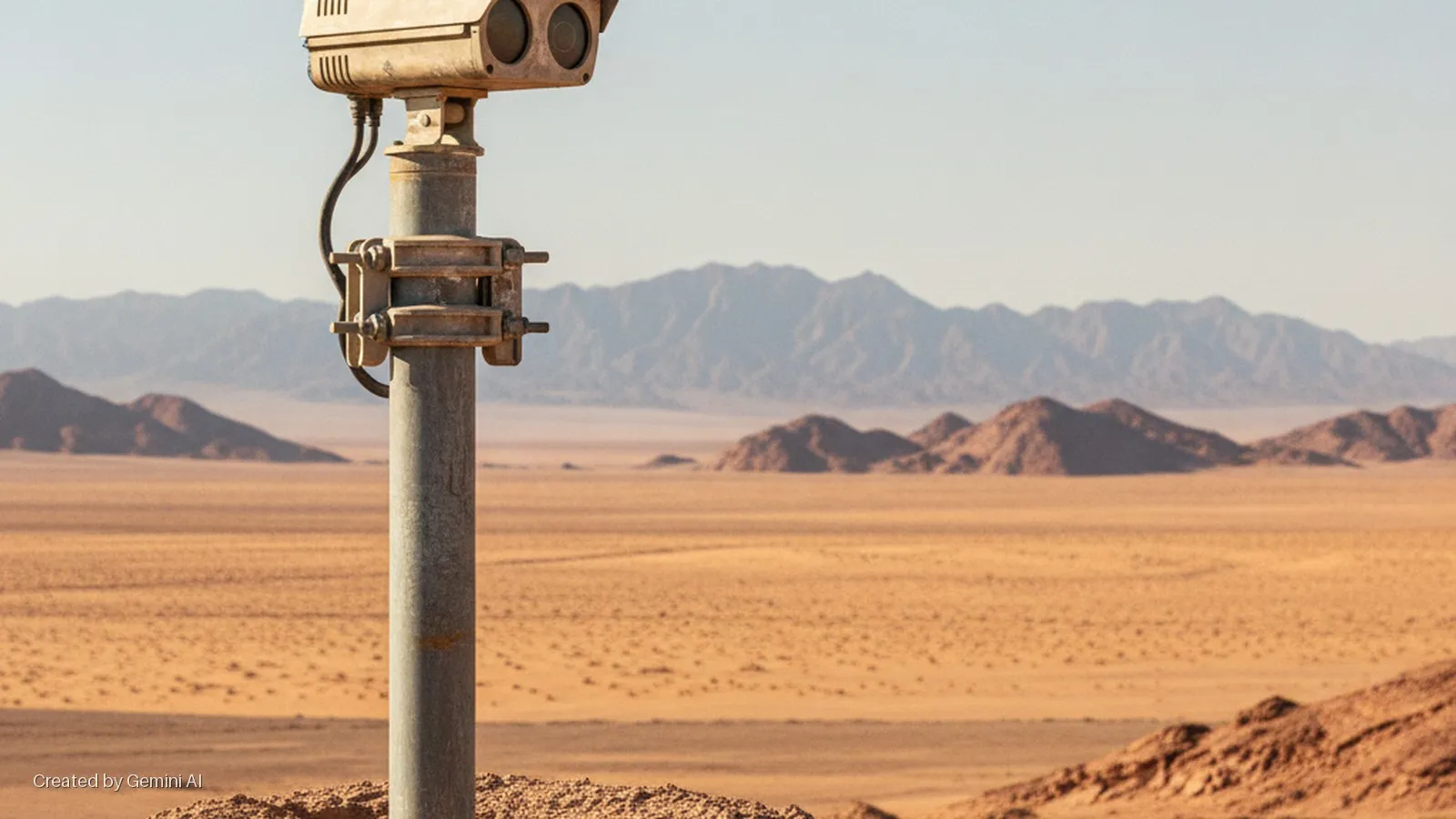
Maris-Tech has received an order worth approximately $280,000 for its Peridot Night system, a ruggedised compact unit combining thermal and full HD day cameras for use in observation and terrain dominance roles. The Israel-based vendor, listed on Nasdaq under the ticker MTEK, said the order follows completion of the system's development earlier in 2026 and reflects what it describes as continued demand across its situational awareness portfolio.
The Peridot Night is designed around a modular architecture offering a 90-degree field of view per camera module. Onboard AI handles object detection and classification at the edge, reducing reliance on bandwidth-intensive backhaul to a central processing node. The system can also relay video to a host observation platform when connectivity permits. Maris-Tech positioned the product for fixed-site monitoring, border surveillance, and dismounted or vehicle-mounted terrain dominance applications where space and power budgets are constrained.
The order
Chief executive Israel Bar said the contract represents a meaningful step in commercial adoption of the Peridot Night line. "For terrain dominance applications, the ability to integrate these capabilities into a small, ruggedised system can be particularly valuable," he said, adding that the company is focused on converting its core video and edge-processing technology into products that address specific operational requirements. Maris-Tech did not disclose the identity of the ordering customer, the delivery timeline, or whether the contract carries options for additional units.
The $280,000 value is modest relative to the scale of typical defence procurement programmes, suggesting this is an evaluation or initial deployment tranche rather than a full programme-of-record award. Investors will look for follow-on orders or a named programme designation as evidence that the Peridot Night is moving beyond early adopter trials.
Market context
The market for edge-AI imaging in defence and homeland security is competitive and growing. A number of well-funded vendors, including both established prime contractors and specialist startups, are pursuing similar SWaP-optimised (size, weight, and power) designs that push inference to the sensor rather than the data centre. The secular driver is the proliferation of unmanned systems, from border surveillance towers to UAVs and ground vehicles, where bandwidth to a cloud or ground station is unreliable or operationally risky.
Export-control considerations are material for an Israeli vendor seeking to expand into the US and allied markets. The US Bureau of Industry and Security (BIS) and the International Traffic in Arms Regulations (ITAR) regime both apply to dual-use and defence imaging technology. Maris-Tech referenced its ability to market successfully in the United States as a key variable in its SEC filings, indicating that US regulatory clearance remains an active workstream rather than a settled matter.
Competitive positioning
Maris-Tech's edge-first approach, embedding AI classification directly on a compact hardware module, is broadly aligned with the direction of travel for surveillance payloads. The challenge for smaller vendors in this space is demonstrating programme-level scale: a single five- or six-figure order establishes technical proof of concept but does not demonstrate manufacturing capacity or long-cycle programme management capability. Sustained contract momentum, customer diversity, and progression from evaluation orders to multi-unit framework agreements will be the key metrics for the company to establish credibility with larger procurement organisations.
The company's broader portfolio spans UAV, armoured vehicle, and dismounted soldier platforms. The Peridot Night appears to extend that edge-video stack into fixed-installation roles, broadening the addressable market without requiring a fundamental technology shift.