
HPE launches Gen12 'Saudi Made' ProLiant servers with Intel Xeon 6
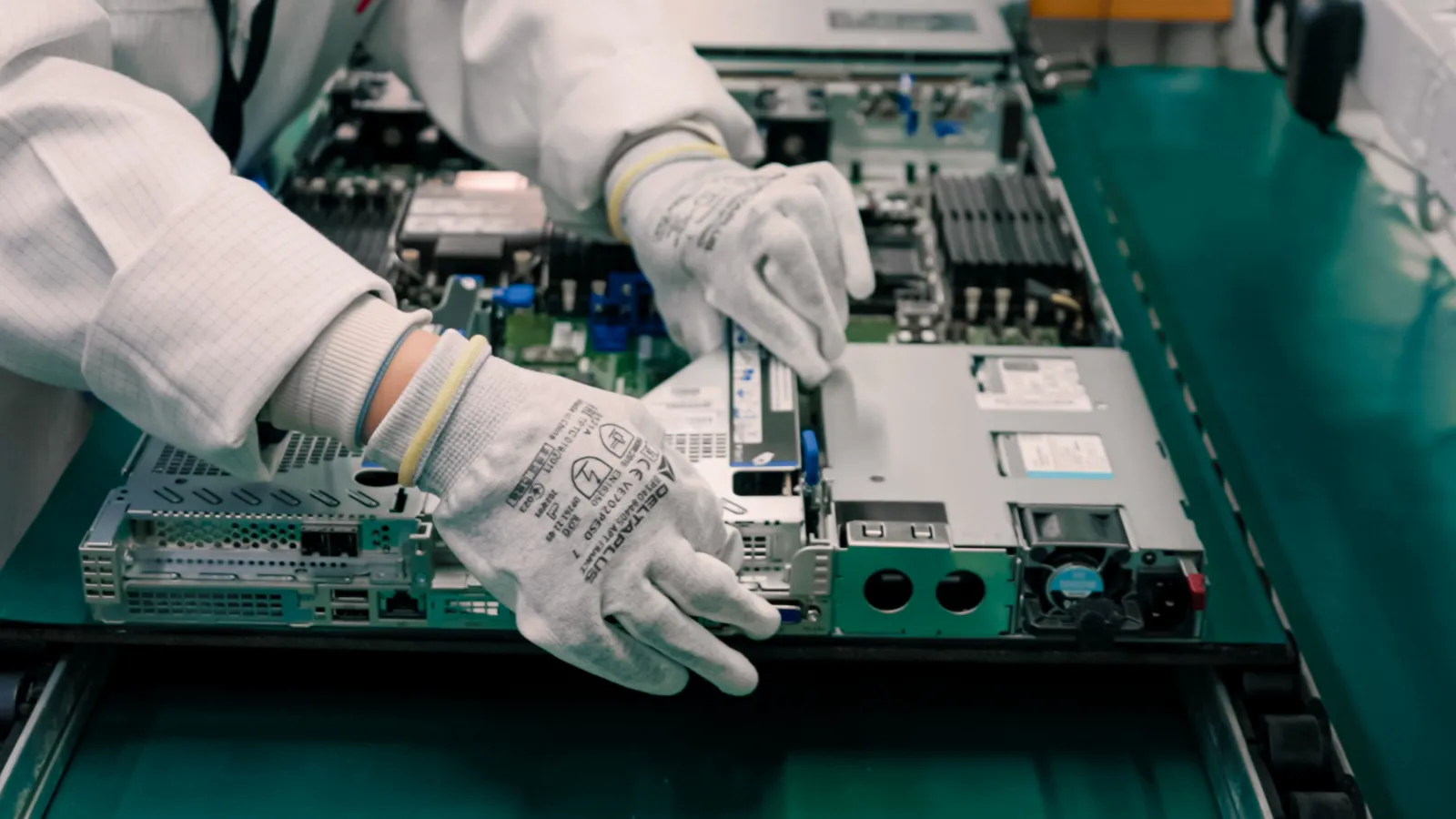
Hewlett Packard Enterprise has announced the latest generation of its 'Saudi Made' server portfolio, adding the ProLiant Compute DL360 and DL380 Gen12 models to its locally produced range. Assembled at the alfanar manufacturing facility in Riyadh and powered by Intel Xeon 6 processors, the systems are now available across Saudi Arabia and selected regional markets including Jordan, Egypt, and the GCC.
The DL360 Gen12 is a 1U, two-socket server supporting up to 144 cores, up to 8 TB of DDR5 memory running at up to 6,400 MT/s, and configurations of up to 20 EDSFF E3.S NVMe drives. It supports PCIe Gen5 expansion and up to three single-wide GPUs. The 2U DL380 Gen12 shares the same processor and memory ceiling but accommodates up to 36 EDSFF E3.S drives and up to eight single-wide or three double-wide GPUs, making it the more accelerator-dense of the two. HPE says the Gen12 platform delivers up to 41% better performance per watt compared with legacy enterprise systems and can reduce power consumption by up to 65% per year.
Security features include HPE's iLO 7 management controller with a silicon root of trust and secure enclave technology, alongside Intel Software Guard Extensions and Trusted Domain Extensions at the silicon level. Cloud-based server governance is handled through HPE Compute Ops Management, which the company says provides AI-informed operational insights across distributed environments.
Digital sovereignty as a commercial driver
The launch is explicitly positioned around Saudi Arabia's Vision 2030 agenda and the broader regional push for digital sovereignty: the idea that governments and enterprises should be able to process and store data within national borders, under local legal jurisdiction, without dependency on foreign infrastructure. Mohammad Alrehaili, VP and Managing Director for the Middle East at HPE, said the Gen12 systems give organisations "the confidence to run their most sensitive workloads" and underlined HPE's ongoing commitment to Saudi-based production.
Intel General Manager for Middle East and Africa Taha M. Khalifa echoed that framing, describing the launch as a contribution to Vision 2030's goals of economic diversification and technological self-sufficiency. Neither executive disclosed customer names, contracted volumes, or the financial terms of the manufacturing arrangement with alfanar.
Market and regulatory context
Saudi Arabia is not an isolated case. Across the Gulf, governments are enacting or tightening data-residency regulations, mirroring similar moves in the EU under GDPR and emerging frameworks in India and Southeast Asia. For enterprise hardware vendors, local-assembly programmes offer a credible answer to procurement policies that favour in-country production, particularly for public-sector and critical-infrastructure contracts.
HPE competes in the regional server market against Dell Technologies and Lenovo, both of which have pursued localisation strategies in growth markets, and against hyperscaler edge offerings that allow compute to run within a sovereign perimeter without on-premises hardware. The ProLiant Gen12 platform's AI-inference capabilities, via its GPU expansion slots and PCIe Gen5 bandwidth, also position it against purpose-built AI server vendors that have been winning rack space in Gulf data centre build-outs.
The 'Saudi Tech' logo on the systems signals compliance with Saudi localisation requirements, which is increasingly a procurement gate for government-adjacent buyers. As the Kingdom's Oversight and Anti-Corruption Authority and the National Cybersecurity Authority tighten controls on foreign IT vendors, locally assembled hardware with a silicon-level trust chain is likely to carry growing commercial weight in the region through 2027 and beyond.