
Nutanix and ChronoScale partner on enterprise AI infrastructure
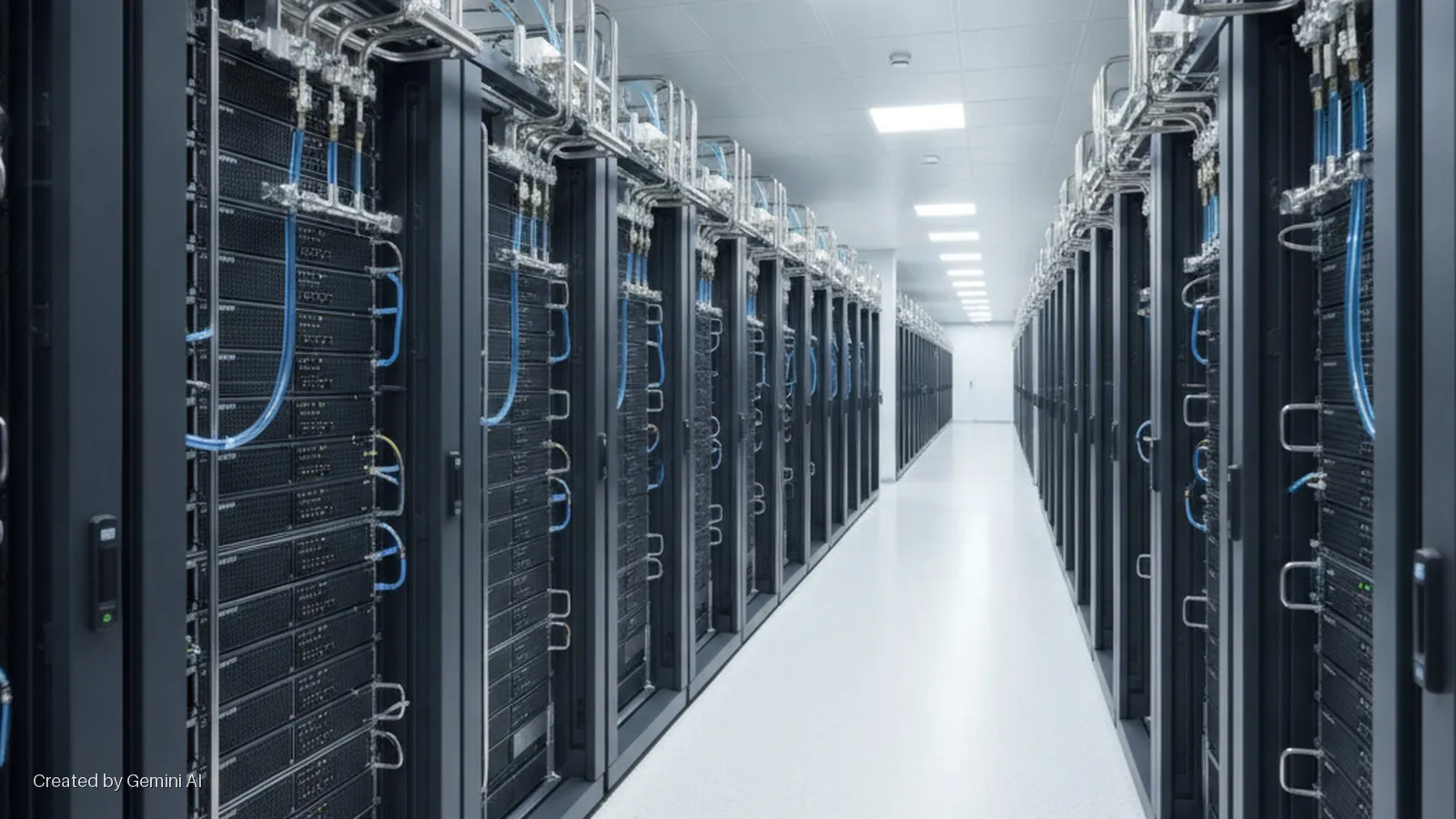
Nutanix (NASDAQ: NTNX) and ChronoScale Holdings Corporation (NASDAQ: CHRN) have announced a strategic partnership aimed at simplifying enterprise AI deployment by combining their respective infrastructure and compute capabilities. The agreement covers platform integration, joint go-to-market activity, and technical collaboration, with Global 2000 organisations cited as the primary target market.
At the centre of the deal is a plan to give Nutanix customers elastic access to ChronoScale's GPU-as-a-Service (GPUaaS) for committed workloads and its Token Factory product, which provides pre-paid inference tokens backed by open-source models, for burst and experimental use. ChronoScale Foundry, the company's managed enterprise AI foundry for building and governing agentic workflows, is also intended to be deployable directly through the Nutanix Kubernetes Platform Catalog, keeping agents, data, and workflow state within the customer's own environment.
Both companies are NVIDIA partners. ChronoScale is an NVIDIA Cloud Partner and the release states it plans to deploy NVIDIA HGX B300 systems, connected via Spectrum-X networking, running NVIDIA AI Enterprise software including NIM microservices and NeMo. Nutanix holds NVIDIA ISV status and carries a portfolio of NVIDIA-validated software for enterprise AI factories.
The deal in detail
Tarkan Maner, President and Chief Commercial Officer at Nutanix, said the partnership would help enterprises "accelerate their AI transformation by combining high-performance infrastructure with the operational simplicity, flexibility, and security that Nutanix delivers." ChronoScale chief executive Cenly Chen described the tie-up as "an important milestone in our mission to become the platform where the global AI ecosystem converges."
Neither company disclosed commercial terms, revenue commitments, or a timeline for completed technical integration. The release notes that the partnership "is expected to be implemented through one or more definitive agreements," meaning binding contracts are not yet in place. The absence of signed agreements, named launch customers, or performance benchmarks is worth noting for buyers evaluating either vendor.
Market context
The enterprise AI infrastructure market is currently crowded with overlapping propositions. Hyperscalers, AWS, Azure and Google Cloud, offer integrated GPU compute, managed Kubernetes, and inference APIs as a single stack. Pure-play GPU cloud providers such as CoreWeave and Lambda Labs compete on raw capacity and pricing, while a growing tier of "neocloud" operators is positioning around sovereignty, dedicated tenancy, and NVIDIA-optimised reference architectures.
Nutanix's broader strategic angle is intelligible: the company has built a loyal base among enterprises running on-premises and hybrid workloads, and extending that footprint into GPU capacity through a partner rather than building its own accelerated compute estate is capital-efficient. For ChronoScale, which describes itself as purpose-built for demanding AI workloads, the partnership provides access to Nutanix's installed base across more than half of the Global 2000, according to the company's own figures.
Digital sovereignty is an increasingly significant purchasing criterion, particularly for European and Asia-Pacific enterprises subject to data-residency regulations. Both companies emphasise the ability to run AI workloads locally, which aligns with the direction of travel in EU AI Act compliance and sector-specific frameworks such as DORA for financial services.
What comes next
The immediate milestones for observers to watch are the execution of definitive commercial agreements, the availability of ChronoScale Foundry through the Nutanix Kubernetes Catalog, and the first publicly named customer deployments. The HGX B300 infrastructure referenced in the release is part of NVIDIA's Blackwell generation, and broader availability timelines for that hardware will also affect delivery schedules. Until those milestones are confirmed, the announcement is best characterised as a letter of intent with technical ambition.