
Swarmer to acquire Ukraine's Ratel Robotics for up to $224m
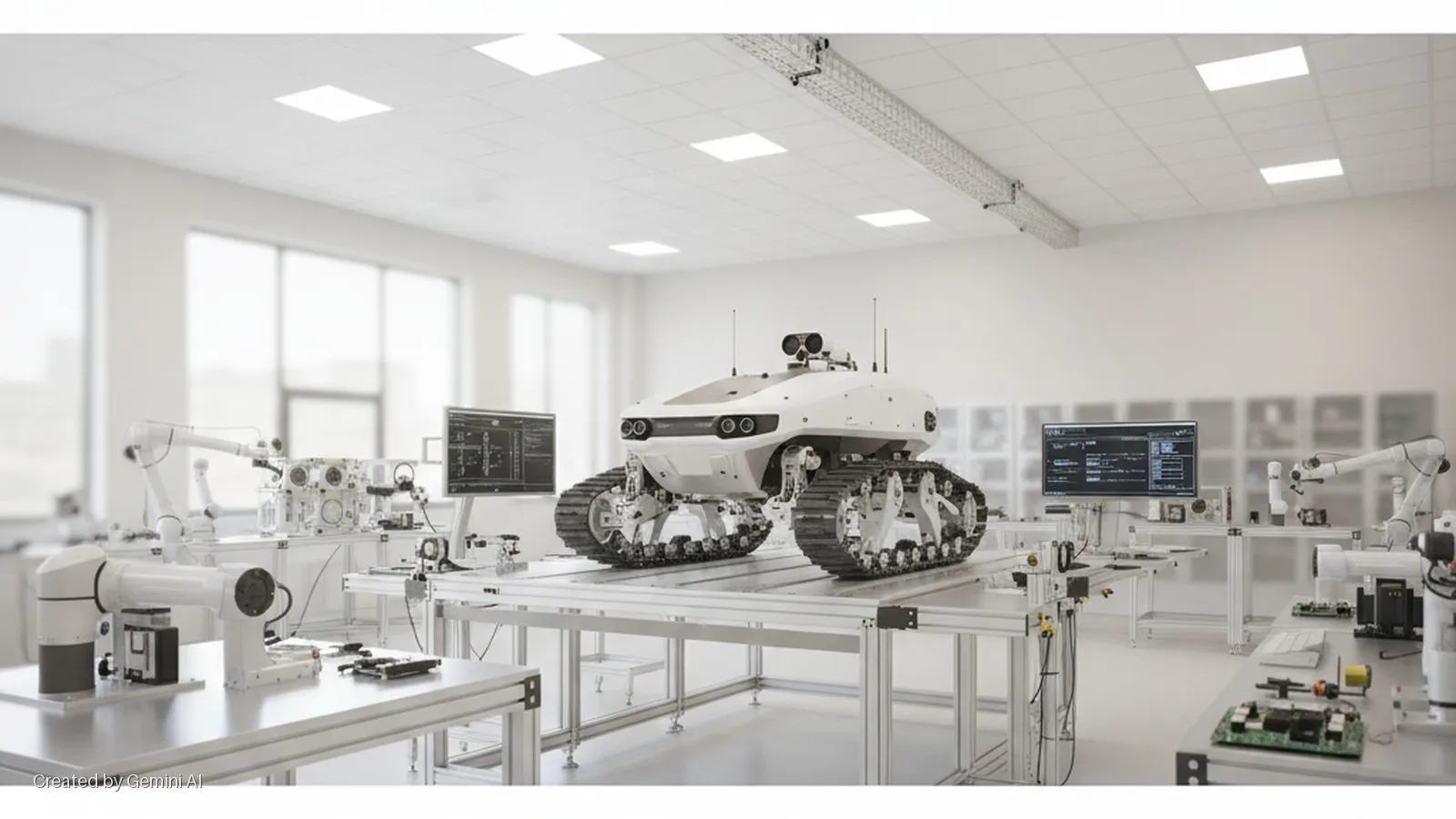
Swarmer (NASDAQ: SWMR), an Austin-based drone autonomy software company, has signed a definitive agreement to acquire Ratel Robotics, a Ukrainian manufacturer of unmanned ground vehicles (UGVs). The deal is structured as a mix of cash and equity worth up to $224 million, contingent on the achievement of earnout milestones. Closing remains subject to customary regulatory, legal and shareholder approvals.
Ratel Robotics, founded in 2023, has secured $86 million in contracts during 2026 and is in active discussions with multiple NATO member states under the "Build With Ukraine" procurement initiative. Its product portfolio covers battlefield logistics, casualty evacuation, reconnaissance, drone-launching platforms and demining. The company is also developing two UAV variants, mobile workshops and solar-powered logistics trailers. Every serial Ratel H and Ratel M unit carries a NATO stock number and holds an AQAP 2110 quality-assurance certificate, the NATO standard that governs design, development and production.
The deal
Ratel accounts for approximately 37% of all UGV procurement spending by Ukraine's Ministry of Defense Procurement Agency in the period from 1 January to 18 April 2026, out of a total 11 billion UAH (roughly $247 million) allocated to the category. That market-share figure gives the acquisition a credible commercial rationale beyond the strategic narrative.
Ratel founder and chief executive Taras Ostapchuk will remain in post after closing and will report to Swarmer's US chief executive Alex Fink. The Ratel headcount of more than 300 employees is expected to join Swarmer, bringing the combined entity to nearly 500 people. Fink described the logic as pairing "a battle-tested launch platform with our combat-proven autonomy software" to create interoperable, multi-domain unmanned solutions.
Swarmer's chairman, Erik Prince, framed the acquisition as part of a stated strategy to assemble battlefield-validated defence products into a single integrated platform company. Prince said Ratel "precisely fits that mission" and that Swarmer intends to accelerate the Ukrainian manufacturer's capabilities and extend its commercial reach.
Market context
The market for autonomous ground and aerial unmanned systems is expanding rapidly, driven largely by procurement lessons drawn from the conflict in Ukraine. Several Western defence primes and a growing cohort of defence-tech startups are competing to supply NATO members with UGVs, loitering munitions and multi-domain autonomy software. The "Build With Ukraine" initiative reflects a broader shift in NATO procurement thinking: rather than simply purchasing finished systems, member states are exploring co-production and technology-transfer arrangements with Ukrainian manufacturers who have accumulated substantial real-world operational data.
For Swarmer, which has positioned itself as a hardware-agnostic autonomy layer, the acquisition represents a significant departure from that asset-light model. Owning a UGV manufacturer brings supply-chain exposure, manufacturing overhead and operational complexity in an active conflict zone. Investors will want clarity on how the earnout milestones are structured and whether the $86 million in 2026 contracts carries into a multi-year revenue backlog.
The transaction also sits at the intersection of several overlapping regulatory frameworks. US defence-trade-control requirements, including ITAR and EAR, govern the export of dual-use autonomy software; Ukrainian and NATO export-control regimes layer on top. Any expansion of Ratel's sales to additional NATO nations will require navigating those regimes, particularly given the involvement of a US-listed entity and a chairman with a high-profile public profile in defence contracting circles. The company's existing SEC filings flag sanctions, export controls and geopolitical risk as material uncertainties.