
Khazna and Siemens sign MoU on next-generation AI data centre tech
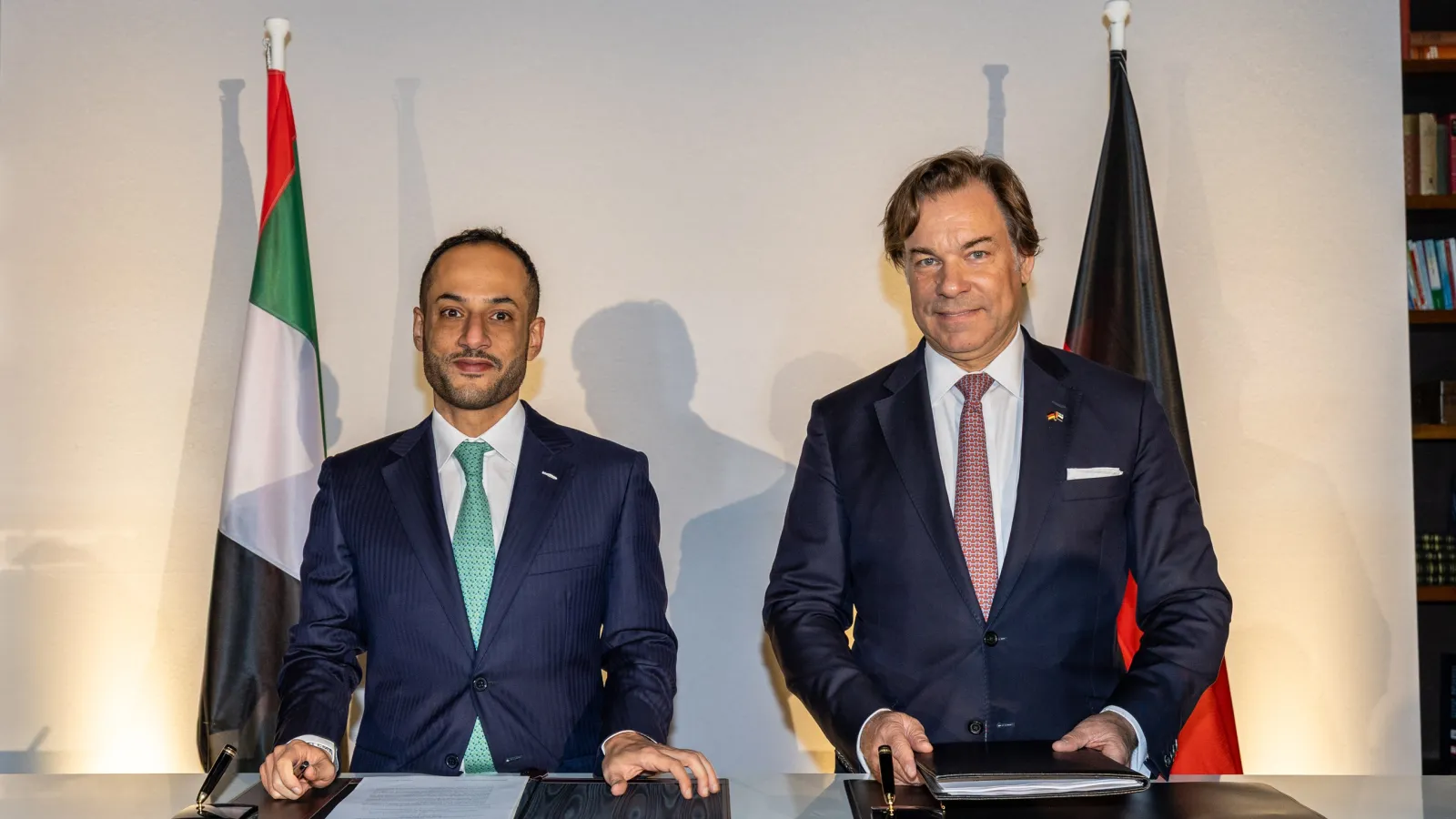
Khazna Data Centers and Siemens have signed a Memorandum of Understanding to advance the infrastructure requirements for the next generation of AI data centres. The agreement was formalised at the UAE-Germany Business Forum in Munich on 15 September 2026 and spans five areas: AI-ready infrastructure strategy, technology testing, next-generation power architectures, digital twin adoption, and an Emirati engineering talent programme.
Sultan Alowais, Vice President for International Execution at Khazna, said that as AI drives significantly denser computing environments, the demands on power and supporting systems become considerably more acute. The MoU, he said, is intended to combine Siemens' technology expertise with Khazna's operational and delivery experience to examine what next-generation AI infrastructure will practically require.
Technical focus areas
The most concrete technical commitment in the agreement is a joint investigation into 800 VDC power architectures. Moving from the conventional 480 VAC or 400 VAC distribution found in most hyperscale campuses to high-voltage direct-current buses reduces conversion losses and simplifies the power chain for dense GPU clusters, where rack power densities are rapidly pushing past 100 kW. Wider industry adoption of 800 VDC remains nascent, with standards bodies including IEC and ASHRAE still developing formal guidance, but several large operators and equipment vendors have begun pilot deployments.
Digital twin technology is a second pillar. Siemens brings established simulation and design-validation capabilities from its Xcelerator portfolio, which is already used across industrial and building-automation sectors. Applying those tools to data centre commissioning and operational optimisation is a logical extension, though translating factory-floor digital twin workflows to the real-time operational complexity of a hyperscale campus requires significant customisation. Khazna and Siemens say they intend to test these approaches in live environments rather than limiting the work to simulation.
The talent strand is notable in regional context. Under the proposed programme, Siemens will sponsor internships in Germany for nominated Emirati engineers, providing exposure to European engineering practices and data centre applications. The initiative aligns with UAE government targets under the national Emiratisation framework, which sets sector-specific quotas for Emirati participation in private-sector roles.
Market and competitive context
Khazna positions itself as one of the fastest-growing hyperscale data centre platforms globally, with an expanding international portfolio beyond its UAE home market. The Siemens partnership extends a pattern visible across the Gulf region, where sovereign and quasi-sovereign infrastructure operators are pursuing technology transfer and workforce localisation alongside capacity expansion.
Siemens is not the only industrial technology group pursuing data centre partnerships as AI infrastructure investment accelerates. ABB, Schneider Electric and Eaton are all competing for critical-power and automation mandates as hyperscale operators scramble to add capacity. For Siemens, a formal MoU with a fast-growing operator gives it a testing ground for 800 VDC and digital twin propositions that it can reference in wider commercial discussions.
Helmut von Struve, chief executive of Siemens Middle East and UAE, said the collaboration was "about turning emerging technologies into practical infrastructure solutions" that can meet the scale, resilience and efficiency demands of the next AI infrastructure generation.
The agreement is an MoU rather than a binding commercial contract, which means specific project timelines, capital commitments and deliverables remain to be agreed. Both companies will need to convert the stated ambitions into defined workstreams if the partnership is to produce verifiable technical outcomes rather than remain a high-level statement of intent. Observers will be watching for named pilot facilities and published results from the 800 VDC and digital twin workstreams as the near-term indicators of progress.