
Pasqal forms Saudi joint venture to deploy neutral-atom quantum systems
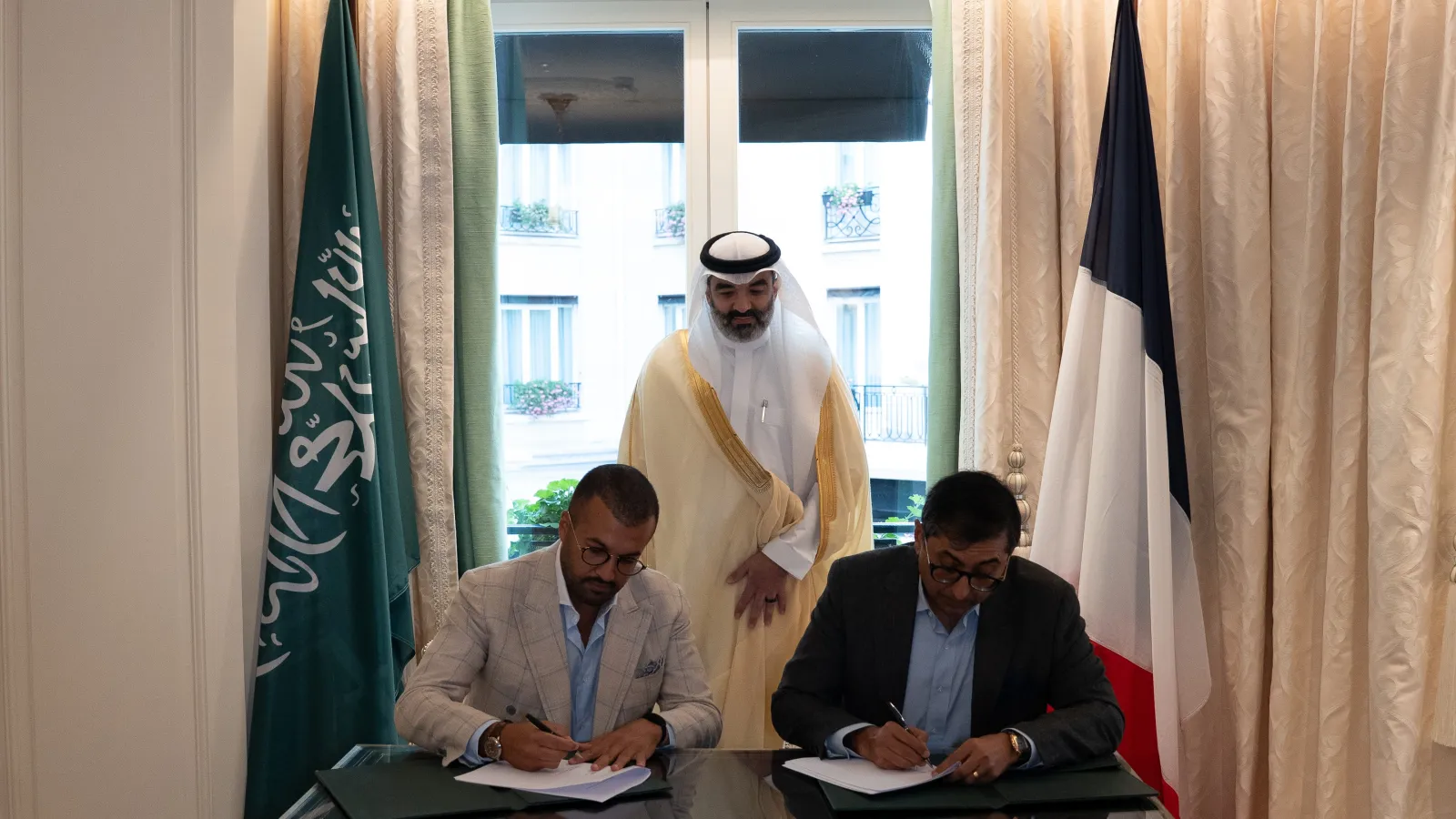
Pasqal, the French neutral-atom quantum computing company, has agreed to form a commercial joint venture with Eleven Ventures, a Saudi Arabia-based investment platform, to deploy and commercialise its quantum systems across the Kingdom of Saudi Arabia and the wider MENA region. The announcement, timed to coincide with a Saudi state visit to France on 24 August 2026, positions the venture as part of the Kingdom's Vision 2030 push into advanced computing.
The new entity, named Pasqal Arabia, will be chaired by HRH Prince Abdulaziz Bin Turki Bin Talal, founder of Eleven Ventures. The joint venture intends to operate Pasqal's neutral-atom systems in-country, offer commercial access to enterprise and government customers across the region, and develop local quantum talent rather than relying on offshore capability. Pasqal's chief executive, Dr. Wasiq Bokhari, said the deal puts the company's quantum systems "inside the Kingdom, built to scale with the region's ambition."
The release did not disclose deal terms, equity splits, capital commitments, or the number and specification of the quantum systems earmarked for initial deployment beyond a reference to "multiple systems in the coming years."
Market context
The MENA region is an increasingly active destination for advanced computing investment. Saudi Arabia, the UAE and Qatar have each announced sovereign AI and computing programmes over the past two years, partly in response to US export-control restrictions on high-end GPU chips, which have raised the strategic value of alternative compute modalities. Neutral-atom quantum computing, alongside superconducting and photonic approaches, is being watched as a potential complement to classical high-performance computing for optimisation and simulation workloads.
Pasqal competes in the quantum hardware market with IBM (superconducting), IonQ and Quantinuum (trapped-ion), QuEra and Atom Computing (neutral-atom), and a number of well-funded European startups. Neutral-atom architectures offer reconfigurability and potential qubit-count scaling advantages, but the technology remains pre-commercial at industrial scale. The company counts Saudi Aramco, Crédit Agricole CIB and Thales among its more than 25 clients and partners, and has raised over $300 million in total funding. It is also pursuing a Nasdaq listing via a business combination with Bleichroeder Acquisition Corp. II, with a Form F-4 registration statement declared effective by the SEC on 5 August 2026.
Digital sovereignty angle
The structure of Pasqal Arabia reflects a deliberate digital-sovereignty strategy that is becoming a standard commercial template for advanced-technology vendors entering Gulf markets. By deploying systems in-country, building local talent pipelines, and appointing a Saudi royal as board chair, Pasqal is aligning with the Kingdom's stated preference for technology that is resident and governed domestically rather than accessed via international cloud infrastructure.
This approach carries relevance beyond the quantum sector. A number of hyperscalers and enterprise software vendors have been required to establish local cloud regions or data-residency commitments as conditions of access to Gulf public-sector contracts. Pasqal Arabia appears designed to meet those expectations from the outset, which may give it a structural advantage over competitors that offer only cloud-based quantum access. Whether that advantage translates into signed contracts will depend on demonstrated system performance and the pace at which quantum workloads mature for enterprise use cases relevant to the region's priority industries, including energy, logistics and financial services.