
Beacon's Fraser Robinson on the preventable cost in freight bills

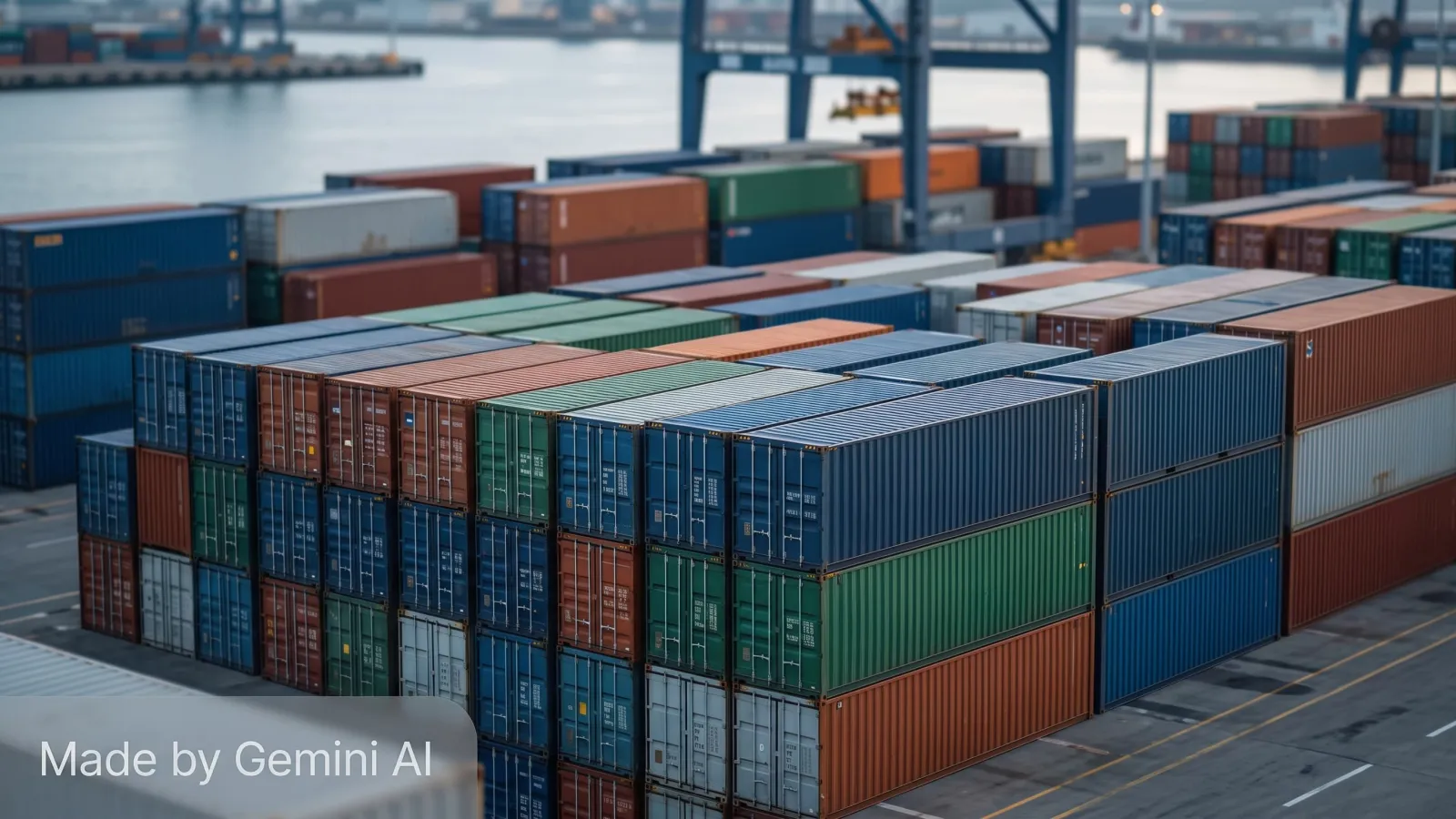
Demurrage and detention charges rarely feature in a board pack. They arrive weeks after the event, buried in carrier and forwarder invoices, and are usually paid without challenge.
The sums involved are not small. According to the US Federal Maritime Commission (FMC), nine major ocean carriers collected roughly $15.4 billion in demurrage and detention (D&D) charges between April 2020 and March 2025.

CEO & co-founder,
Beacon
Fraser Robinson, CEO and co-founder of Beacon, which provides an AI supply chain workspace, argues that much of that cost could have been avoided. Beacon says its analysis covers almost 180,000 shipments, and Robinson’s view is that the problem is one of data and timing rather than bad luck.
“By the time you see a demurrage or detention charge, both useful options have gone,” he said. “Too late to work out what actually went wrong, and too late to do anything about it, because you’ve already been charged.”
He puts that down to missing connections rather than carelessness. “Most businesses don’t have the notifications or the data connections in place to know when a container is approaching its free-time limit. There’s no alert, no flag, no prompt to act,” he said. “The container breaches its free days, the clock runs, and the first the finance team hears about it is an invoice arriving 30 days later for a charge that was preventable at the time.”
Checking the bill is just as difficult. The invoice, the freight contract and the container arrival data typically sit in separate systems. “Cross-referencing them takes more time and effort than most teams can justify, so the charge gets paid. Not because it’s right, but because proving it’s wrong is too hard.”
Volatility is only part of the story
Freight market disruption plays a part. Beacon’s own platform data, which counts an arrival as on time only if it lands within 12 hours of the estimated time of arrival (ETA), shows ocean freight on-time delivery falling from 36 per cent in 2024 to 13.9 per cent in 2025, with no major trade corridor better than 30 per cent through the first quarter of 2026. “Every missed ETA change increases the likelihood of paying avoidable D&D,” Robinson said.
He does not accept that the charges are simply the price of a volatile market, however. “Carriers, ports and geopolitical events get blamed for D&D, and sometimes that blame is warranted. But a significant proportion of charges accrue during a window where the shipper, with the right data and the right processes, could have acted.”
Prevention, as he describes it, means knowing a vessel is running late before it arrives, knowing exactly when free time will expire on each container, and having enough notice to rebook a haulier or arrange extra yard space at the warehouse. Beacon monitors containers against their free-time allowances and sends an alert when an ETA slips or free time is about to expire.
“A charge that never accrues is worth far more than one recovered after the fact, because recovery only claws back the fee itself,” Robinson said. “It does nothing for the missed delivery window, the contractual penalty, or the working capital tied up in goods sitting on the quay.”
Who owns the problem
Robinson sets out three stages that work in sequence: prevention, through real-time monitoring of ETAs against free-time clocks; negotiation, using historical dwell and carrier performance data to push for better free-time terms at contract stage; and recovery, through systematic checking of invoices for incorrect free-time calculations, misapplied tariffs and duplicate charges.
“Free-time allowances barely feature in most rate negotiations, yet they are among the most valuable terms on the table,” he said. “A single extra free day on a high-volume lane removes the charge on a large share of containers.”
Ownership is where he believes most businesses fall down. “Operations, finance and logistics all touch D&D, and without clarity on who is responsible end to end, it can default to an unmanaged cost,” he said. A managed programme, in his view, needs a single owner with access to connected operational and financial data, benchmarks for normal spend on each lane and a process for escalating disputes. “Without that structure, even the best data in the world sits unused.”
On the role of AI, Robinson is direct about the order of work. “AI cannot help if the underlying data is not there,” he said. The foundation comes first: centralising supply chain data, standardising how milestones, ETAs and costs are captured, and connecting live carrier data with contract data. Once that is in place, he says, AI can surface containers approaching their free-time threshold, flag the carrier and lane combinations that generate charges most often, identify invoice discrepancies at scale and help teams decide where to intervene. “But the sequence matters. Data first, AI second.”
A first step for finance teams
For finance leaders, his starting point is a question most cannot yet answer: what percentage of total freight spend is D&D, and how does that compare with businesses moving similar volumes? Beacon estimates that a company spending $50 million a year on ocean freight faces D&D exposure of between $1.5 million and $4 million annually.
“Most CFOs I speak to have no idea whether their number sits at the low or high end of that range, or whether it is even in that range at all, because the data to answer the question does not exist in one place,” he said.
The practical first step he recommends is to pull together the last 12 months of freight invoices, identify every D&D line item, and map those charges against shipment records to see which lanes, carriers and ports generate the most exposure. “From there, the question shifts from ‘how much are we paying?’ to ‘how much of this is actually preventable?’”
In the US, the FMC’s rule on demurrage and detention billing, in force since May 2024, sets out what carriers and terminal operators must include on a D&D invoice and when it must be issued, and gives billed parties a set window to dispute charges.