
Xanadu and Mitsubishi Chemical advance EUV lithography quantum research
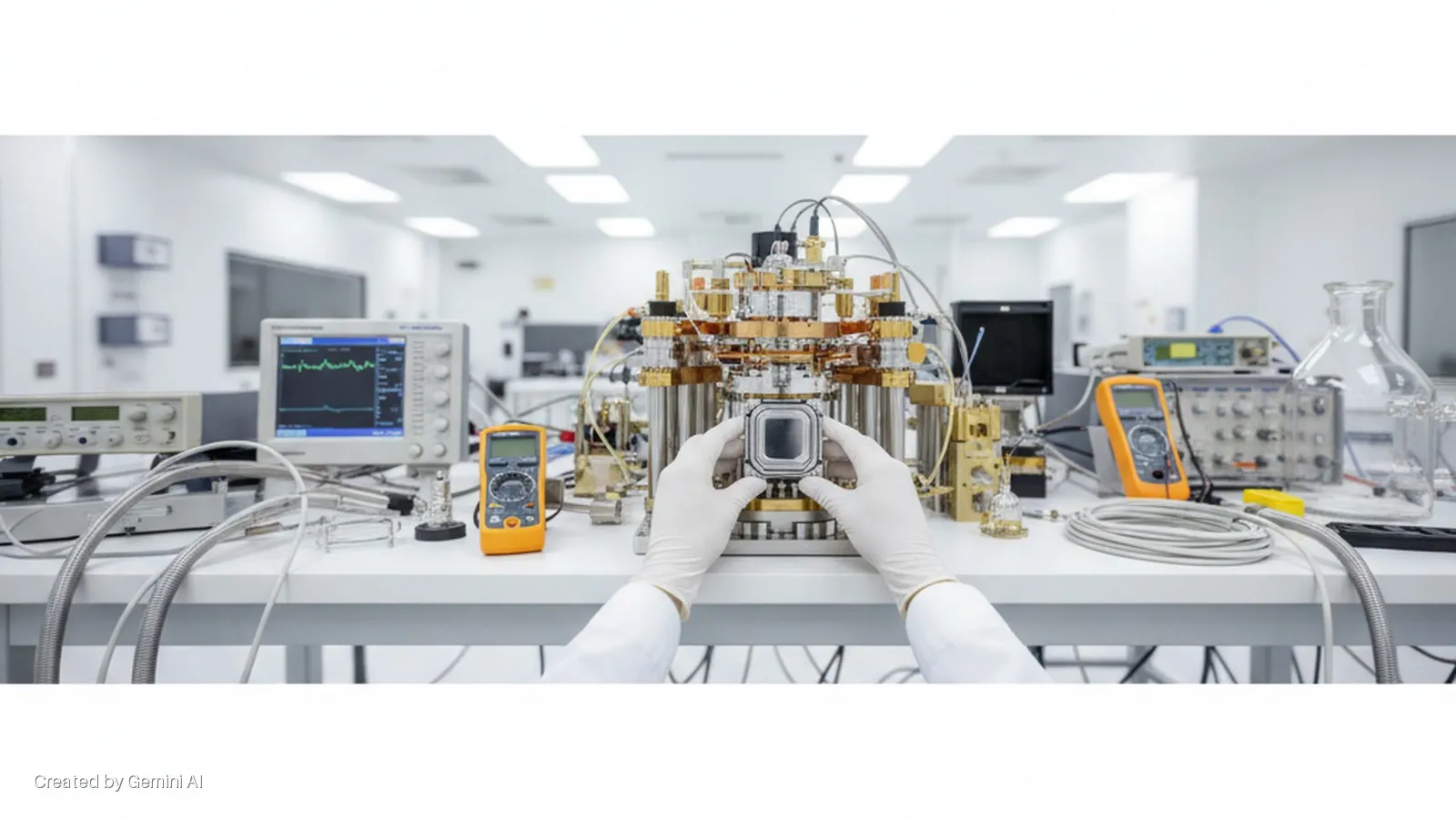
Xanadu Quantum Technologies and Mitsubishi Chemical Corporation have launched the second phase of their quantum computing collaboration, targeting a persistent bottleneck in extreme ultraviolet (EUV) lithography: radiation-induced blurring of chip patterns. The partnership is co-funded by Canada's National Research Council Industrial Research Assistance Program (NRC IRAP) and Japan's Strategic Innovation Promotion Program (SIP), with the Japanese side led by the National Institute of Advanced Industrial Science and Technology (AIST) and the Global Research and Development Center for Business by Quantum-AI Technology (G-QuAT).
In the first phase, the two organisations demonstrated that quantum algorithms could accurately model the optical properties of photoresists, the light-sensitive materials used to etch circuit patterns during EUV lithography. The new phase goes further: parameters generated by Xanadu's photonic quantum simulations will feed directly into Mitsubishi Chemical's multi-scale models to predict and, ultimately, prevent blur. The goal is a fault-tolerant quantum computing (FTQC)-ready software pipeline capable of screening candidate materials before they reach the fabrication line.
Why EUV matters to the semiconductor industry
EUV lithography underpins the manufacture of the most advanced logic chips used in mobile, AI accelerators and high-performance computing. The blurring problem it faces is inherently quantum mechanical in nature, which makes it particularly resistant to classical simulation methods. Accurate modelling of how short-wavelength UV light interacts with photoresist chemistry requires representing quantum-level electron dynamics, a task that scales poorly on conventional hardware. That is where quantum simulation is expected to contribute genuine near-term industrial value, even before full fault-tolerant systems are available at scale.
Xanadu founder and chief executive Christian Weedbrook said the collaboration "bridges quantum simulation and semiconductor fabrication, eliminating a critical manufacturing bottleneck and supporting the development of differentiated semiconductor materials for next-generation manufacturing." Mitsubishi's Dr Qi Gao, a distinguished scientist in the company's Analysis Technology Laboratory, noted that the first phase had already demonstrated the utility of the quantum approach, and that dual government backing strengthens the case for broader industrial adoption.
Xanadu has previously received more than $800,000 in funding from NRC IRAP across several quantum computing R&D projects.
Market and competitive context
The photonic quantum computing sector is occupied by a small number of dedicated hardware vendors, with Xanadu among the most prominent following its 2025 dual listing on Nasdaq and the Toronto Stock Exchange. Its approach, using light rather than superconducting circuits or trapped ions, allows systems to operate at room temperature, which the company positions as a scaling advantage. Competing architectures from IBM, Google, IonQ and Quantinuum are predominantly superconducting or trapped-ion and require deep cryogenic cooling.
The choice of semiconductor materials discovery as an application is notable. It is one of a handful of near-term quantum use cases with a plausible commercial return before general-purpose fault-tolerant hardware arrives, alongside drug discovery, financial optimisation and logistics. Several well-capitalised quantum software startups are pursuing materials simulation in parallel, and hyperscalers including Microsoft are investing heavily in the same space through their own quantum chemistry programmes.
Government co-investment from two G7 nations adds credibility but also signals that the timeline to commercial returns remains long enough to require public subsidy. Xanadu disclosed a going-concern qualification in its most recent filings, underscoring the funding pressures common across the sector. The concrete demonstration and roadmap Xanadu has committed to providing through this collaboration will be closely watched as evidence of how quickly FTQC-ready workflows can be translated into defensible industrial value.