
ASML breaks ground on Eindhoven campus with 20,000-workplace potential
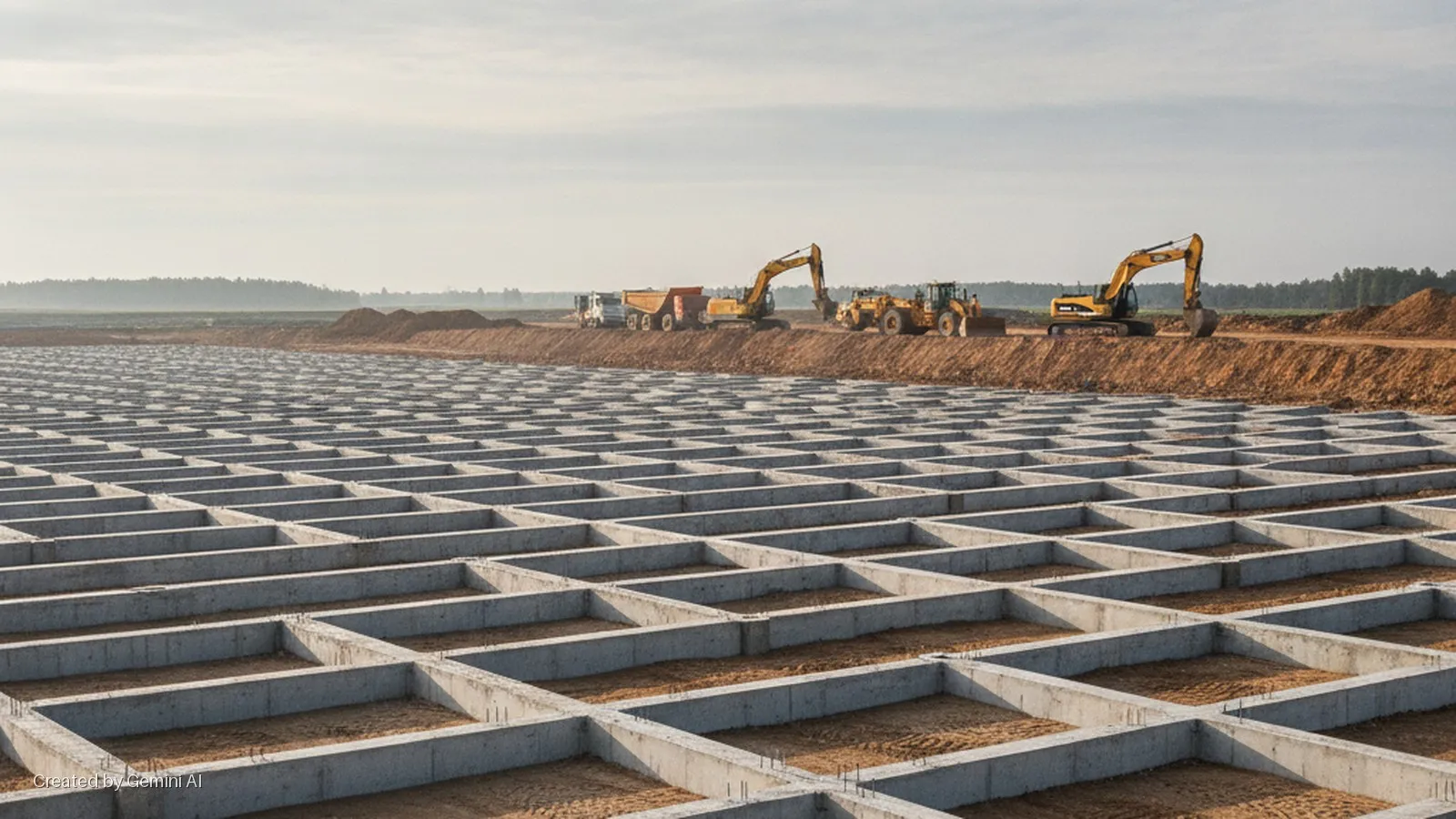
ASML Holding has marked the start of construction on a new industrial campus in Eindhoven, signalling a significant long-term bet on its home region at a moment when global semiconductor capacity expansion is under intense geopolitical and market scrutiny. A groundbreaking ceremony at Brainport Industries Campus (BIC) North on 8 September was attended by Dutch Prime Minister Rob Jetten, alongside representatives from government, academia and industry partners.
The campus, which will span approximately 350,000 square metres at full build-out, is conceived as a multi-phase development capable of hosting up to 20,000 workplaces in the long term. Phase one is expected to reach completion in 2029 and will bring together at least 3,000 workers drawn primarily from existing ASML sites, consolidating production, logistics and office functions in a single integrated site.
The new facility
A central feature of BIC North will be what ASML describes as a "flow factory" manufacturing model for its TWINSCAN lithography systems. The approach, which the company says borrows from automotive and aerospace production principles, is intended to improve throughput and installation efficiency by streamlining the movement of materials and work-in-progress through the factory floor. ASML did not disclose projected output volumes or cost-per-unit targets associated with the new model.
Chief executive Christophe Fouquet framed the investment as a response to sustained demand from chipmakers worldwide. "The growing global demand from the semiconductor industry requires continuous investments," he said. "BIC North provides the space and flexibility we need to continue innovating and supporting our customers around the world."
The new campus sits alongside ASML's existing Veldhoven headquarters at De Run 1000 and its adjacent industrial campus at De Run 6000/7000, completing a three-site cluster in the Brainport area. ASML employs more than 44,500 people globally and is the sole supplier of extreme ultraviolet (EUV) lithography tools, which are essential for manufacturing leading-edge chips at the 3nm node and below.
Market and regulatory context
ASML's expansion comes at a fraught moment for the semiconductor equipment sector. The company's EUV and deep ultraviolet (DUV) shipments have been subject to tightening Dutch and EU export controls, restricting sales to certain Chinese fabs following US pressure. Those restrictions have trimmed ASML's addressable market in the near term and introduced revenue uncertainty, making domestic capacity investment partly a hedge against further regulatory friction.
More broadly, European policymakers are pressing for onshore chipmaking capability under the EU Chips Act, which targets a doubling of Europe's global semiconductor production share to 20 per cent by 2030. ASML's BIC North investment supports that goal indirectly: the company does not fabricate chips itself but supplies the tools without which leading-edge fabs cannot operate. A resilient domestic manufacturing base for those tools is therefore critical infrastructure for European semiconductor ambitions.
Public-private partnership structures underpin the BIC North development. ASML cited collaboration with the City of Eindhoven and national authorities on adjacent priorities including affordable housing and talent pipelines, both perennial constraints in the Brainport labour market where competition for engineers is acute. Investors will be watching phase-one construction milestones and any disclosure of flow-factory productivity benchmarks as the nearest-term indicators of whether the model delivers on its efficiency promises.